





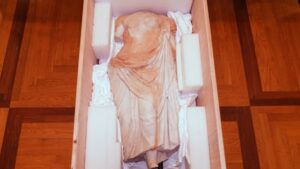
The U.S. Immigration and Customs Enforcement’s Homeland Security Investigations (ICE–HSI), in collaboration with its partners, has repatriated 26 ancient artifacts to Greece that had been seized by American law enforcement authorities.
According to the agency’s announcement, the items were recovered as part of investigations conducted by HSI, in cooperation with U.S. Customs and Border Protection (CBP), the FBI, and the State Department.
ICE HSI and its partners repatriated 26 ancient artifacts to the Hellenic Republic of Greece during a ceremony at the Embassy of Greece in Washington, D.C. April 23.
— U.S. Immigration and Customs Enforcement (@ICEgov) May 2, 2026
This marble torso of Asclepius, ancient Greek god of medicine and healing from the 1st or 2nd century, which… pic.twitter.com/v4Wneno9wf
“ICE HSI is particularly proud to have leveraged its investigative expertise and customs authorities, in collaboration with our partners, leading to the repatriation of these 26 invaluable antiquities that had been unlawfully looted from their homeland,” said ICE Deputy Director Charles Wall.
“These precious objects were an important part of life in the ancient world. I am especially grateful to the investigative and prosecutorial team responsible for recovering and returning these invaluable treasures.”
The artifacts include 25 ancient coins dating from the Greek, Roman, and Byzantine periods, as well as a marble torso of Asclepius, the Greek god of medicine and healing, weighing approximately 500 pounds.
The return of these looted objects continues a long-standing commitment to protecting Greek cultural heritage. Since 2007, HSI has repatriated more than 200 cultural heritage items to Greece, many of which were seized under the bilateral cultural property agreement between the United States and Greece, which came into effect in 2011.
Among the returned items are:
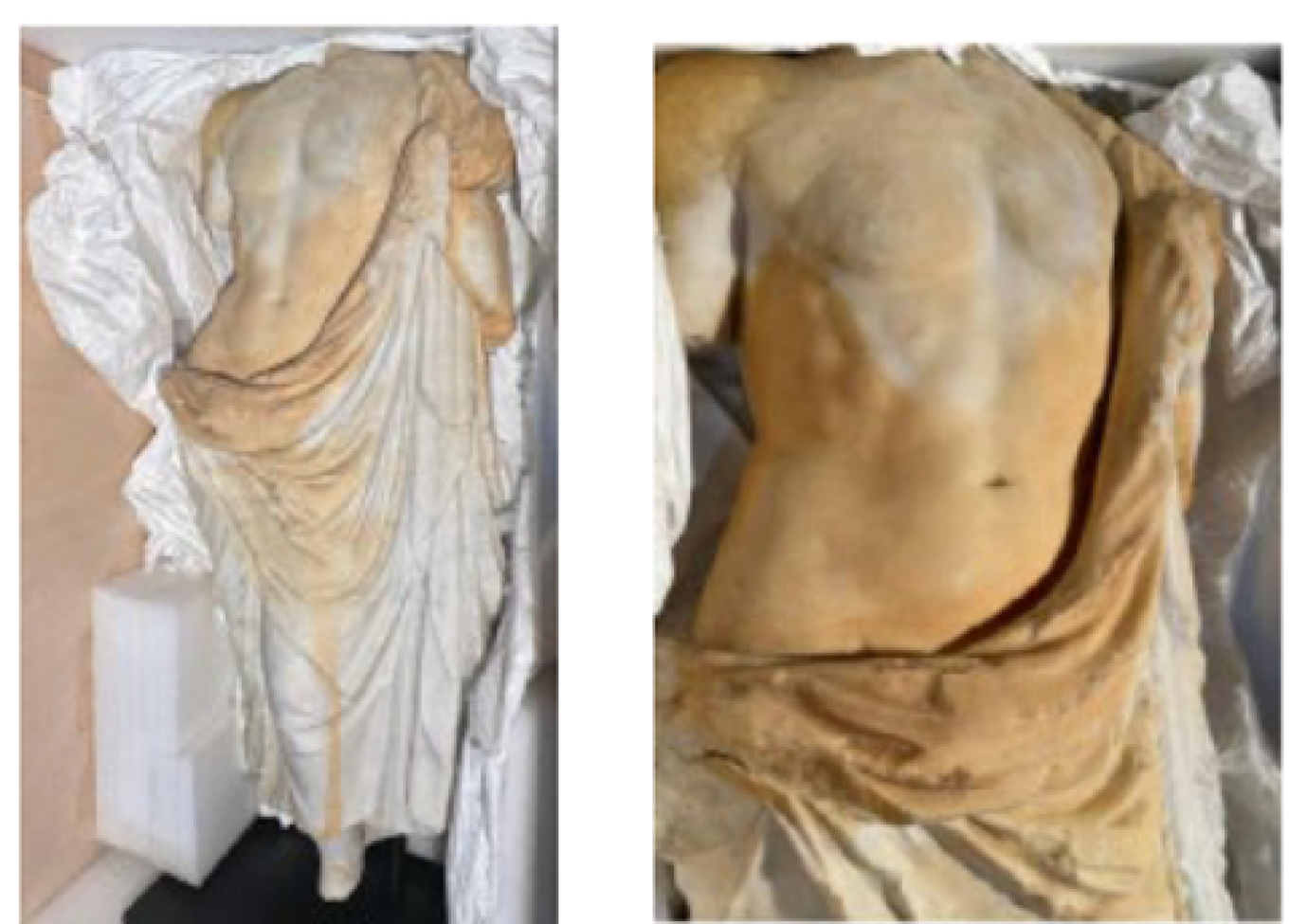
- A marble torso of Asclepius, dating to the 1st or 2nd century AD and measuring 40 inches in height. The statue was seized after claims in accompanying documentation were proven false following an HSI and CBP investigation.
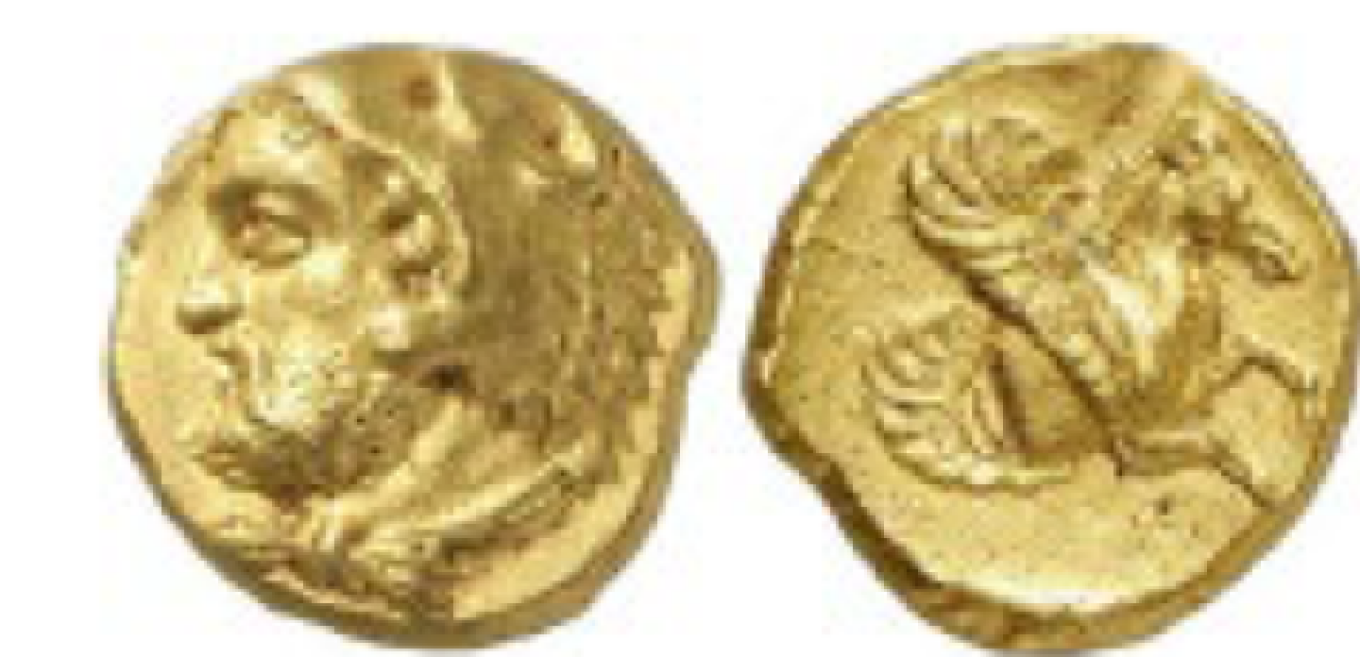
- A gold coin from Lampsacus in Mysia, minted around 370 BC, depicting Heracles on the obverse and Pegasus on the reverse. The coin was excavated by an unknown looter, sold to an intermediary, and later resold to the head of a criminal organization for €7,000. It was illegally exported from Greece to Germany, where it failed to sell at auction, before being sent to an auction house in Philadelphia.
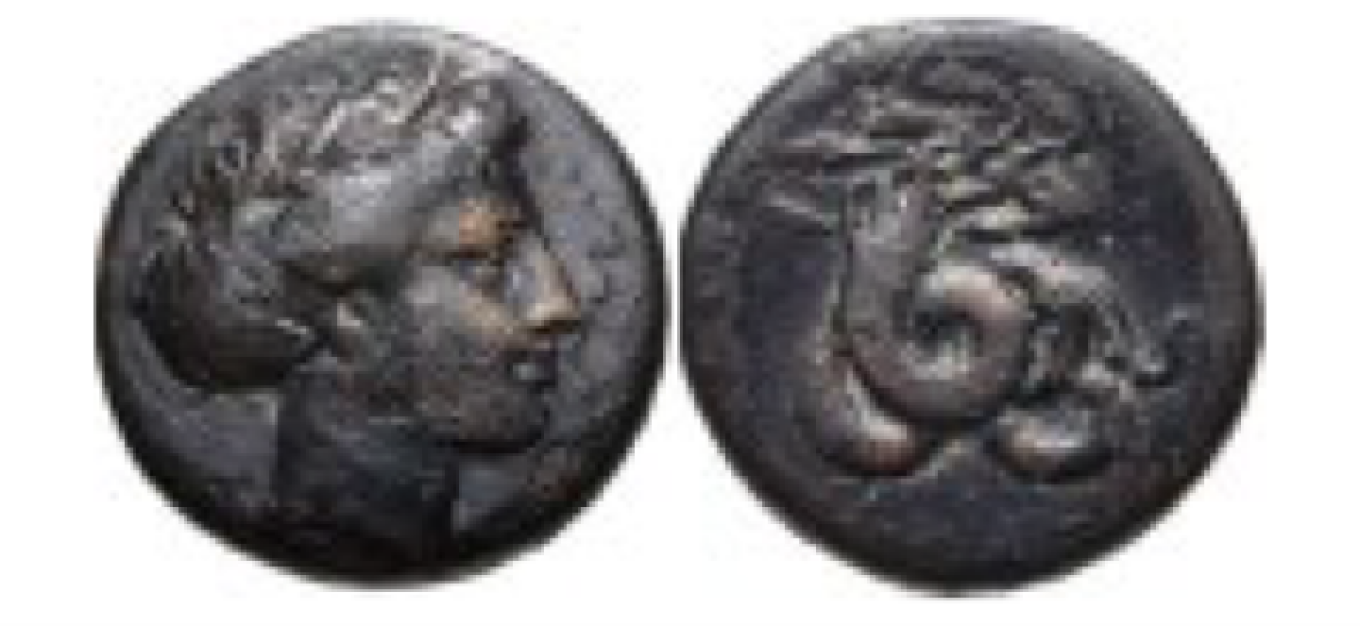
- A bronze coin from Macedonia, dating to the 4th century BC, depicting Persephone on the obverse and the Hydra on the reverse. Greek police determined it had been illegally excavated and exported by the same criminal network. It was auctioned in 2009 and re-offered for sale in 2017 before appearing at the same U.S. auction house.
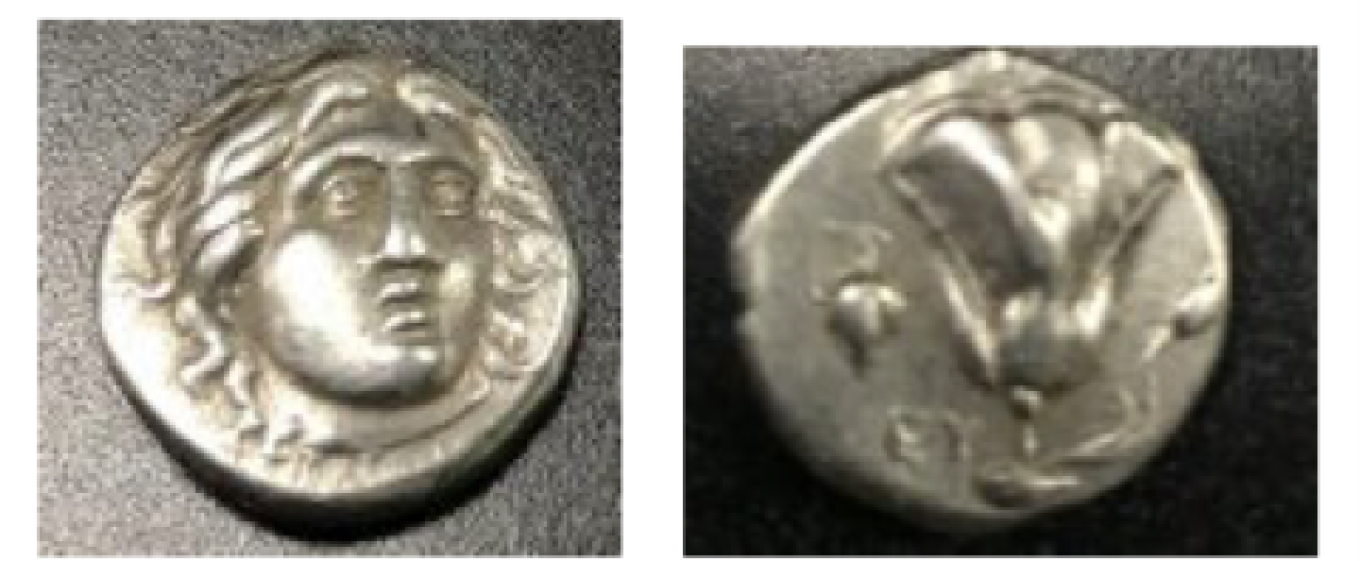
- A silver didrachm from Rhodes, minted in 304 BC, featuring Helios on the obverse and the rose emblem of Rhodes on the reverse. The coin was seized by HSI in Memphis after violations of the Cultural Property Implementation Act and smuggling-related offenses were identified. The importer failed to provide sufficient evidence that the coin had been exported from Greece prior to import restrictions.
The protection and preservation of global cultural heritage and knowledge of past civilizations remain key objectives of HSI’s Cultural Property, Art and Antiquities Program (CPAA). The program conducts training and outreach, supports investigations into cultural property crimes, and strengthens international cooperation, working with foreign governments and citizens to return looted cultural heritage and stolen artworks.
Since 2007, CPAA has collaborated with the State Department’s Cultural Heritage Center and the Smithsonian Institution to train HSI special agents, FBI personnel, customs officers, and prosecutors in modern investigative techniques and best practices for handling cultural property. To date, CPAA has repatriated more than 25,000 items to over 40 countries worldwide.
Ask me anything
Explore related questions




