





Tensions between the United States and Iran are escalating, with Donald Trump stating that the new proposal submitted by Tehran is unlikely to be accepted, even as Iran signals readiness for both a diplomatic resolution and continued confrontation.
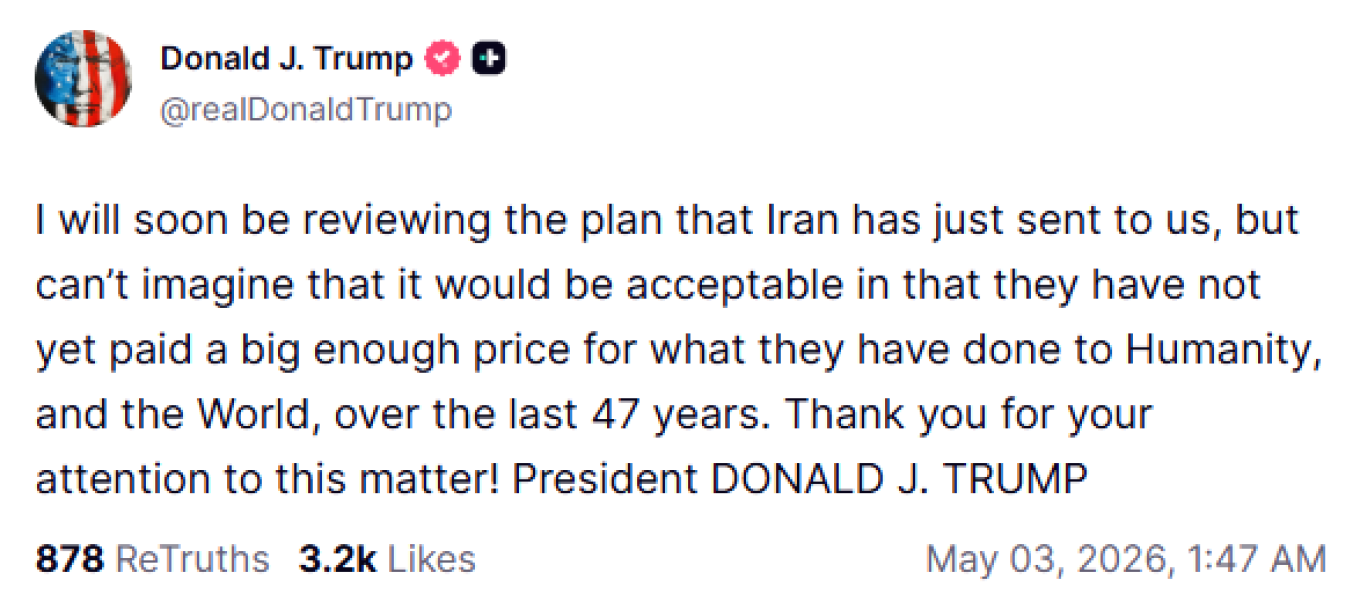
The U.S. president said via the platform Truth Social that he will soon review the plan sent by Iran, while expressing clear skepticism.
“I will be reviewing the plan Iran sent us soon, but I can’t imagine it will be acceptable, as they have not paid enough for what they’ve done to humanity and the world over the past 47 years,” he said.
Earlier, speaking to reporters before boarding the presidential aircraft Air Force One in Florida, Trump added: “I’ll let you know later. I’ve been briefed on the general framework of the deal. Now they will give me the exact wording.”
His remarks came after reports from Iranian state media that Tehran had submitted a 14-point proposal to Washington.
Trump also sought to walk back comments made the previous day, when he appeared to suggest that no deal might be preferable.
“I didn’t say that,” he clarified.
“I said that if we left now, it would take them 20 years to recover. But we’re not leaving now,” he added before departing from Palm Beach for Miami.
Iran: “The ball is in the U.S. court”
For its part, Iran says it is prepared either to continue the conflict or prioritize diplomacy to end the crisis.
Deputy Foreign Minister Kazem Gharibabadi stated that Tehran had submitted its proposal through a mediator, aiming for a definitive end to what it calls an “imposed war.”
“Iran presented its plan to the Pakistani mediator, and now the ball is in the U.S. court, which must choose between diplomacy or continuing the conflict,” he said.
According to the Tasnim News Agency, which is close to the Revolutionary Guards, Iran handed a 14-point counterproposal to Pakistani intermediaries to be presented to U.S. decision-makers.
Tehran’s core demands reportedly remain largely unchanged. These include guarantees against future military action, the withdrawal of U.S. forces from the wider region, lifting the naval blockade in the Strait of Hormuz, the release of frozen Iranian assets, an end to the conflict between Israel and Lebanon, and the payment of reparations.
Plan for restrictions in the Strait of Hormuz
At the same time, Iran’s parliament is considering legislation that would impose restrictions on ship transit through the Strait of Hormuz, one of the world’s most critical maritime routes.
According to state broadcaster Press TV, the proposed 12-point plan would ban Israeli vessels from passing through the strait. Ships from “hostile countries”—a term believed to primarily refer to the United States—would be required to pay war reparations in order to receive transit permission.
All other vessels would also need to request authorization from Iran before crossing the area.
These developments come as talks between Tehran and Washington remain deadlocked, with both sides holding firm to their positions. On Friday, Iran submitted a revised peace proposal after a previous version was rejected by Trump, with no immediate breakthrough in sight.
Ask me anything
Explore related questions




