





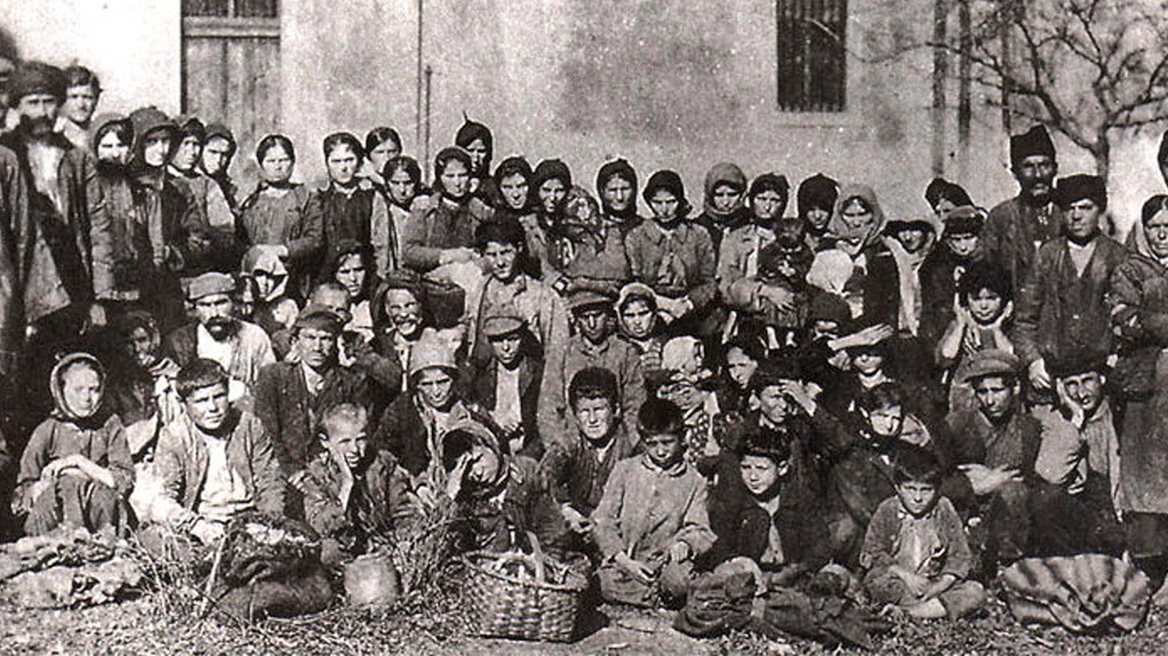
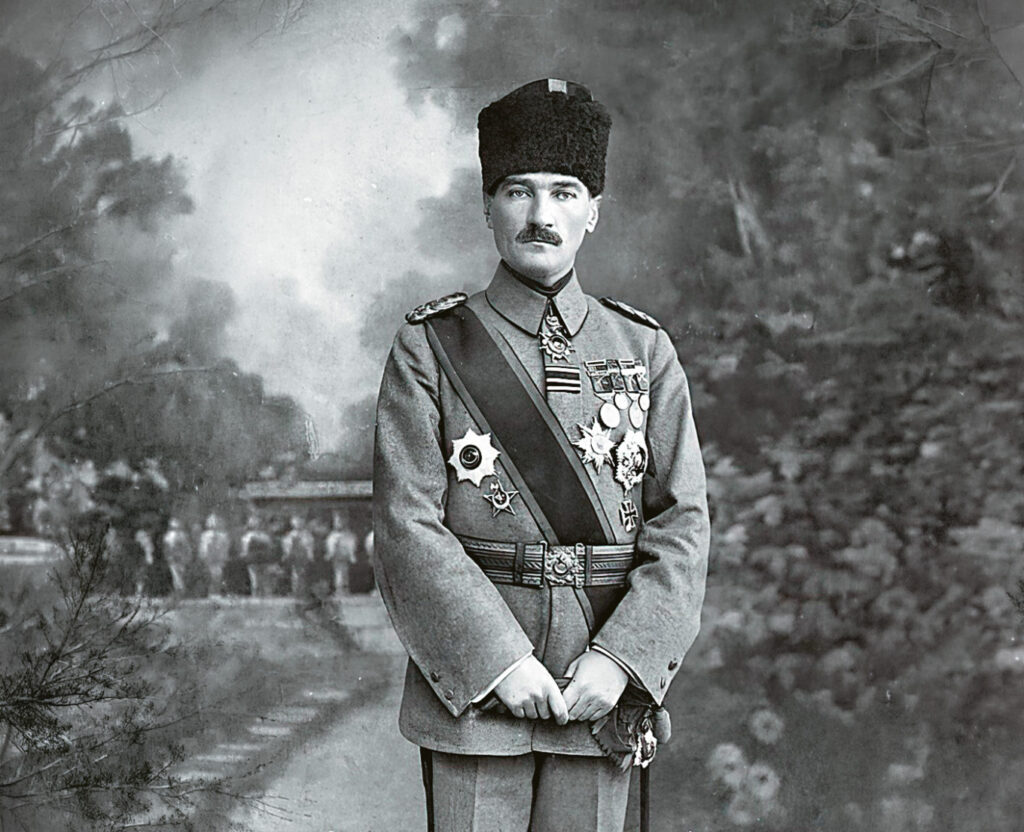
On May 19, 1919, a young officer of the Ottoman army, Mustafa Kemal Atatürk, landed in Samsun accompanied by 21 trusted associates. At the same time, he came into contact with the remnants of the Young Turks in the area. His arrival marks the beginning of the final phase of the Genocide of the Pontic Greeks, which was completed in 1923 and left behind a total of 353,000 dead.
In 1913, just before the First World War, it is estimated that 600,000–700,000 Greeks lived in Pontus, part of the Ottoman Empire. The Young Turk Movement (1909) and the outbreak of the war mark a broader shift in Ottoman policy aimed at the extermination or expulsion of Christian populations and the demographic homogenization of the state, a decision which, as is claimed, was taken under German influence, particularly by Liman von Sanders, who had been appointed military adviser and supreme commander of the Ottoman army during the First World War.
Given this decision, the Genocide of the Greeks of Pontus begins in 1914, unfolding in two phases, with some dividing the first phase into two: from 1914, with the outbreak of the First World War, until the capture of Trebizond by the Russians (5/18 April 1916), and from 1916 until the end of the First World War in 1918. Finally, the second (or third) phase begins essentially with the arrival of Mustafa Kemal in Pontus (May 1919) and is completed in 1923.
The First Phase
According to Dr. Ioannis S. Papafloratos, during the First World War (1914–1918), approximately 250,000 Pontic Greeks were exterminated. The head of the relief mission in Pontus, the Caucasus, and southern Russia, Ioannis Zervos, wrote that before the First World War, 600,000 Greeks lived in Pontus. Of these, 235,000 were killed by the Turks and 80,000 fled to the Caucasus. In southern Russia, 515,000 Pontic Greeks were living. In western Pontus, Argyroupolis and Trebizond suffered the greatest destruction, while the economic damage amounted to millions of Ottoman pounds. (Ioannis Zervos, “The Hellenism of Pontus”, lecture delivered at the Philological Association “Parnassos” on September 27, 1919.)
British archives also state, among other things, the following:
“The achievement of an armistice with the Ottoman Empire on October 30, 1918 (note: the Armistice of Mudros on the island of Lemnos, October 17/30, 1918, which ended hostilities between the Entente powers and the Ottoman Empire, effectively marking its collapse) appeared to bring a temporary cessation of the persecutions of minorities by the Turks, which were carried out throughout the war.
In pursuit of these persecutions, it is generally accepted that approximately 1,500,000 Armenians perished under conditions of extreme brutality, and that more than 500,000 Greeks were deported, of whom comparatively few survived.” (Foreign Office, 371/7876, XC 145767)
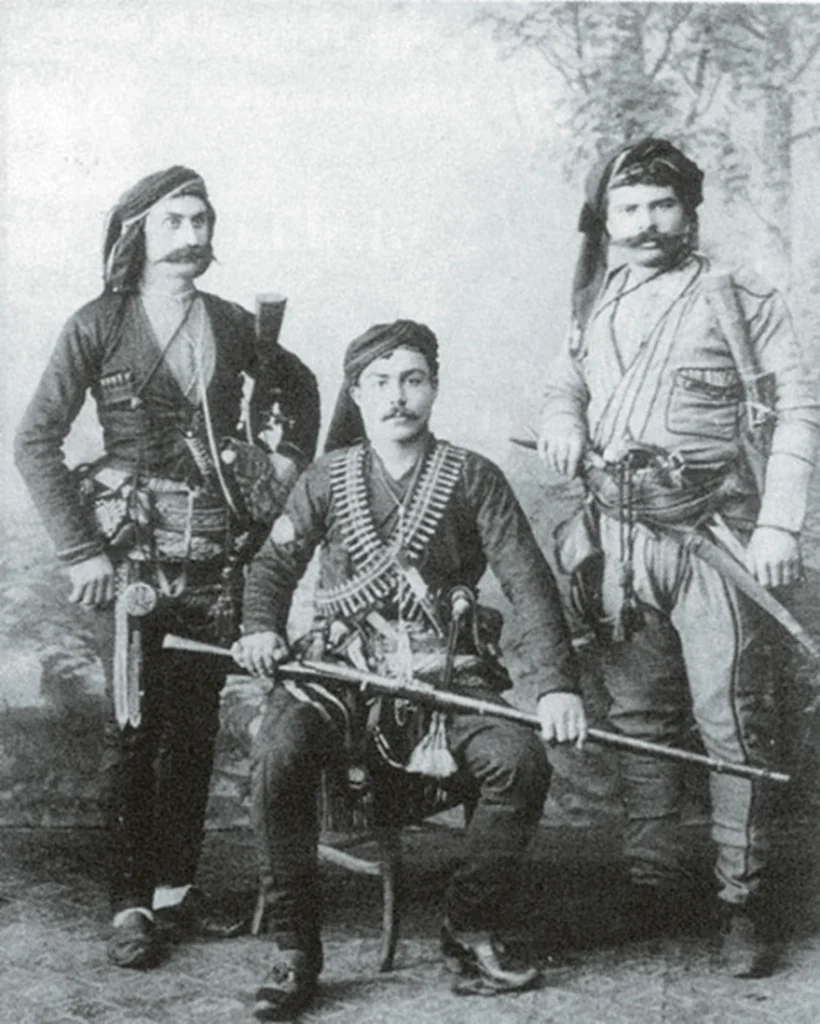
(Greek rebels of Pontus)
Operation “Extermination”
The final act of the Genocide, however, begins on 6/19 May 1919, when Mustafa Kemal, who had been actively involved with the Young Turks and had taken part in the First World War—participating in the Battle of Gallipoli, the Russian front, and Syria—landed in Samsun. Until then, he had been inspector of the eastern provinces. The Grand Vizier Damat Ferid Pasha informed the British High Commission that the Sultan had received information that Mustafa Kemal was going to the east to incite the population and requested that his departure be prevented. This order was not carried out…
Kemal arrived in Samsun accompanied by 21 trusted associates. He immediately began organizing scattered and small guerrilla groups. In a telegram to the commander of the 15th Corps in Erzurum, he noted: “The situation in Samsun is so alarming that it may have tragic consequences. Therefore, I am forced to remain here.” At the same time, he came into contact with the remnants of the Young Turks in the region. During his journey inland, an assassination attempt was made against him by a Pontic guerrilla named Kosmidis. He killed the advancing Turks, and Kemal escaped…
Meanwhile, the Sultan realized that it had been a mistake to send Kemal to Anatolia, as the Entente Powers would be displeased and the dissolution of the Ottoman Empire would be accelerated. Therefore, he recalled him by telegraph to Constantinople. Kemal went to the Erzurum telegraph office and sent an urgent telegram to the Sultan requesting to remain in Anatolia and lead the resistance. He waited all night for a response. It arrived at 6:00 a.m. and was brief but clear: “His Majesty orders you to return immediately to Constantinople.”
Kemal did not obey and replied that he would remain in Anatolia “until the nation attains its full independence.” The Sultan was taken aback, as he was not accustomed to such behavior! He removed Kemal from office, stripped him of his rank, and declared him and his supporters outlaws. Since, due to the Armistice of Mudros, the Sultan’s government had no right to maintain armed forces, he ordered the Muslim clergy to urge the faithful to take up arms against Kemal.
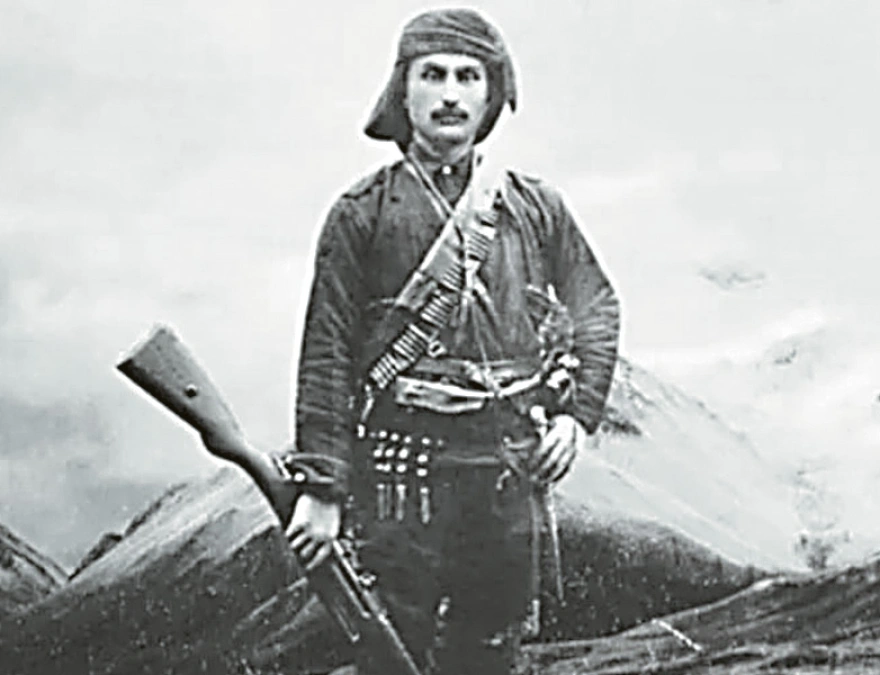
(Topal Osman)
The Lame Executioner
On May 28, 1919, Kemal met with Osman Feroudoun Zanteler (or Feritinoglu), better known as Topal (Lame) Osman, İsmail Ağa, Darkaoglu Bilal and Kara Ahmet in Havza. Topal Osman, who was born in Giresun in 1883 or 1884, had begun his actions against the Greeks of Pontus from 1914 as the leader of a band of irregulars of 250 men: 150 prisoners he had freed from Turkish prisons and 100 men from the underworld.
At this meeting, Kemal congratulated them for their actions up to that point. He promised that he would support them with officers and assigned them responsibilities for the extermination of the Greeks of Pontus and the rest of Asia Minor. Kemal went to Erzurum, where he convened a congress with representatives from Van, Erzurum, Bitlis, Sivas and Kerasunda. There, he was elected head of a committee of national salvation and used the phrase “Turkey for the Turks.” From September 4 to 11, 1919, he organized a new congress in Sivas.
Representatives of the Bolsheviks from Georgia and Azerbaijan also took part in it. Kemal had begun contacts with the Bolsheviks from June 1919. They supplied him with weapons and ammunition, while promising assistance in preventing the creation of Armenian, Pontic, and Kurdish states. At the same time, Dr. Fuat Sabit was sent to Moscow for on-site contacts with the Bolsheviks.
In Sivas, the decisions of Erzurum were confirmed and the Pontic issue was a central topic of discussion. It was initially decided to form a committee of Turks in Trebizond to prevent the establishment of a Greek Empire of Pontus.
According to Udo Steinbach, in Die Türkei im 20. Jahrhundert. Schwieriger Partner Europas (1986), the landing of Greek troops in Smyrna in May 1919 encouraged the Greeks of Pontus to proceed with the proclamation of the Republic of Pontus, which would consist of the regions of Trebizond, Samsun, Sinope and Amasya. This was declared on May 20, 1919 in Trebizond.
However, Kemal began gathering a significant number of troops. Soon he reached 16,000–17,000 men and by the end of 1920 up to 30,000 men. His first target was the Greeks. At the same time, Topal Osman, with the criminals he commanded, spread fear and terror among the Greeks of Pontus.
In July 1919, the president of the Permanent Congress in Batumi, Vasilis Ioannidis, drafted two letters asking Venizelos to intervene with the Allies so that they would take control of Pontus in order to prevent the massacre of the Greeks there. Unfortunately, Venizelos did not respond positively to this request, nor to a subsequent one sent by Pontic fighters in August 1919 requesting weapons, ammunition, blankets, medicines, bandages, etc. According to Ioannis Papafloratos, if the Greek government had sent aid, a second front would have been opened behind the Kemalist forces. Since August 1919, a ship carrying military supplies and destined for Samsun was in Piraeus. This ship never departed. However, Venizelos had sent his trusted colonel D. Katheniotis to Pontus to organize the fighters militarily and to compile a detailed report on the situation in the region.
Horrific details
It is impossible to publish all the crimes committed by the Turks against the Greeks of Pontus between 1919–1923. We will limit ourselves to some characteristic events. Topal Osman was receiving orders from the “Union and Progress” Committee at the time. Rıza Nur, then Minister of Health, met him and the following dialogue took place:
“R.N.: Chief, cleanse Pontus thoroughly!
T.O.: I am cleansing it well.
R.N.: In the Greek villages, do not leave one stone upon another.
T.O.: That is what I am doing, but I leave only a few good buildings and churches in case we need them.
R.N.: Even those destroy, and scatter their stones so no one can say a church ever stood there.
T.O.: Alright, I had not thought of that; I will do so.”
On 9/2/1920, British Sub-Lieutenant S. J. Perring, whose ship was anchored in Trebizond, wrote in a report about massacres of Greek civilians in the city and its surroundings by the men of Ali Riza. In the same month, Topal Osman’s men sent the inhabitants of Kotioura and Oinoe on death marches, while in Merzifounta they exterminated all the inhabitants. In Bafra, the Turks locked all women and children (about 6,000 people) inside churches. They set the churches on fire and most of them were burned alive. In Bafra and Atsam they executed 90% of the Greeks living there, numbering 25,000. The survivors were sent on death marches. In April 1920, Çetes led by the notorious criminal Karamistich, a life-sentence prisoner in Tokat prison who was released by order of Kemal, looted the village of Köseli in Tokat and, after raping the priest’s daughters, demanded ransom from the villagers so as not to execute them. Although the villagers gave all the money they had, the Turks locked most of them in a church, set it on fire, and burned them (30/4/1920).
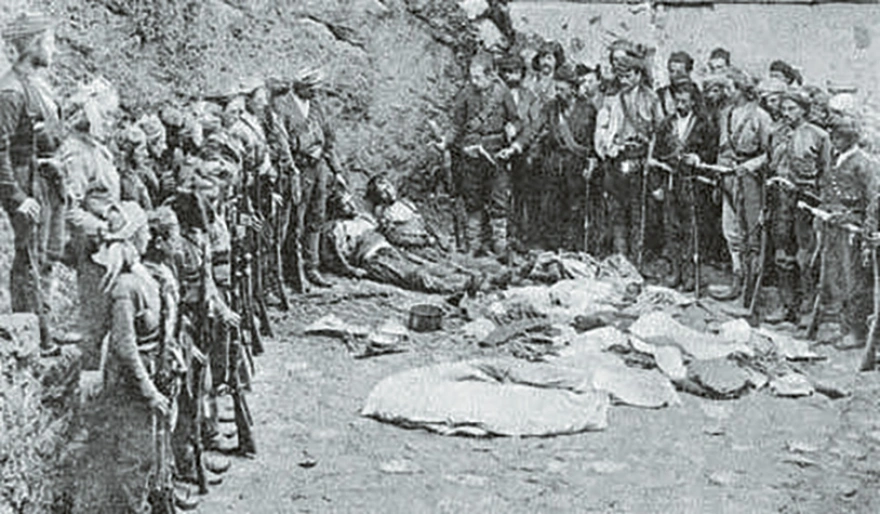
(Pontic rebels in front of their dead comrades)
At the port of Kerasous
The rest were massacred, while only 30 girls survived, who were sold as slaves to local aghas. In June 1920, the Greek ship “Filia” docked at the port of Kerasous due to a technical failure. A large number of armed Turks boarded the ship, arrested the 7 unarmed Greek sailors, and imprisoned them. After torturing them, they executed them. On October 7, 1920, the commander of the British Naval Squadron in the Black Sea sent a revealing report to his government. After stating that all Greeks of Nicaea were massacred, he continued: “Personally, I myself saw places where there were dozens of corpses. The victims’ hands and feet were cut off. They were tortured. First their limbs were cut off and then their heads. Among the bodies I clearly recognized women and children.”
Amasya was attacked by the Turks on 26/10/1920. A total of 1,140 men, young and old, were arrested, and another 180 from neighboring villages. Nine groups were organized for deportation to the east. Out of the 1,320 men, 280 over the age of 18 were selected as soldiers. The rest were led after an exhausting 46-kilometer march to the location of Kavak (Lefkes). There, while they were resting, they were ambushed and 701 of them were killed.
In Merzifounta, in 1903, the “Pontus” association was founded by graduates of the city’s Anatolia College. By 1913 it had 180 members. In February 1921, members of the association’s football team were arrested on the accusation that their jerseys (with white and blue stripes) resembled the Greek flag. Six months later, all of them were executed in Amasya.
Çetes attacked the Greek villages of Kountzilar, Martar, Ekiz Tepe, Karasein and Muamli.
The Çete leaders Arnaut Hussein and Mehmet Tiliroglu ordered the burning of the villages and the gathering of those who could not escape (at least 350 people) in the mansion of the local notable Savvas Tsigaloglou in Muamli. There, they set fire to the house and burned them alive. On 5/6/1921, 600 Greeks from villages in the Bafra region were led to one of these villages. They were locked in the church of Saint Charalambos and burned alive…
In the village of Alatsam in Bafra, an extraordinary event occurred that same day. Çetes under Duran Bey and the gendarmerie officer İhsan Bey entered the village and gathered its inhabitants in the square. From there, they took them to the Turhan forest. Just before executing them, a strong earthquake shook the ground. The Turks considered it a divine sign and canceled the execution. The would-be victims were taken to the prison of Elbistan (ancient Elpinikion).
(Mustafa Kemal Ataturk)
International reactions
Gradually, the atrocities of the Turks began to become known internationally and provoked strong reactions. On 20/11/1921, a large rally was organized by American senators and academics in New York. There were many eyewitnesses of the massacres in Pontus, such as Dr. Nosto, who described what they had witnessed in horrifying detail. That month alone, in the Samsun region, 58 villages were burned. The assembled participants approved a resolution addressed to the President of the United States, Warren G. Harding.
A few days earlier, the British MP T. O’Connor asked the Under-Secretary of State for Foreign Affairs, Hamshworth, what action his country would take regarding the hangings of Greeks and Armenians by the Turks, and how it would act if the French left Cilicia. Hamshworth replied that the Turkish press had acknowledged the hangings of Greeks and Armenians in Bafra and Amisos, and that he himself was aware of the killing of 950 Greeks and Armenians under barbaric conditions.
On 22/11/1921, approximately 40 Greek writers and artists issued a protest to European intellectuals. From it, it is learned that many infants died after being thrown against walls. In the United States, strong pro-Greek activity was developed by Senator King, who also referred to the assistance provided to Kemal by the USSR, which sought the annulment of the Treaty of Sèvres, while calling on the President of the United States to take, together with the Europeans, an initiative to refer the matter to the League of Nations.
Clemenceau was among the first to predict, as early as 1919, what would happen in Pontus, while Lloyd George referred to 500,000 victims. Churchill also made statements against the Turks. However, there were also at least three Turkish MPs who distanced themselves from the atrocities against the Greeks: “This violent population transfer is going to be, in the future, an indelible stain of shame on our forehead” (Hakki Hami Bey, MP for Sinop).
The number of victims
On 1/12/1922, ecclesiastical sources referred to 303,327 victims of the Turks in Pontus. The number accepted today by all is 353,000 dead. Hundreds of thousands of Pontic Greeks were deported. 815 prosperous communities were completely destroyed. 1,174 churches and 960 schools were looted and burned.
Dr. I. S. Papafloratos considers the number of 353,000 to be too low. Lloyd George himself, on 14/10/1922, stated that from 1914 until then the Turks had cold-bloodedly killed at least 500,000 men, women, and children. “The Turkish army has, in addition to the enthusiasm of victory, blood on its hands,” he concluded.
In 1994, the Greek Parliament, following a proposal by then-Prime Minister Andreas Papandreou, recognized the Genocide of the Pontic Greeks and voted to declare 19 May as a Day of Remembrance for the Genocide of the Greeks in the Pontic region of Asia Minor.
Ask me anything
Explore related questions




