





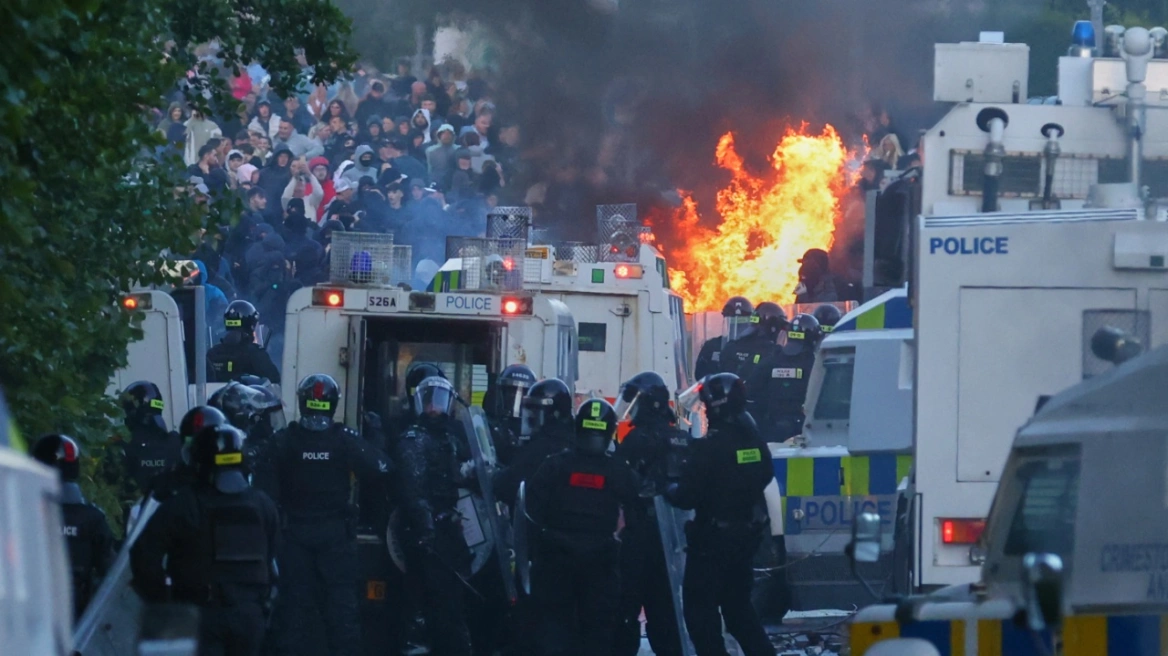
For a second consecutive day, Belfast and other areas of Northern Ireland were confronted with serious unrest that erupted following the attempted beheading of Stephen Ogilvie by an illegal immigrant from Sudan, resulting in at least 27 people leaving their homes and authorities investigating the “role social media” may have played in “inciting the violence”.
The disturbances that broke out after the attack have caused significant unrest in various parts of Northern Ireland.
Following the widespread riots on Tuesday, the House of Lords was informed that at least 27 people were forced to leave their homes.
The Police Service of Northern Ireland (PSNI) announced that it had identified photographs and social media posts circulating online that were falsely presented as images of the attack victim.
“These images are not connected to any of the individuals involved in the attempted murder,” the police stated.
Following the attempted beheading by 30-year-old Hadi Alodin, an illegal immigrant from Sudan was arrested and remanded in custody. He appeared before a court on Wednesday facing a charge of attempted murder.
British Prime Minister Keir Starmer, amid accusations that his policies encourage illegal immigration that leads to such attacks and the public reaction they provoke, limited his response to assuring that authorities would take action against those who incite violence and division, but referring exclusively to the protests against the consequences of his policies.
“We will crack down on anyone who fuels this division,” he said.
British authorities are now examining the role that social media may have played in the spread of the unrest.
Messages circulated via WhatsApp have also come under scrutiny. These messages allegedly called on men over the age of 18 to wear dark clothing and be prepared “to fight or be arrested.”
Ask me anything
Explore related questions




