





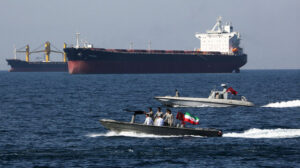
The United States and Iran appear close to reaching an agreement to end hostilities between them, according to statements by Iranian Foreign Minister Abbas Araghchi. The agreement under negotiation includes, among other provisions, the reopening of the Strait of Hormuz and the gradual lifting of the U.S. blockade against Iran. It could be signed within the coming days.
At the same time, the U.S. Central Command (CENTCOM) announced that it had shot down multiple Iranian “suicide drones” that, according to Washington, attempted to disrupt commercial shipping near the Strait of Hormuz. The command emphasized that maritime traffic continues uninterrupted and that the critical international trade route remains open.
Optimism in Tehran Over an Imminent Signing
Iran’s top diplomat told state television that the memorandum of understanding would be signed remotely once the final stages of negotiations are completed.
“As soon as the final stages of our negotiations are completed, this agreement will be signed and announced. The signing will initially take place digitally. Each party will sign remotely,” Abbas Araghchi said.
“This could happen within the next few days. I am optimistic,” he added.
According to the Iranian minister, the memorandum has both supporters and critics within Iran’s Supreme National Security Council, though no final collective decision has yet been made.
What the Agreement Includes
Araghchi stated that the first major provision of the agreement is the lifting of the U.S. naval blockade against Iran.
The deal also provides for the reopening of the Strait of Hormuz, which had effectively been closed following the outbreak of war. The conflict began on February 28, when American and Israeli forces launched attacks on Iranian targets, prompting Tehran to retaliate against Israel and U.S. allies in the Gulf.
The Strait of Hormuz is one of the world’s most important maritime routes, carrying roughly 20% of global oil and liquefied natural gas trade.
The Iranian foreign minister suggested that the management of the waterway would not fully return to its prewar status, saying that its operation “will no longer be the same as before.”
Since imposing restrictions on ship traffic, Tehran has required commercial vessels passing through the area to pay transit fees—a position rejected by the United States.
Renewed Tension in the Strait of Hormuz
Despite the positive atmosphere surrounding the negotiations, tensions in the region remain high.
On Friday night, CENTCOM announced that U.S. forces had shot down multiple Iranian suicide drones near the Strait of Hormuz. According to the American military, the drones were launched with the aim of interfering with commercial navigation.
“Our forces destroyed all of the drones in recent hours, while traffic through the Strait continues uninterrupted,” CENTCOM said.
It added that “the international trade corridor remains open for vessel transit.”
Disagreement Over the Nuclear Program
Despite progress in the talks, significant differences remain regarding Iran’s nuclear program.
According to U.S. officials, once the initial agreement is reached, a 60-day negotiation period will follow focusing on Tehran’s stockpiles of enriched uranium.
Washington is demanding the destruction and removal of enriched nuclear material from Iranian territory, while Tehran insists that the solution should be the dilution of those stockpiles within Iran itself.
“Our position has always been that the only way to manage enriched material stockpiles is to dilute them in Iran,” Araghchi said.
Diluting uranium to below 5% enrichment—far below the approximately 90% enrichment level required for a nuclear weapon—is considered a significant step toward reducing concerns about possible military applications.
Iran has consistently maintained that its nuclear program is exclusively peaceful, while Western countries have long expressed concern that it could be used to develop nuclear weapons.
Gradual Sanctions Relief and Economic Reintegration
American officials clarified that the agreement does not provide for immediate economic assistance to Iran or the release of frozen assets before the agreed commitments are implemented.
Instead, the plan envisions a gradual reintegration of Iran into the global economy through the progressive lifting of sanctions and the possible release of assets at a later stage.
Washington stresses that any economic benefits will depend entirely on the verifiable implementation of Tehran’s commitments.
Pakistan’s Role and the Hezbollah Issue
Pakistani Prime Minister Shehbaz Sharif stated that the memorandum of understanding has been agreed to in principle and now only requires finalization.
Araghchi also claimed that the agreement includes provisions for ending the conflict between Israel and Hezbollah in Lebanon. However, American sources have indicated that this issue is not part of the framework currently under negotiation.
Israel is not participating in the talks, which are aimed at extending the ceasefire and launching broader negotiations on key regional security issues.
Ask me anything
Explore related questions




