





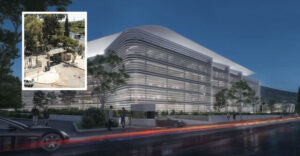
Driving along Mesogeion Avenue, directly opposite the “Sotiria” Hospital, one encounters one of the largest modern construction sites in Athens. Cranes, bulldozers, trucks, teams of engineers, technicians and workers have been operating at full pace for some time to ensure the timely completion of the new state-of-the-art bioclimatic building that will house the central services of Public Power Corporation (PPC).
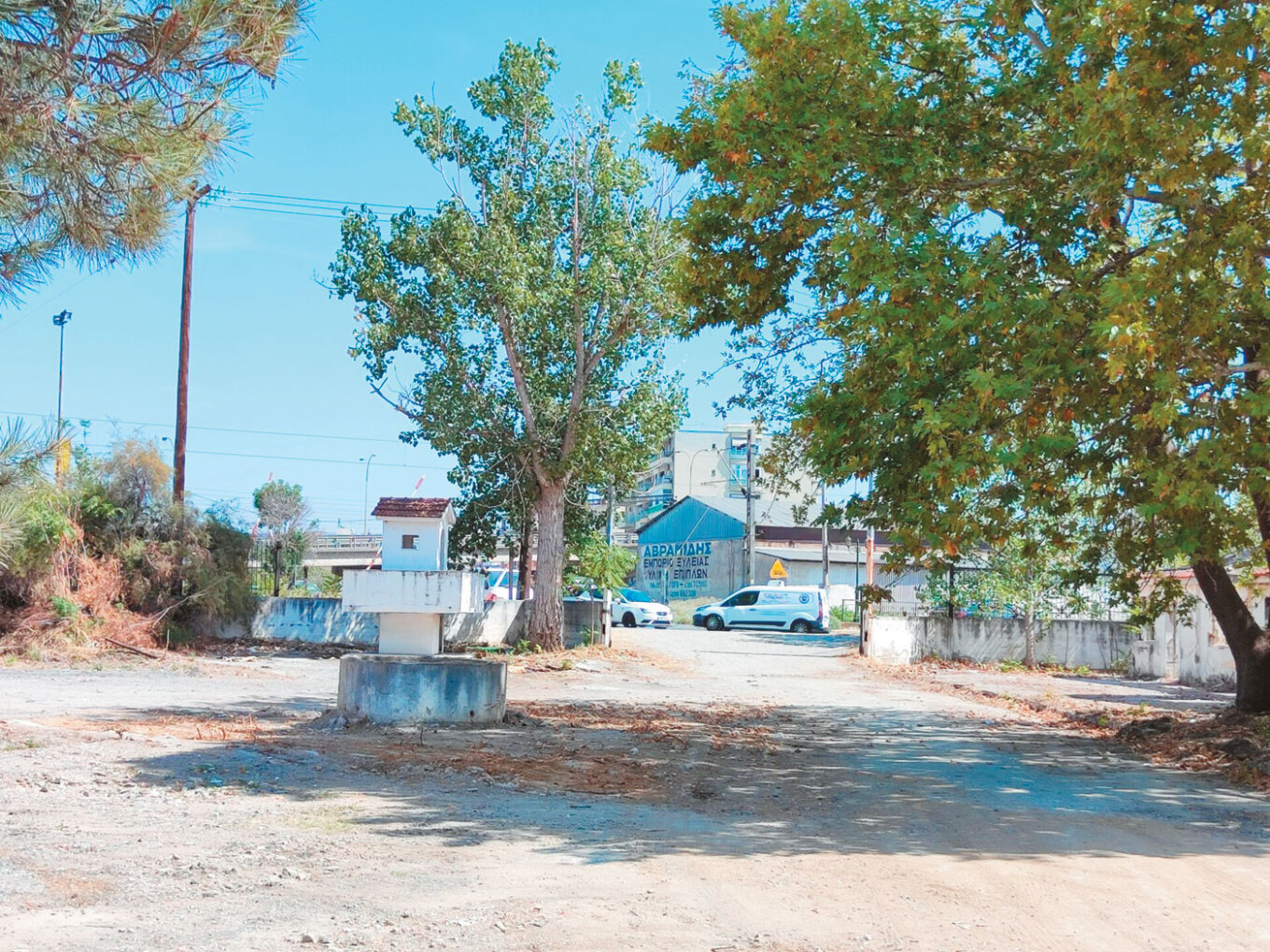
Until a few years ago, the same site, covering approximately 19 acres, was home to the Lieutenant Colonel Michael Plessa military camp. Passers-by were often surprised to discover that it was located only a very short distance from Papagos Camp, home to the Greek Ministry of National Defence and known as the Pentagon. Only one city block separated the two facilities, less than 150 metres apart. At 211 Mesogeion Avenue stood the former Plessa Camp, while at 227–231 Mesogeion Avenue stood the Pentagon.
“Ghost” camps
A phenomenon that appears to have been more the rule than the exception in the spatial organisation of military camps. Within a few hundred metres, two more are located.
The active Fakinou Camp is situated on Kanellopoulou Avenue, while at 96 Mesogeion Avenue lies the former Lieutenant Nikolaos Varytis Camp, where several buildings have now been converted into guest accommodation facilities. A few hundred metres further away, in Goudi, is the Nikolaos Zorbas Camp, which houses the Supreme Military Command of Support (ASDY).
In other words, within a radius of 1.5 kilometres from the Pentagon, there are four additional camps, two of which remain operational.
This is an impressive example — though certainly not a unique one — of the lack of serious planning in shaping the structure of the Greek Armed Forces, particularly regarding the spatial distribution of military camps.
There has been an excessive number of facilities, scattered locations, over-concentration in some areas and shortages in others, as well as the creation and continued operation of camps often driven by social rather than military considerations. Around these facilities, especially the larger camps, vital local economic and commercial ecosystems were developed.
Adding to the old familiar saying “every city has a stadium, every village has a gym”, Greece effectively created a model of “every city has a military camp(s), every village has a military unit”.
Greece has approximately 800 military camps, more than the United States has for its own Armed Forces, as the current Minister of National Defence, Nikos Dendias, frequently points out. The figure highlights the scale of the challenge facing him — and the (few determined) predecessors before him — in dealing with a long-standing and recurring problem of the Greek Armed Forces.
Among these military camps, dozens are already in ruins. They have been abandoned — some for years, many more recently — and are literally falling apart. The “magic word” for the political leadership of the Ministry of National Defence is “utilisation.”
In practice, this means their closure, followed by leasing with a change of use either to a private entity, or simply their transfer to a public or local government body for social activities and conversion into green spaces. Last year, Mr Dendias committed that 137 of these camps would be shut down in the first phase. Later, another 45 were added to the list.
Therefore, military camps — even as abandoned areas — will gradually become fewer, representing an important step towards rationalising the landscape. At the same time, their redevelopment opens up new prospects for many of them.
The body responsible for the utilisation of military properties is the Armed Forces Real Estate Utilisation Agency (FAAED), established last year. Its mission is to develop properties classified as no longer operationally necessary belonging to the National Defence Real Estate Fund (TAETHA) and other supervised entities of the Ministry of National Defence.
It is the direct successor of the Armed Forces Real Estate Utilisation Service (YPAAEPED), which was established in 2016 and made some initial moves towards leasing or granting inactive military camps to third parties. The intention now is to accelerate the process.
Social housing
The Plessa Camp is therefore not the only former military camp being “transformed”, changing ownership, use and function. It is also one of the most significant and costly construction projects in the country.
Projects of equal — and even greater — scale include the conversion of the former Gonou Camp in Thessaloniki into a logistics centre, the largest in Northern Greece, as well as the construction of the new Oncology Hospital at the former Karatasou Camp, also in Thessaloniki.
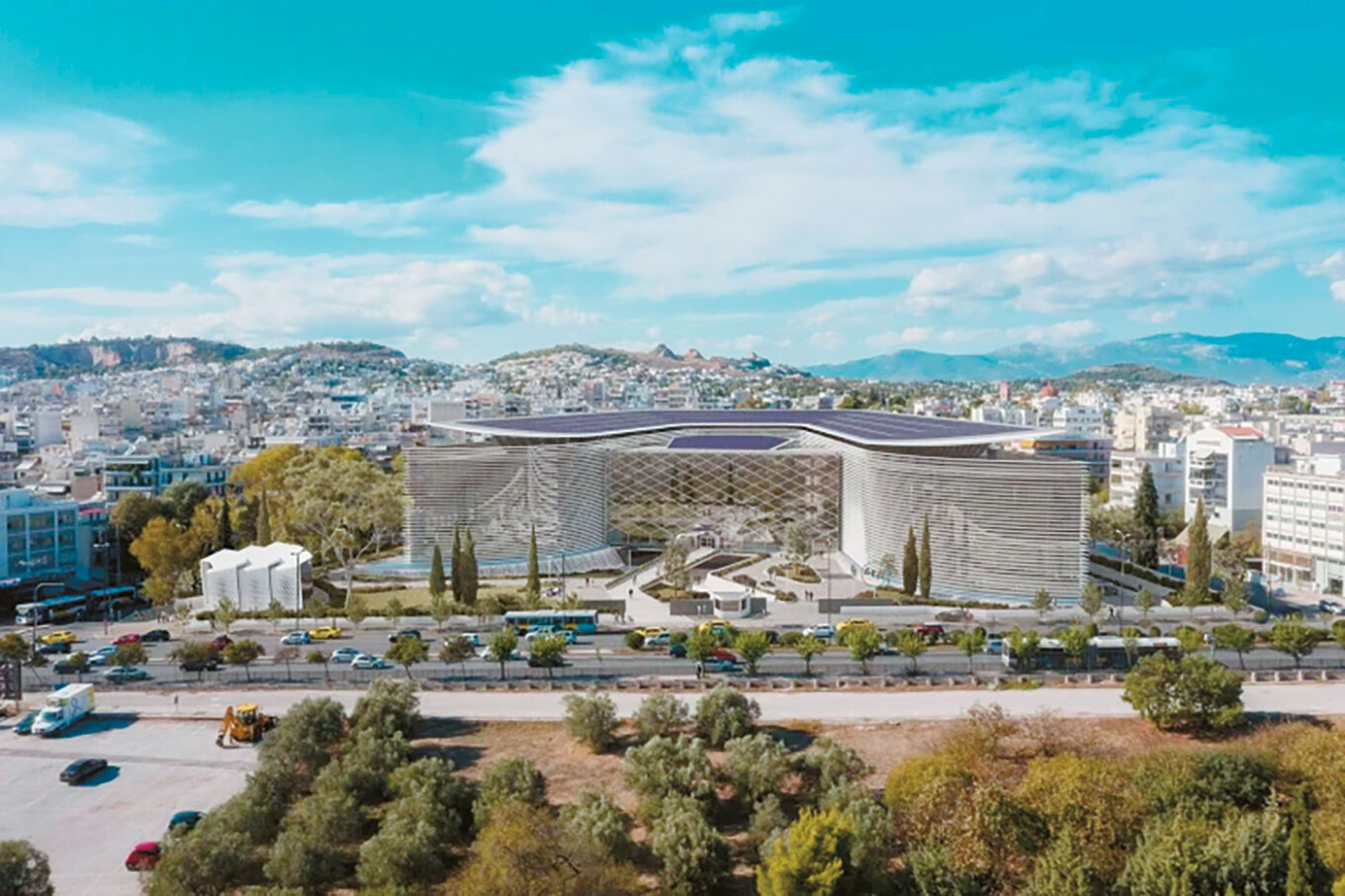
Plessa Camp – Mesogeion Avenue / Athens
New bioclimatic PPC building
Lease agreement worth €2.7 million for 50+10 years (€135–162 million)
Project budget: €176 million
The combined budgets of these three projects, along with the lease payments that will be made by the contractors to the state, exceed €1 billion.
In addition, in Serres, the former Kolokotronis Camp has already been transformed into a Business Park, hosting, among other things, the SERREXPO exhibition, while the former Liosi Camp in Ano Liosia has been converted by a private company into an entertainment venue centred around water slides.
Of course, cases involving similarly large-scale projects are not numerous. Therefore, in order to accelerate the redevelopment of inactive Ministry of National Defence camps, beyond the business and investment dimension — even for smaller-scale projects — there is also the possibility of addressing social needs.
Options include granting land to municipalities for conversion into green spaces, cultural and sports facilities, as well as recreational areas benefiting local communities. Alternatively, in areas suitable for development, the sites could be used for military or social housing, creating a significant social impact in every case.
Within this framework, just last Tuesday, an amendment passed by Parliament finalised the terms of cooperation between the Ministries of National Defence and Social Cohesion for the construction of social housing on TAETHA properties.
The total cost will amount to €70 million, funded through unused allocations from the “My Home” housing programme.
The selected military camps are:
- Papastathis Camp in Acharnes
- Ziakas Camp in Eleftherio-Kordelio, Thessaloniki
- Manousogiannakis Camp in Patras.
It is recalled that from the podium of last year’s Thessaloniki International Fair, Prime Minister Kyriakos Mitsotakis announced the immediate launch of a programme for the construction, in the first phase, of approximately 2,000 social housing units on former military camps.
Plessa Camp – PPC
The spatial arrangement of Public Power Corporation (PPC)’s offices had been a persistent “headache” for its administrations since 2000. Its central headquarters on Chalkokondyli Street had exceeded the limits of the block and expanded into neighbouring buildings. Over the years, there had been various ideas and discussions regarding large properties, particularly along the Kifissos Avenue axis, but none ever materialised. The solution was set in motion under the administration of Stassis.
In February 2020, PPC won the Ministry of National Defence’s tender for the prime property on Mesogeion Avenue, with a total area of 18,643 sq m, where the Plessa Camp had been located. It was an entire city block, surrounded by Grigoriou Xenopoulou, Ernestou Embar, K. Ourani streets and Mesogeion Avenue.
The property is located very close to the Katehaki and Ethniki Amyna metro stations, along the Mesogeion Avenue axis, while also being near Kifisias and Katehaki avenues, extending towards the Hymettus Ring Road and Attiki Odos motorway.
The design involves the creation of 29,900 sq m of main-use spaces, with the building complex reaching a maximum height of 19.5 metres and having a capacity for 1,800 people.
The project also includes the construction of three underground levels, with a total surface area of approximately 29,000 sq m, providing 607 parking spaces.
The demolition of the 22 existing buildings, covering an area of 7,582 sq m, within the former camp has already been completed.
The initial works, including demolition, excavation and retaining structures, were undertaken by TERNA, the construction subsidiary of the GEK TERNA Group, which, according to information, has also taken over the wider construction project.
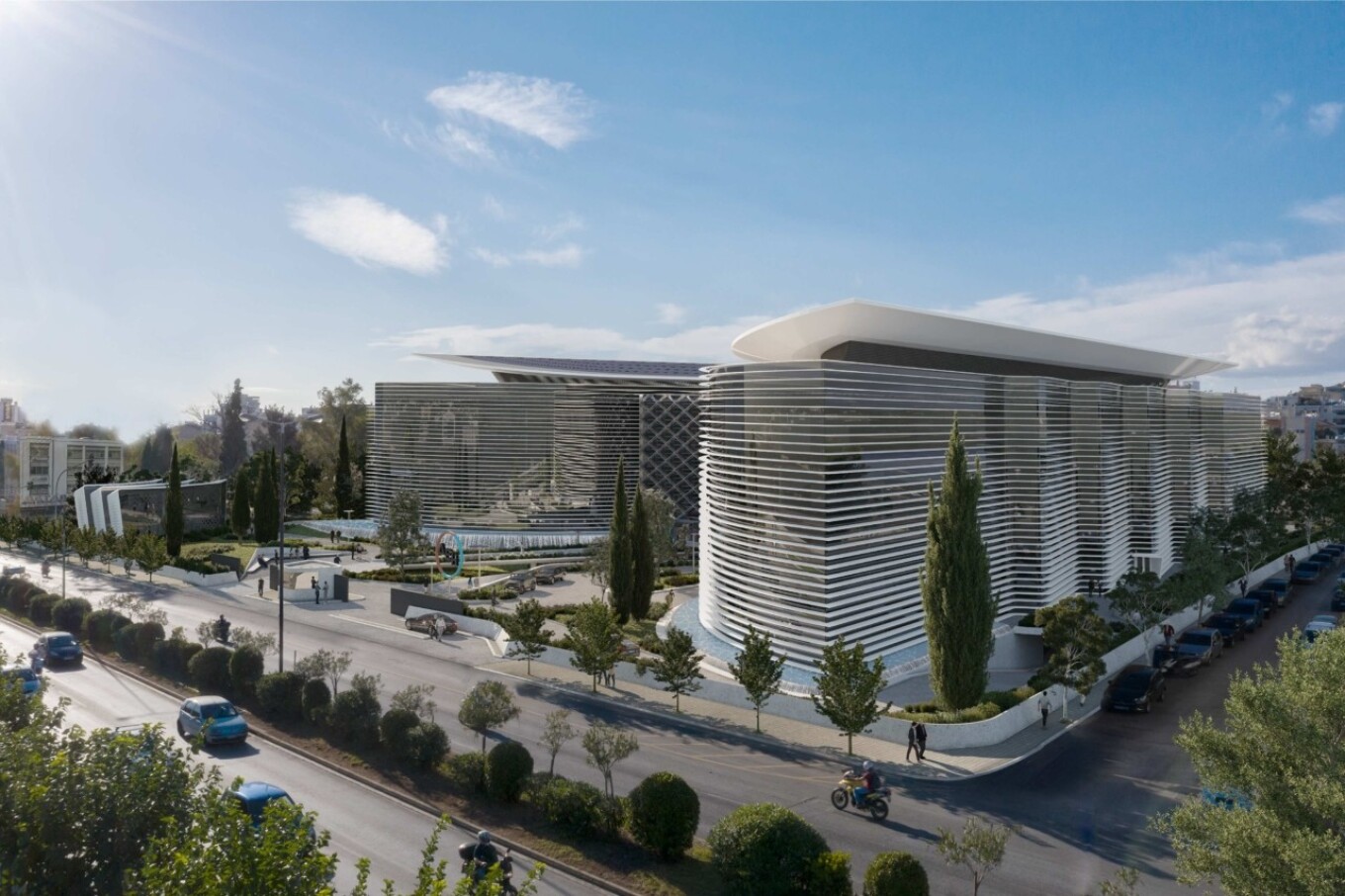
The administration building will consist of three underground levels, a ground floor and four floors, including executive offices, open-plan offices, an auditorium/media room, meeting rooms and other facilities.
As part of its bioclimatic design, with a focus on achieving LEED and WELL Platinum certification, specialised energy-saving technologies will be implemented.
A separate building will house PPC’s commercial exhibition and customer showcase space.
The project is expected to be delivered by 2028.
However, just a few days ago, some fundamental elements of the project changed for the better, indicating that it is evolving into one of the most significant contemporary urban regeneration interventions in the capital.
PPC reached an agreement with Dimand — which had participated in the 2020 tender but came second — to establish a joint company, Powerhub Properties S.A., owned 50%-50% by both parties, which will undertake the redevelopment and exploitation of the property instead of PPC alone.
The lease agreement will run for 50+10 years, with an annual rent of €2.7 million.
The construction budget has increased to €176 million, from the approximately €110 million initially estimated in 2024.
The camp owes its name to Lieutenant Colonel of Infantry Michael Plessas, who participated in numerous battles during the Greco-Italian and Greco-German Wars of 1940–1941. He was fatally wounded during the capture of the Tambourio Heights in Pindos.
The operation of the camp began in 1955. In its final period, it housed the Hellenic Army Research and Technology Centre (KETES), whose mission was to develop applied and technological research for the Army, in cooperation with Greek and international universities and research centres.
The first discussions regarding its transfer began in the early 2000s. The first potential claimant was the Ministry of Education, which aimed to construct the new National Library there. However, the site was insufficient, as the project required an area of at least 50 acres, and the proposal was eventually abandoned.
Gonou – mega logistics centre
One of the most important investment opportunities for Thessaloniki and the wider region of Northern Greece is the redevelopment of the former Gonou Camp.
The site covers approximately 672 acres on the western side of the city, in the Municipality of Delta.
The project is considered of national importance, as it involves the creation of a mega logistics centre that will strengthen Thessaloniki’s role as a leading transport and supply-chain hub in the Balkans and across Southeast Europe.
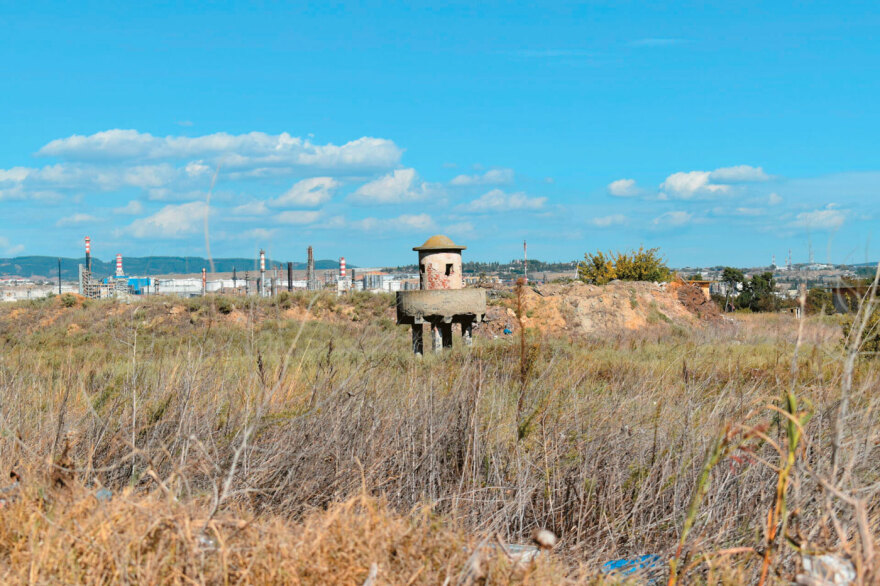
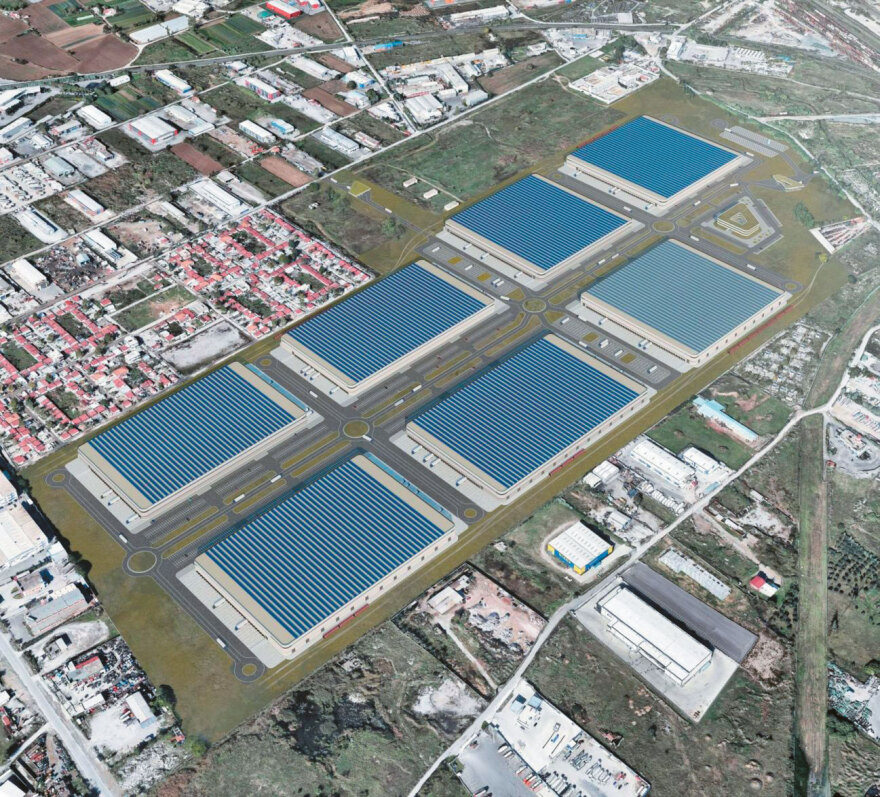
Gonou Camp – Municipality of Delta, Thessaloniki
30-year concession for the creation of a logistics centre
Investment value: €260 million
The property is located at a strategic point, close to the Port of Thessaloniki. It has a railway connection to the OSE Freight Station and the Port of Thessaloniki (OLTH), although the rail link requires upgrading. It is also located near the PATHE motorway and the main road corridors connecting Greece with the Balkans.
The tender is being conducted by the Strategic Contracts Unit (PPF). It is currently underway, but the market is eagerly awaiting the start of the investment, as the project has been in planning for years, with procedures only accelerating recently. The business community considers that this project, combined with the construction of OLTH’s 6th pier, could become a game changer for the market, radically upgrading Thessaloniki’s position in international supply chain corridors, significantly reducing transport times, acting as a catalyst for new business facilities, hundreds of millions of euros in investments and the creation of thousands of jobs, while developing a new high-value-added production ecosystem.
The total initial investment is estimated at approximately €260 million. The preferred investor will undertake the financing, development and operation of the logistics park for at least 30 years.
The bidders are the consortium Goldair Cargo – Aktor Group and the Thessaloniki Port Authority (OLTH), owned by interests linked to Ivan Savvidis, which controls the other side of the freight corridor — the port itself. In the first phase, Noval Property and the Trade Logistics–Interkat consortium also participated, but were eliminated before the final stage. A remaining challenge is the presence of a Roma settlement within the property.
The Gonou Camp was named after Gonos (Georgios) Giotas, a prominent commander of the Macedonian Struggle, who was killed on February 12, 1911, during a clash with a Turkish detachment following a betrayal. His actions became legendary, particularly in the Giannitsa Marshes, where he was given the nicknames “Stoicheio” (Spectre) and “Therio tou Valtou” (Beast of the Marsh).
Originally, the camp was used as a military storage facility. As several dangerous ammunition deposits were scattered throughout the site, the area was cleared by the Greek Army’s Land Mine Clearance Battalion.
Karatasou – New Cancer Hospital
The abandoned former Karatasou (or Karatasiou) Camp, located in the northwestern part of Thessaloniki — where a fire also broke out in the early hours of last Wednesday but was brought under control before spreading — has been selected for the construction of the New Theagenio Hospital.
The new facility will be the city’s modern cancer hospital, built on a section of approximately 150 acres of the camp’s total 661-acre area.
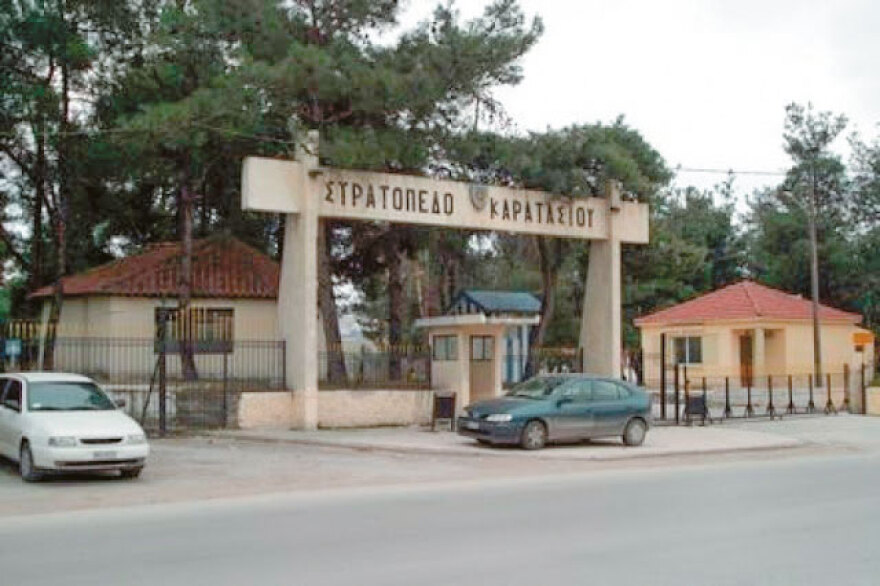
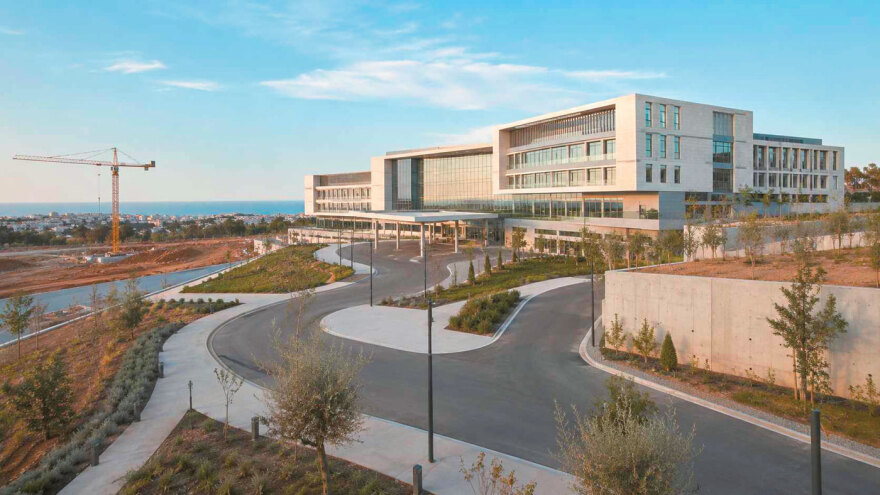
Karatasou Camp – Municipality of Pavlos Melas, Thessaloniki
30-year concession for the construction of the new Theagenio Hospital
Budget: €434 million
The project is a personal commitment of Prime Minister Kyriakos Mitsotakis. During a visit to the site in the Municipality of Pavlos Melas, he stated:
“It will be the best hospital in Greece, and I dare say in the Balkans as well, based on the way we are designing it.”
According to the plans, in addition to medical, surgical and diagnostic units, the hospital will include facilities for psychological support for patients, rehabilitation services, palliative care for terminal cases, and accommodation for patient companions. It will consist of buildings with a total area of 55,000 square metres, with a capacity of 425 beds, compared with the current Theagenio’s 330 beds.
The project is progressing. In October, the temporary contractor is expected to be selected for the implementation of the largest Public-Private Partnership (PPP) project in Greece’s healthcare sector, worth €434.68 million including VAT.
The bidders are AVAX, GEK TERNA, and the Aktor–Metlen consortium. During the first phase, EKTER also participated but was excluded, while Plenary withdrew from the process. Construction is expected to take five years, followed by 25 years of maintenance and operational support by the private contractor.
The earliest indications of military facilities at the site date back to the presence of the Allied Entente forces between 1915 and 1917. Later, the area passed into the hands of the Greek Army and operated as a military camp until 2003.
After the army’s withdrawal, numerous debates and tensions emerged over its future. The local community called for the area to be transformed into green space and used for sports and other low-impact activities, while accepting — and this was the key point — the construction of the New Theagenio Hospital on part of the site.
The camp was named after Dimitrios (or Tsamis) Karatasos, a commander of the 1821 Greek War of Independence who operated in the Naousa region and later in Central Greece, eventually becoming an aide-de-camp to King Otto.
Kolokotroni, Serres – SEREXPO
The vast 289-acre Kolokotroni Camp, located in an extremely strategic position within the urban fabric of the city of Serres, went from being a key pillar of the region’s military infrastructure to, by the late 2000s, housing only the Military Store.
After a decade-long process, the site was granted in 2021 for 20+10 years to the Serres Chamber of Commerce for the creation of the Kolokotroni Business Park, a permanent Business and Exhibition Centre. Because the project had been a lifelong ambition of the then president of the Chamber, Christos Megklas, his unexpected death in July 2021 led to the renaming of the site as the SEREXPO Christos Megklas Business Park.
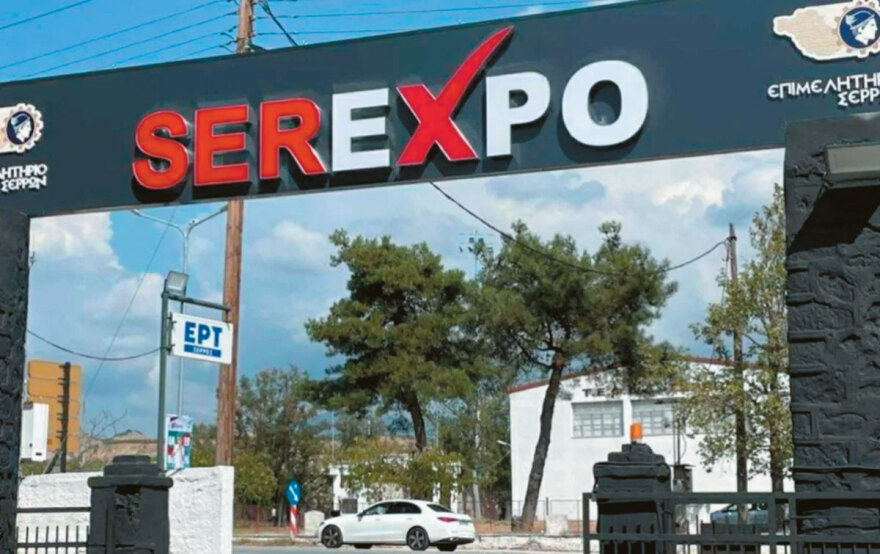
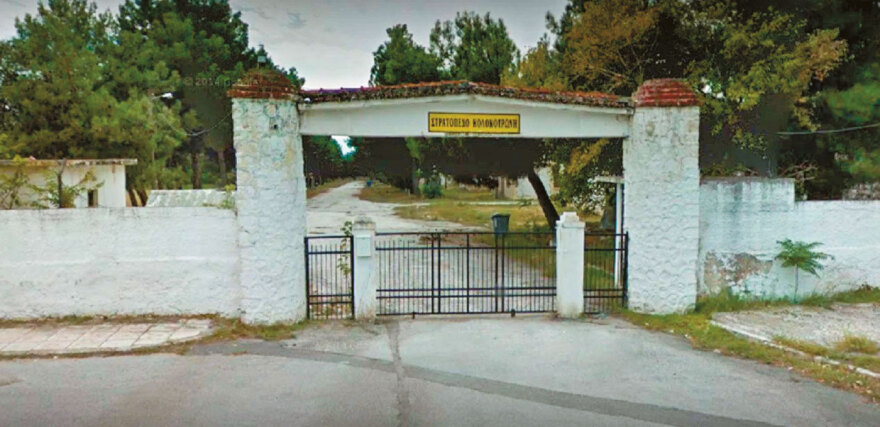
Conversion into Business Park and SEREXPO Exhibition Centre (since 2021)
The SEREXPO exhibition has been organised by the Serres Chamber of Commerce since 2015. Since 2021, it has been hosted at the former Kolokotroni Camp, attracting an average of 160 exhibitors and more than 60,000 visitors annually.
This year, the exhibition will take place from September 16–20, with Bulgaria as the honoured country. SEREXPO showcases the productive identity of Serres, highlighting local agri-food products as well as the region’s tourism potential, promoting destinations such as Roupel Fort, the Alistrati Cave, the Serres Motor Speedway, Lake Kerkini, and opportunities for religious tourism.
At the same time, upgrading works are underway at the exhibition facilities themselves. Five buildings are being renovated, each measuring approximately 1,000 square metres. Two will operate as exhibition spaces for sector-specific fairs throughout the year, one will become a conference centre, one will host start-ups and serve as an innovation hub, and one will be used as office space for organisations.
Liosi, Ano Liosia
The inactive Liosi Camp, in Ano Liosia, covering approximately 90 acres, was among the first military camps to be granted for private use.
This followed an unsuccessful attempt to use it as a temporary migrant accommodation centre during 2015–2016. In April 2017, the camp was offered by the Armed Forces Real Estate Utilisation Service (YPAAEP) through a competitive bidding process for a long-term lease.
It was awarded to Parko Nerou S.A. with a monthly rent of €3,400 for 25+25 years. The minimum financial benefit for the National Defence Real Estate Fund (TETHA) amounts to €1,152,322.54.
Since June 17, 2020, the Waterfun/Waterpark has operated on the site of the former camp, attracting large numbers of summer visitors who enjoy its water slides, waterfalls, large swimming pool and other facilities.
The former camp was named after Lieutenant General Efstathios Liosis, who came from the area and fought in the Balkan Wars, all major battles of the Asia Minor Campaign, and later in the Greco-German War in the Argos Orestiko region.
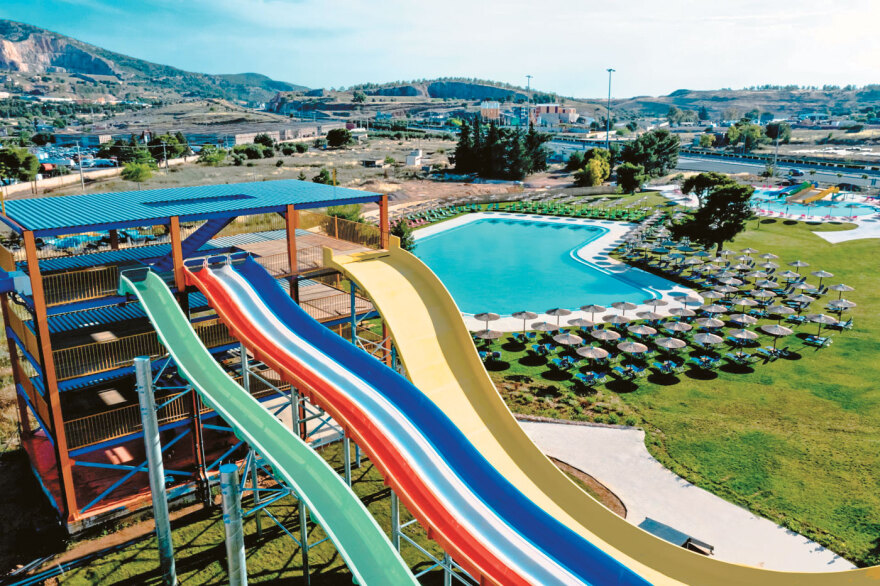
Conversion into Waterfunpark by Parko Nerou (since 2020)
The eight camps changing use
At the same time, a number of former military camps across Greece are either already being utilised or have plans underway for conversion to different purposes by local authorities. Among the most notable are:
Creation of the Diachronic Museum of Trikala
The Ministry of Culture has launched plans for the establishment of the Diachronic Museum of Trikala in a building located within the inactive Poulios Camp, situated on the slopes of Prophet Elias Hill.
The four-storey building previously housed the Headquarters and Support Brigade (TAXYP) of the First Army Corps.
Structural, energy and functional upgrades have already progressed. The first floor, covering 500 square metres, will host the museum’s permanent archaeological exhibition.
New Courthouse in the former Athanasios Tsaltakis Camp, Lamia
The construction of the new Lamia Courthouse is planned within the former Athanasios Tsaltakis Camp, located inside the city’s urban area.
Since 2010, the 195.6-acre site has hosted Tsaltakis Park, offering recreational, cultural, educational and sports facilities.
The courthouse will be developed through a Public-Private Partnership (PPP) on approximately 15 acres of the former camp, where removal works for potentially hazardous materials have already been completed.
Ioannis Pilikas Camp – Municipality of Chalkida
The concession of Ioannis Pilikas Camp to the Municipality of Chalkida was renewed two months ago for another four years, allowing the continued operation of the Special Vocational Education and Training Workshops (EEEKK) of Chalkida within the site.
Creation of an Audiovisual Industry Hub in Andrικάki Camp, Drama
Plans are underway for the creation of an Audiovisual Industry Centre at the former Andrikaki Camp, covering 150 acres, in Drama.
A relevant agreement for the preparation of all necessary studies was signed in April 2025 by Culture Minister Lina Mendoni and Kalissa Apostolidou, representative of REIKAP S.A.
Under the agreement, the company undertook the restoration studies of four buildings within the camp, as well as the redevelopment of their surrounding areas, creating a modern audiovisual hub that will also host the Drama International Short Film Festival.
The study was approved last December and the project is now fully underway.
Prison facility at the former Lieutenant Thomas Triantis Camp, Filiates, Thesprotia
Plans are also underway for the construction of a prison facility at the former Lieutenant Thomas Triantis Camp in Filiates, Thesprotia.
The site previously housed the 628 Infantry Battalion and covers 17.65 acres.
At the end of May, the Municipality of Filiates approved the draft programme agreement with the General Secretariat for Crime Policy of the Ministry of Citizen Protection, paving the way for the first essential soil and technical studies at the former military camp.
Ask me anything
Explore related questions




