





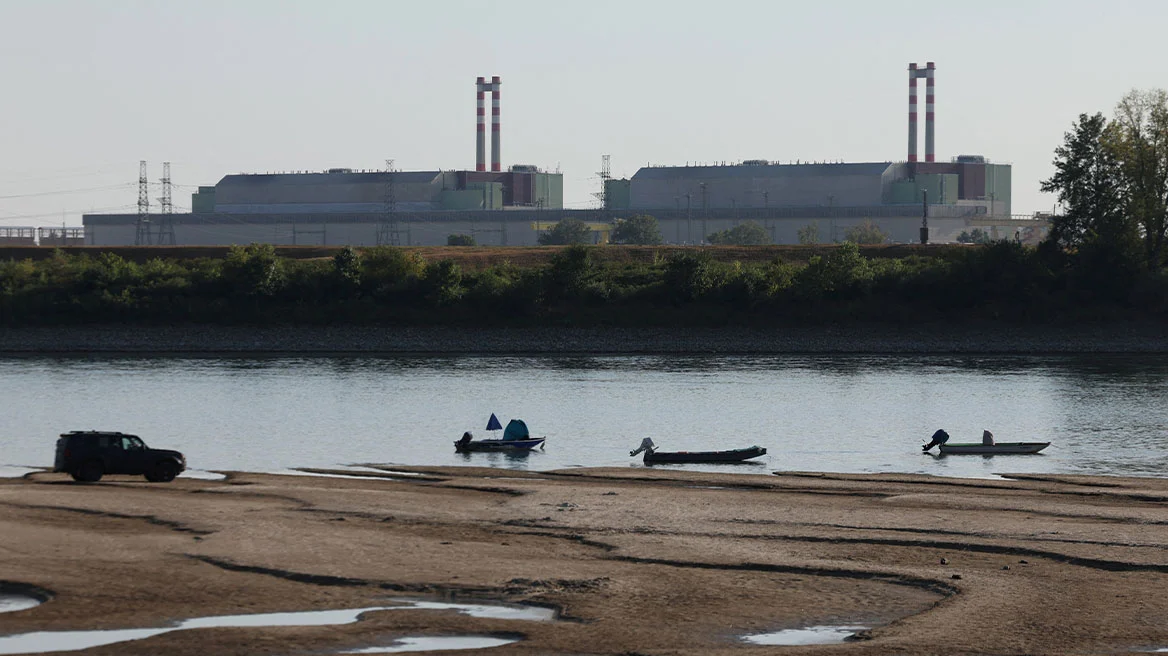
Prolonged drought and extreme temperatures across much of Central and Eastern Europe have caused an unprecedented drop in the water levels of the continent’s major rivers, triggering a cascading crisis affecting energy production, transportation, tourism, and the wider economy. The Danube and the Rhine have fallen to historic lows, and several countries are now openly warning of a potential energy crisis.
For the first time, Hungary and Romania have been forced to take nuclear reactors offline because the Danube’s water level—used to cool the plants—has dropped below the threshold required for safe operation.
In Hungary, the 44-year-old Paks Nuclear Power Plant, which generates nearly 50% of the country’s electricity, is already operating at drastically reduced capacity, at around 10% of its normal output. Prime Minister Péter Magyar said on Monday that the plant would continue operating for at least two more days, but warned that it could be shut down entirely in the coming days, with the outage potentially lasting for weeks, as no rainfall is forecast to restore river levels.
“We may soon be facing an energy crisis,” Magyar said, urging households and businesses to reduce electricity consumption.
Energy-saving measures and blackout fears
The Hungarian government has already called on citizens to cut electricity use during peak hours by limiting air-conditioning and avoiding charging electric vehicles. Carmakers and battery manufacturers have also been instructed to reduce their water and energy consumption. The crisis is expected to cost Hungary between 100 billion and 200 billion forints (approximately €275 million to €550 million) because of the increased cost of importing electricity.
At the same time, the country’s largest natural gas-fired power station is also experiencing operational problems, placing additional strain on the electricity grid.
In Romania, authorities have already shut down one reactor at the Cernavodă Nuclear Power Plant for safety reasons and have announced plans to take a second reactor offline. Acting Prime Minister Ilie Bolojan declared an energy alert and likewise urged citizens to voluntarily reduce electricity consumption during the afternoon and evening peak hours.
In an effort to increase water flow to the nuclear plant, the Romanian Navy carried out controlled underwater explosions on rocky sections of the Danube to alter the river’s course and improve water supply.
Bolojan also announced that the Dacia car plants, owned by the Renault Group, as well as Ford’s factories, have temporarily suspended production until August 19, voluntarily reducing electricity consumption by around 200 megawatts.
The Danube reveals shipwrecks, bombs… and a mammoth
The dramatic fall in the Danube’s water level has exposed objects that had remained hidden for decades—or even thousands of years.
In the northern Bulgarian village of Ryahovo, a local resident discovered the bones of a giant Ice Age mammoth on the dried riverbed. The remains are now being examined by experts from the Regional History Museum in Ruse.
In Budapest, authorities were forced to close Margaret Bridge after the receding river exposed a World War II aerial bomb near its foundations.
River traffic grinds to a halt
The low water levels have also severely disrupted transport along the Danube.
In Budapest, the river level fell to just 10 centimeters, breaking the previous record low of 33 centimeters, set in 2018. River cruise ships are now being forced to dock outside the city, and many tourist routes have been cancelled. Freight transport has nearly ground to a halt, as cargo vessels can no longer sail fully loaded and are facing delays of several hours.
At the Vidin–Calafat Bridge on the Bulgaria-Romania border, fishermen and boat owners say they have been left without work because their vessels are literally stranded on dry land.
“It has never dried up this much before. We can now walk all the way to Romania,” fisherman Rosen Dobrev told The Guardian.
A similar situation is unfolding in Serbia, where hundreds of small boats and dozens of barges have been immobilized near Novi Sad. River tourism operators say the summer season has effectively been lost.
Rhine also falls to historic lows
The crisis is not confined to the Danube.
In Germany, the Rhine’s water level at Cologne has dropped below the record lows of 2018, forcing cargo ships to carry only about 20% of their normal loads. The Rhine is one of Europe’s most important transport arteries for grain, ores, coal, petroleum products, and fuels destined for the continent’s largest economy. Businesses are warning of significant delays and rising costs across supply chains.
In the Netherlands, where the Rhine enters the country, water levels have fallen to the lowest ever recorded at that location. The country has been under an official drought emergency since mid-July, with restrictions on water use, particularly in agriculture.
Impact spreads across Europe
The drought is now affecting numerous European countries.
In Italy, the Po River basin is experiencing severe water shortages, threatening rice cultivation and drinking water supplies across the country’s northern regions.
In Serbia, low Danube water levels have reduced output at the country’s largest hydroelectric power plant to around 20% of its capacity, prompting Prime Minister Đuro Macut to urge citizens to limit the use of energy-intensive appliances such as air conditioners.
Meanwhile, weather forecasts offer little cause for optimism. No significant rainfall is expected in the coming days, while temperatures across large parts of Central and Eastern Europe are forecast to exceed 38°C (100.4°F), maintaining pressure on rivers, power grids, and the continent’s economic activity.
Ask me anything
Explore related questions




