





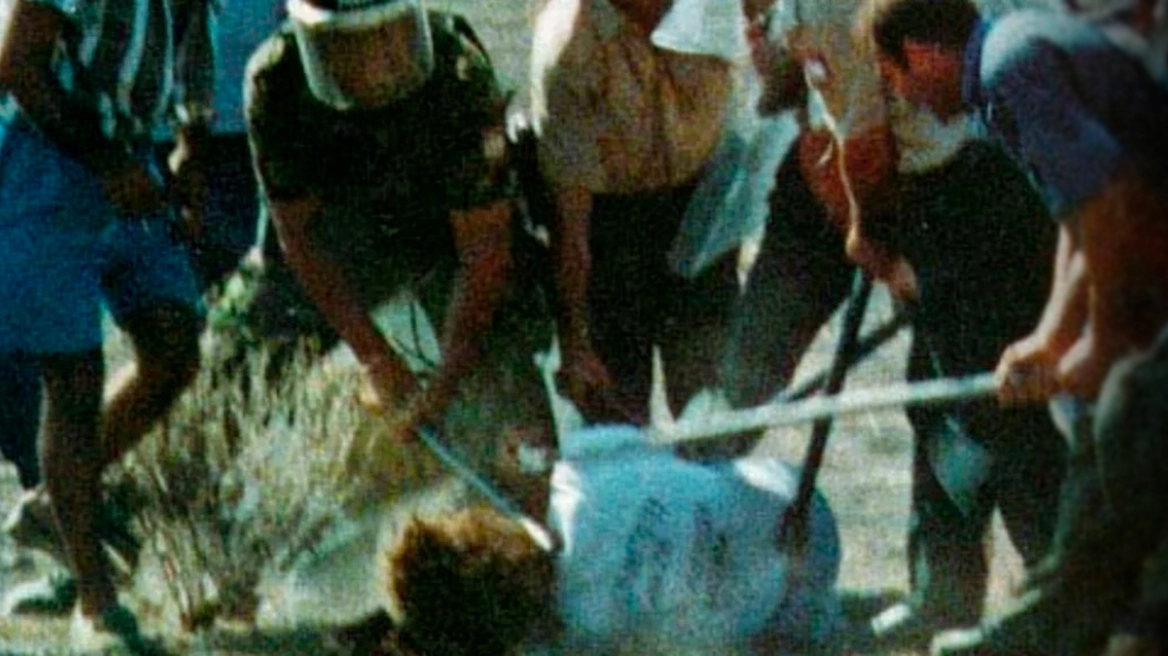
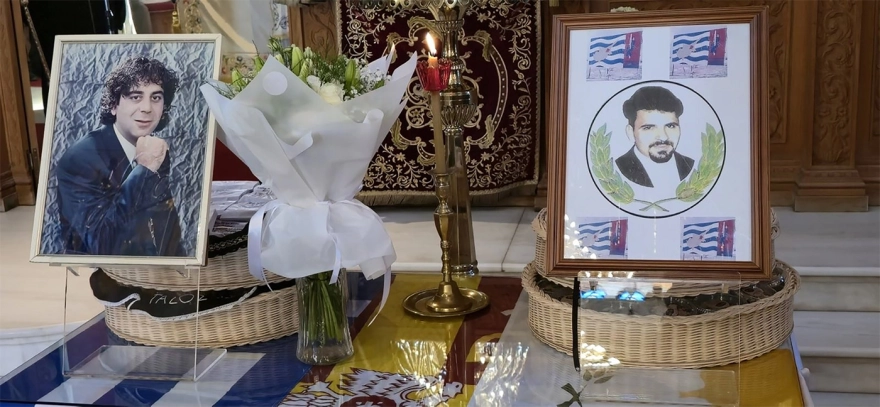
Today marks 30 years since Tasos Isaac was lynched at the Deryneia checkpoint in Cyprus, just a few meters from the occupied city of Famagusta.
Three days later came the cold-blooded killing of Solomos Solomou. Thirteen Cypriot arrest warrants and ten international Interpol notices remain unenforced. Turkey did not hide the killers and allowed them to continue their careers.
There are crimes that require years of investigation before those responsible are identified. The murders of Tasos Isaac and Solomos Solomou, however, do not belong in that category.
They Were Killed in Front of the Cameras
Everything that happened in Deryneia in August 1996 was recorded frame by frame.
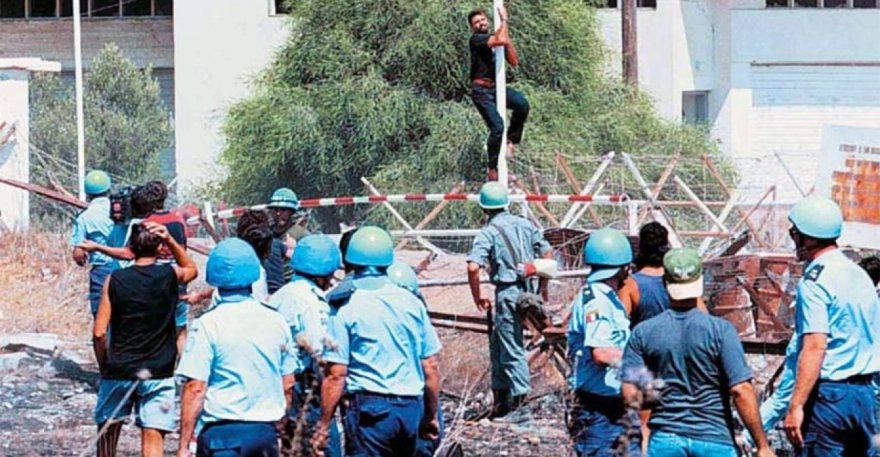
Television cameras, photographers, members of the United Nations Peacekeeping Force, police officers, and hundreds of witnesses watched as an organized mob lynched Tasos Isaac, and, three days later, as armed men shot Solomos Solomou while he was climbing the flagpole bearing the Turkish flag.
The footage was examined by experts, witnesses gave statements, and the perpetrators were identified.
Cypriot arrest warrants were issued, and Interpol circulated international notices.
The European Court of Human Rights (ECHR) unanimously ruled that both young men were killed by agents of the Turkish state or with their participation and acquiescence.
At that point, the course of justice ended and political protection began.
None of those involved ever stood trial.
Some disappeared from public view, while others continued their lives as usual, were promoted, retired, or entered politics.
They became “members of parliament,” “ministers,” and “deputy prime ministers” in the self-declared administration of the occupied territory.
One suspect was arrested in Kyrgyzstan, but was never extradited to Cyprus.
Another was arrested in Istanbul for smuggling mobile phones, yet the international notice concerning Solomou’s murder appeared to cause little concern for the Turkish authorities.
The case did not stall because evidence was lacking.
It stalled because Ankara decided the evidence would carry no consequences.
From the Wall of Shame to the Shame of the Barbed Wire
The pan-European motorcycle rally began on August 2, 1996, at the Brandenburg Gate in Berlin, with the occupied city of Kyrenia as its destination.
The choice of starting point was symbolic.
The Berlin Wall had fallen, and Europe was celebrating the end of division and the Cold War.
In Cyprus, however, another barrier remained standing—barbed wire, military outposts, minefields, and tens of thousands of Turkish troops.
The rally crossed several European countries, reached Greece, and sailed from Piraeus to Cyprus.
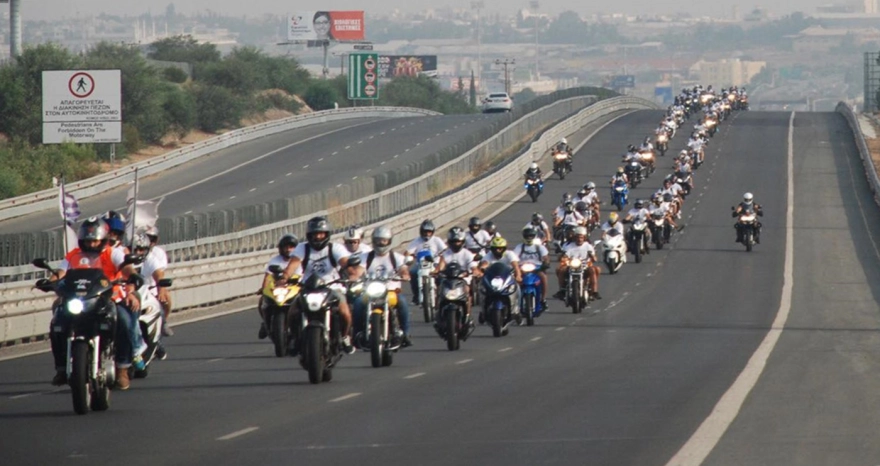
The motorcyclists arrived in Limassol on August 10 amid deep emotion but also growing concern.
The government of Glafcos Clerides had intelligence indicating that the Turkish side was organizing a forceful response.
The President of the Republic of Cyprus urged the organizers not to attempt to breach the ceasefire line.
The official demonstration was canceled at the last moment, but by then it was no longer possible to halt the movement of thousands of participants.
Motorcyclists and civilians spontaneously headed toward various points along the UN buffer zone.
At Deryneia, they were met not only by Turkish Cypriot counter-protesters.
Members of the Grey Wolves, transported from Turkey, were also present, organized and armed with clubs, metal pipes, and stones.
Their presence was documented in the UN Secretary-General’s report on the activities of the peacekeeping force.
A later Turkish human rights report stated that public funds had been used to cover the travel expenses of Turkish nationalist activists who traveled to Cyprus.
The Cypriot police were unable to contain the demonstrators.
The UN Peacekeeping Force lost control of the area.
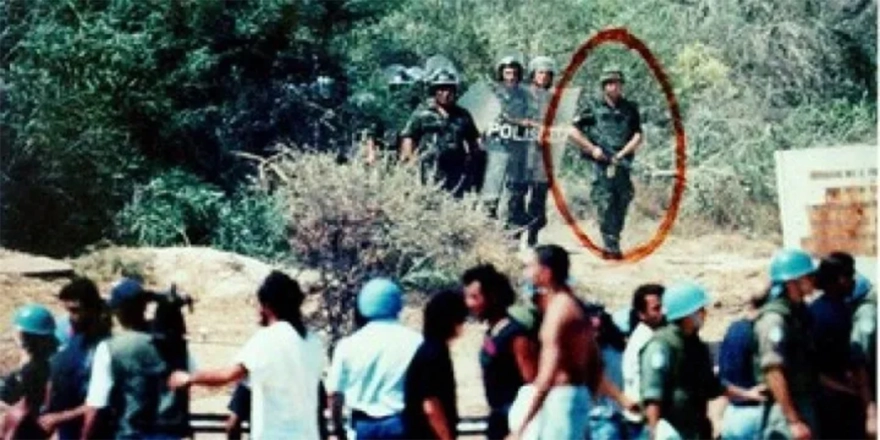
At the same time, the Turkish side allowed organized counter-demonstrators, military personnel, and members of the occupation authorities’ “police” to enter the buffer zone.
In UN Security Council Resolution 1092 of December 1996, the Council noted both the passive response of the Cypriot police and the unnecessary and disproportionate violence used by the Turkish and Turkish Cypriot side.
It was the most serious incident along the ceasefire line since 1974.
The Lynching of Tasos Isaac
Tasos Isaac was 24 years old and a refugee from Famagusta.
Amid the chaos, he tried to help another Greek Cypriot who was being attacked.
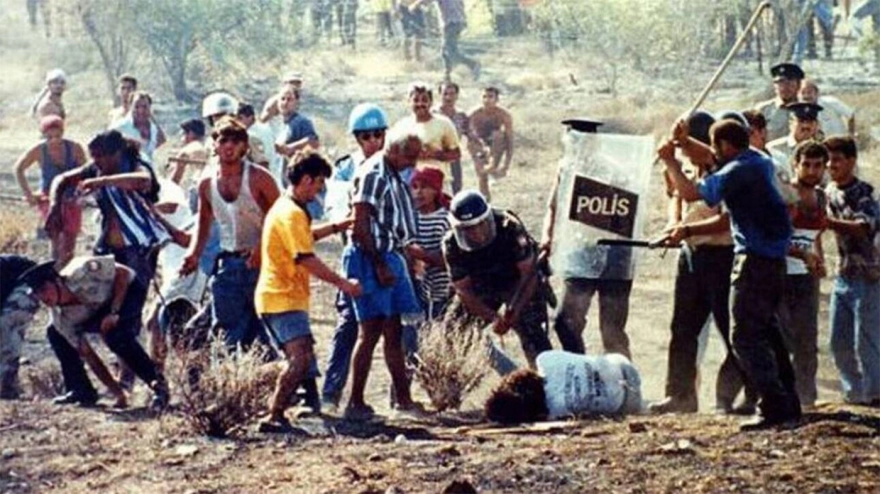
He became separated from the others, got trapped near the barbed-wire barriers, and was surrounded by a group of at least 15 people.
A brutal lynching followed.
Isaac was knocked to the ground and beaten repeatedly for several minutes on the head and body.
The attackers used clubs, stones, and metal objects.
Photographs and video footage show at least four uniformed members of the Turkish security forces actively participating in the assault.
No one attempted to arrest him or protect him.
The autopsy, conducted by internationally renowned forensic pathologist Professor Peter Vanezis, documented multiple blows inflicted with cylindrical and square metal objects.
Injuries to his hands indicated that he had tried to shield his head.
He died from catastrophic head injuries.
Turkey argued that Isaac died because he became entangled in the barbed wire.
That claim collapsed before the European Court of Human Rights.
In its judgment of June 24, 2008, the Court unanimously ruled that Tasos Isaac had been killed by a group that included members of the Turkish security forces and that the fatal violence was carried out with the participation or tacit approval of agents of the Turkish state.
The Court also found that Turkey had conducted no effective investigation, despite abundant photographic evidence allowing the perpetrators to be identified.
Isaac left behind his wife, who was eight months pregnant.
Their daughter, Anastasia, was born on September 17, 1996.
She never met her father.
Instead, she grew up seeing images of his death and watching people wanted in connection with his murder remain free.
Five Bullets for an Unarmed Man
On August 14, Tasos Isaac’s funeral was held in Paralimni.
After the burial, members of the public returned to Deryneia to lay flowers where he had been killed.
Among them was 26-year-old Solomos Solomou, also a refugee from Famagusta and Isaac’s cousin.
Solomou broke away from the crowd, crossed the ceasefire line, and approached the Turkish flagpole.
He began climbing it, still holding a cigarette between his lips.
He was unarmed and attacked no one.
He could have been removed from the area or arrested.
Instead, the armed personnel in the Turkish observation post chose to kill him.
He was struck by five bullets.
Members of the United Nations Peacekeeping Force testified that they saw two men in Turkish military uniforms and one man in civilian clothes firing from the balcony of the observation post. Immediately afterward, a barrage of gunfire was directed toward the UN buffer zone. Several civilians and two UN peacekeepers were wounded.
Among the injured was Georgia Andreou, the mother of one of Tasos Isaac’s friends. She was shot in the abdomen, underwent three surgeries, and lost one kidney and part of her pancreas. She also suffered from post-traumatic stress disorder and depression. She died in 2005, after already having filed a case against Turkey. In 2009, the European Court of Human Rights (ECHR) ruled that her right to life had also been violated because the gunfire to which she had been exposed was potentially lethal.
In the case of Solomos Solomou’s killing, Ankara attempted to create the impression that there had been a general exchange of gunfire. The video footage, ballistic reports, and testimony from UN peacekeepers showed otherwise.
In its judgment on the Solomou case, the ECHR found that no exchange of gunfire had taken place before the shots were fired and that the unarmed demonstrator had been killed by agents of the Turkish state. According to the Court, the fact that Solomou had crossed the ceasefire line and was climbing a flagpole could not justify the use of lethal force.
Thirteen Arrest Warrants
The figures surrounding the two cases are often confusing because there is a distinction between Cypriot arrest warrants, Interpol Red Notices, and Interpol Diffusions, which are different forms of international police alerts.
Initially, six suspects were identified in connection with the murder of Tasos Isaac.
In 2013, the original warrants were canceled for procedural reasons, and the Famagusta District Court issued eight new warrants. The identities of the two additional suspects were never officially disclosed.
For the murder of Solomos Solomou, five Cypriot arrest warrants were issued.
As a result, thirteen national arrest warrants remain in force today: eight relating to Isaac’s case and five relating to Solomou’s.
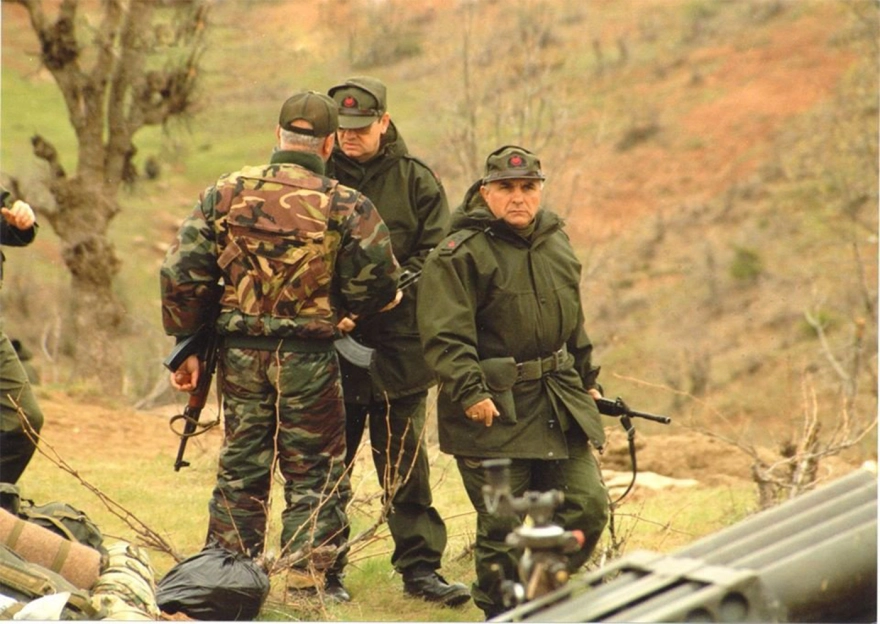
The latest detailed official record appears in a May 2024 memorandum submitted by the Republic of Cyprus to the Committee of Ministers of the Council of Europe.
According to the memorandum:
- For the Isaac case, three Interpol Red Notices and five Diffusions remained active.
- For the Solomou case, two Red Notices remained active, targeting Kenan Akın and Erdal Hatjiali Emanet.
This means there are currently five Red Notices and five Diffusions—a total of ten active international police alerts.
Last Saturday, during the main ceremony marking the 30th anniversary of the killings, Cypriot President Nikos Christodoulides referred to “13 national and five international warrants.” The figure of five international warrants clearly corresponds to the five Red Notices.
The remaining five entries are Diffusions, which are generally not described publicly as “warrants,” even though they are active international police requests.
There is, however, one important clarification.
Interpol itself explains that a Red Notice is not an international arrest warrant that automatically obliges every country to arrest a wanted person.
Rather, it is a request to locate and provisionally arrest an individual on the basis of a national arrest warrant.
Each country decides, under its own laws, whether to arrest and extradite the individual.
This leaves room for legal discretion, but it offers no convincing explanation as to how a wanted suspect can pass through airports, courts, government ministries, and political party conferences without ever appearing before the Cypriot justice system.
The Wanted Men Who Built Political Careers
The case of Erhan Arıklı best illustrates the extent of the impunity.
Cypriot investigators linked his name to the murder of Tasos Isaac.
In September 2012, he was located and arrested in Kyrgyzstan on the basis of an international police alert.
The Republic of Cyprus sent the arrest warrant, photographs, and supporting evidence requesting his extradition.
He was ultimately released and returned to the Turkish-controlled north of Cyprus.
His arrest did not prevent his political rise.
He founded a political party representing primarily Turkish settlers, was elected to the self-declared parliament, sought the presidency of the self-declared state, and served as “Deputy Prime Minister” and “Minister.”
Since 2022, he has held the portfolio of “Public Works and Transport.”
Kenan Akın, the man in civilian clothes identified on the balcony of the Turkish observation post, also served as a “minister” and “member of parliament.”
In 2004, he was arrested at Istanbul Airport while attempting to smuggle approximately 1,000 mobile phones.
Turkey was willing to arrest him over the suitcases, but apparently saw no reason to act on the Interpol Red Notice for Solomou’s murder.
Erdal Hatjiali Emanet, then commander of the occupation authorities’ special police forces, continued serving and rose through the ranks.
He retired in July 2012 without ever being questioned about what the cameras and UN peacekeepers had documented.
Turkey therefore cannot claim that it did not know where the wanted men were.
Some appeared at official ceremonies, posed for photographs with politicians, and held public office.
They were not fugitives hiding in distant countries under false identities.
They remained in plain sight.
The Convictions, Compensation, and the Investigation That Never Happened
The European Court of Human Rights awarded the family of Tasos Isaac €227,000 in compensation and the family of Solomos Solomou €137,000, including legal costs.
However, payment of compensation did not fulfill Turkey’s obligations.
The Court’s judgments required:
- an effective criminal investigation,
- identification of those responsible, and
- examination of the liability of the military personnel, “police officers,” and civilians involved in the killings.
That investigation never took place.
Ankara relied on reports produced in 1996, 2011, and 2021, as well as a later assessment by the occupation authorities’ “police.”
It argued that the quality of the photographs and videos, together with the passage of time, made further investigative steps impossible.
The argument had a significant weakness.
Turkey never submitted to the Committee of Ministers either the full assessment or the complete report of the expert who supposedly analyzed the visual evidence.
Instead, it presented selected excerpts concerning lighting conditions and technical difficulties in examining certain images, while avoiding any explanation as to why individuals who had already been identified—and who had remained under Turkey’s control for years—were never questioned.
The Cypriot side argued that the Turkish assessment did not seek to determine what could still be done.
It sought reasons to do nothing at all.
The cases remain under the enhanced supervision of the Committee of Ministers.
They had been scheduled for further review during the Committee’s 1563rd meeting, held from 9 to 11 June 2026.
The discussion, however, was postponed.
The cases were not closed, but another delay was added to proceedings that have now stretched across three decades.
Christodoulides’ Commitments
President Nikos Christodoulides revealed that there have been developments in both cases.
He said the government is taking all necessary steps concerning those responsible but declined to provide details, explaining that the victims’ families would be informed first.
Two days ago, he went a step further, pledging that the Republic of Cyprus would intensify efforts to execute the outstanding arrest warrants.
Without further information, it is impossible to know whether these developments involve renewed international police notices, new court proceedings, action in countries visited by the suspects, or the use of European mechanisms for police and judicial cooperation.
Confidentiality may be necessary while efforts to locate or arrest suspects are underway.
After thirty years, however, the public—and especially the victims’ families—are entitled to see tangible results.
In the Isaac and Solomou cases, official promises have been numerous.
Arrests have been few.
Extraditions have been none.
Turkey has never seriously disputed that the suspects were on territory under its control.
It did not need to hide them.
It protected them politically, allowed them to build careers, and refused either to hand them over to Cyprus or to prosecute them itself.
Tasos Isaac and Solomos Solomou were not killed amid the confusion of a battlefield.
They were murdered during a ceasefire, in front of UN peacekeepers and television cameras.
The circumstances of their deaths are known.
The individuals involved have been identified.
Their names appear in judicial case files and international police databases.
Thirty years later, the search is no longer for the truth. The search is for the state that will dare to handcuff them.
Ask me anything
Explore related questions




