





Families who, until two years ago, would board a ferry for the Cyclades are now loading up the car and reaching Messenia, Laconia or Arcadia in under three hours. Cost is a major factor: a round trip to Kalamata by car costs around 100 euros.
The same journey by car ferry to the Cyclades starts at 420 euros and can reach 540, while a cabin crossing to the Dodecanese exceeds 1,000 euros. In a year when Greeks are watching every euro, these sums are reshaping the country’s holiday map.
The Peloponnese, once simply the route travellers crossed to catch a ferry to Hydra and Spetses or to reach Elafonisos, has become a destination in its own right this year, and one of the country’s most active investment fronts. The statistics bear this out.
A May survey by the Institute for Retail Consumer Goods Research (IELKA) found that 57 percent of Greeks planning summer holidays this year are heading for the mainland coast, against just 38 percent choosing an island. Separately, a survey by hospitality data platform Nelios on 2026 hotel bookings found Peloponnese reservations up 63.8 percent, nearly double the national average, while Santorini, Zakynthos and Rhodes all posted small declines.
Bank of Greece data for the first four months of the year show road arrivals from the country’s borders up 67.8 percent, five times the rate of air arrivals. Visitors are coming, and increasingly they are coming by car.
The big money
Behind this demand lies something more significant. In Messenia, the Costa Navarino resort has already invested more than 1.25 billion euros, and its next phase carries a price tag of 1.2 billion euros: seven new hotels, more than 5,000 new beds, and 11,200 jobs once complete. A single private developer is rewriting the economy of an entire regional unit.
Around it, the luxury map is filling in. Amanzoe and Nikki Beach are already operating in Porto Heli. Six Senses is due in Porto Heli in 2028, Waldorf Astoria is coming to Ermionida in 2029 with a 203 million euro investment, and Radisson Blu is opening in the Mani region within the year.
Kalamata airport, which welcomed almost 170,000 international passengers in 2025 and now connects to 22 destinations, has been handed to a private operator under a 40 year concession, with investment starting at 28.3 million euros over the first three years and a total programme approaching 125 million euros. The region has shifted into a different league.
A distinct kind of luxury is also taking shape in the mountains. Stratis Batagias, owner of the Manna Arcadia resort in the Arcadian highlands, translates “proper” development explicitly as sustainable development. The area, he says, is fortunate to combine natural beauty, history and, until now, only gentle tourism growth. With the first two as its engine, he argues that with a measured development plan it could become a year round global destination. The challenge, as he frames it, is not losing its authenticity, something he believes can be achieved by reviving existing buildings, respectfully using local resources, and preserving the traditions and folklore that make each place distinctive. He hopes the renowned Arcadian Ideal, which once inspired a global movement, can become the driver of sustainable development for Arcadia and for Greece as a whole.
On the western and southern axis, hotel group Grecotel has a significant presence with three resorts, each with its own identity. In Kalamata, the recently renovated Filoxenia looks out over the Messinian Gulf with Mount Taygetus behind it; in Killini, the luxury Riviera Olympia offers a full summer world aimed largely at families; and in Kato Achaia, Casa Marron keeps a more relaxed, Mediterranean feel. Together they form a chain of destinations stretching from Messenia to Achaea that tracks tourism’s shift westward.
Golden Visa at half price
The money shows up in property prices too. In Messenia, prices in Pylos and Gialova range from 3,000 to 6,000 euros per square metre, with the coastal strip from Koroni to Kardamyli and the Kyparissia Gulf running slightly lower but still high. Kalamata leads the pack with a 14.3 percent price rise over the past year, according to property firm Remax, against a national average of 3.7 percent. Property portal Spitogatos puts the Peloponnese’s five year rise at 30.7 percent.
According to estate agency Engel & Völkers, foreign buyers, British, German, French, Swiss, American, Israeli and members of the Greek diaspora, account for between 60 and 85 percent of transactions in Messenia. This points to an advantage few notice. After the Golden Visa scheme was reformed, the investment threshold for Athens, Thessaloniki and the popular islands rose to 800,000 euros, while the Peloponnese stayed at 400,000. Investors priced out of an increasingly expensive Athens are finding a serious alternative here.
In Ermionida, one of the hottest zones in this market, Stathis Verykios, chief executive of estate agency Goutos Properties, is watching the shift from the inside. Ermionida, he says, is at a turning point, with Amanzoe, new investment and the Ermioni marina transforming the area. Crucially, he adds, demand is not confined to top end homes, and the area is evolving from a purely seasonal destination into somewhere that can support quality living all year round.
The region sees the shift
Dimitris Ptochos, the regional governor of Peloponnese, locates the change in something less visible than the hotels: the institutional groundwork. What has changed, he says, is that the Peloponnese now has a complete plan and a holistic approach, consistency, credibility and a clear direction for growth, creating an environment of trust that lets private initiatives move forward, businesses grow and young people see more opportunities at home.
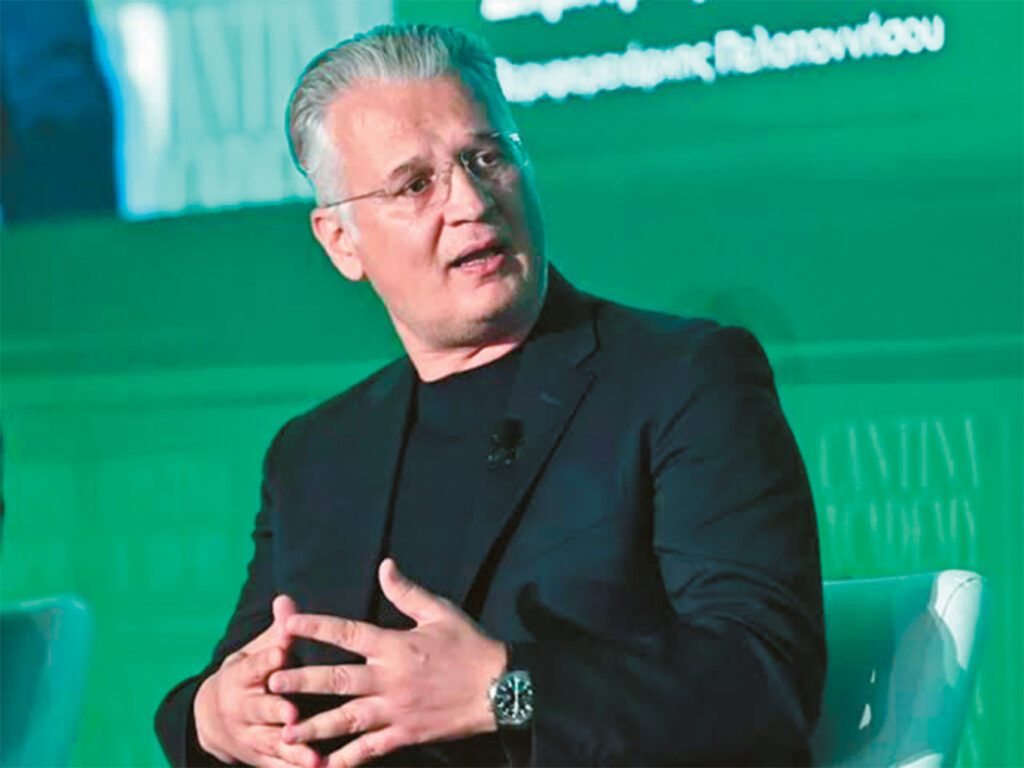
Behind this, he notes, is work that rarely makes headlines: a regional spatial plan that did not exist 14 months ago, specific zoning and urban planning schemes, and simplified, standardised, digital licensing services. The results, he says, are no longer confined to a single regional unit, with strong investment activity now visible across nearly every sector in every part of the region. Major private investment plans have already been approved or are being drawn up for the post lignite era through the Just Development Transition Programme and the Peloponnese Regional Operational Programme.
Much of the investment is in tourism, concentrated in Argolis and Messenia, with a substantial footprint and strong impact on local communities, he says, while food processing and pharmaceuticals are also seeing intense activity, mobilising hundreds of millions of euros and creating hundreds of new jobs.
For the next five years, Ptochos sets a specific goal: for the Peloponnese to record one of the highest growth rates in Greece with measurable, tangible results, to secure a significant share of direct investment, to see today’s maturing investment plans converted into production facilities, new businesses and quality jobs, to complete major infrastructure projects, to expand tourism’s footprint further across the region, and for the Peloponnese to establish itself as an internationally recognised destination for visitors and investors alike.
His measure of success, though, is not counted in beds. Above all, he says, he wants this growth to be felt in people’s daily lives, creating more opportunities for young people, strengthening small and medium sized enterprises in particular, and giving the Peloponnese a future for the people who live there. That, he says, is the goal his administration works toward every day.
Thanasis Michelogonas, the deputy regional governor for Tourism, points to the arrival of well known international brands in Laconia, Ermionida and Messenia as the decisive factor, a channel of outward visibility that is changing how the whole destination is perceived. The privatisation of Kalamata airport, he says, is key, noting that airlines are already approaching the region differently as a result. In Argolis, a public-private partnership for the Nafplio marina, the first of its kind in Greece, is expected to be operational by 2027. Because the Peloponnese has many small municipalities that cannot reach far on their own, the region is also running a programme of lighter scale infrastructure so growth does not stay confined to the biggest players.
Two speeds
The Peloponnese, though, does not mean the same thing everywhere. It is a region running at two speeds. On one side, a western and southern boom driven by Messenia is pulling in investment, flights and the lion’s share of short term lets. On the other, the historic core of Argolis and Laconia is cooling: Mystras recorded the steepest drop in visitors of any archaeological site in the country at the start of the year, with Mycenae and Epidaurus also declining.
Somewhere in between, mountainous Arcadia is winning its own battle outside peak season, with Stemnitsa and Dimitsana reaching close to 90 percent occupancy on long weekends. The centre of gravity has shifted from the classical Peloponnese of Nafplio and Mycenae toward Navarino, the Mani, Monemvasia, Voidokilia and the Kyparissia coast.
In practice, what makes the difference for Greek travellers is that the Peloponnese packs several holidays into one: morning at Voidokilia beach, afternoon at the Diros caves, a day exploring the medieval citadel of Monemvasia and the next hiking the Lousios gorge. It is kind to the wallet too. In Messenia, according to Dimitris Karalis, president of the Hoteliers Association, a double room with breakfast costs between 75 and 200 euros, depending on category.
Food and wine as the draw
In the Peloponnese, the table alone is reason enough to travel. Aris Tselepos, president of the National Interprofessional Organisation of Vine and Wine (ENOAP) and a winemaker at his eponymous estate, sees it from the top of the industry. He believes deeply that the Peloponnese has everything it needs to become one of the strongest brand names in the Mediterranean in the coming years, with Mantinia, Nemea, Patras and Monemvasia-Malvasia underpinning a strong wine identity.
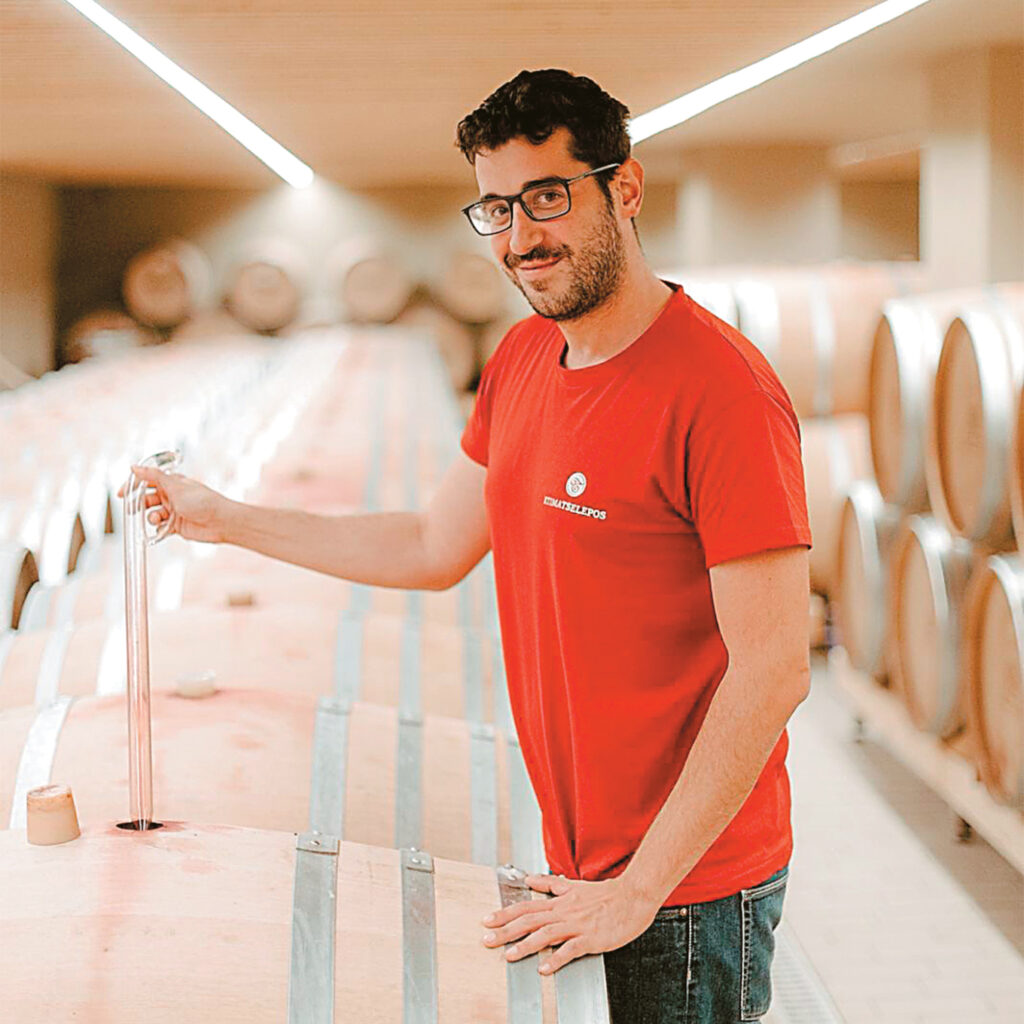
Wine, he says, is really just the way in. The genuine experience is built through its synergy with olive oil, cheese, honey, nature and outdoor activities. Alongside the Agiorgitiko of Nemea and the Moschofilero of Mantinia sit the protected designation Kalamata olive, gournopoula (spit roast suckling pig) and lalangites (fried dough) of the Messenian table, and the taverns of the Mani perched above the water at Limeni.
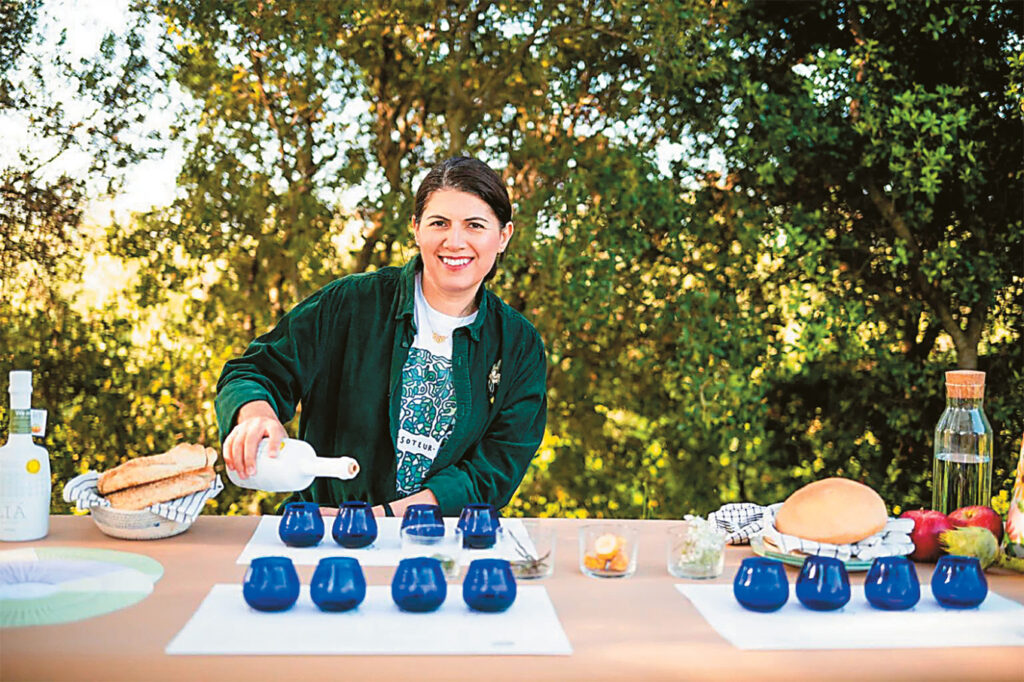
In Filiatra, the same idea has a face. Christina Stribakou returned to her home town and founded LIÁ, a fine extra virgin olive oil made from the Koroneiki variety that now sits on the shelves of Harrods and La Grande Épicerie de Paris. Growth, she says, is not built far from a place, it is built through it; value has no geography.
This gentler kind of growth keeps the interior alive when the islands close for the season. In mountainous Arcadia, the Mainalon Trail has proved that hiking can become an economy in itself. A trail, says Yiannis Lagos, president of the Mainalon social cooperative enterprise, is not just a route, it is a development tool that can bring villages back to life.
The trail draws more than 20,000 visitors a year, and a 1,700 kilometre network is now being built on the back of that success, described as the largest social economy project ever carried out in Greece. In South Kynouria, the same formula is playing out through rock climbing around Leonidio. With more than 2,500 routes, says Simona Tsouka, deputy mayor for Tourism, the sport brings visitors exactly where they are needed most, outside the summer season.
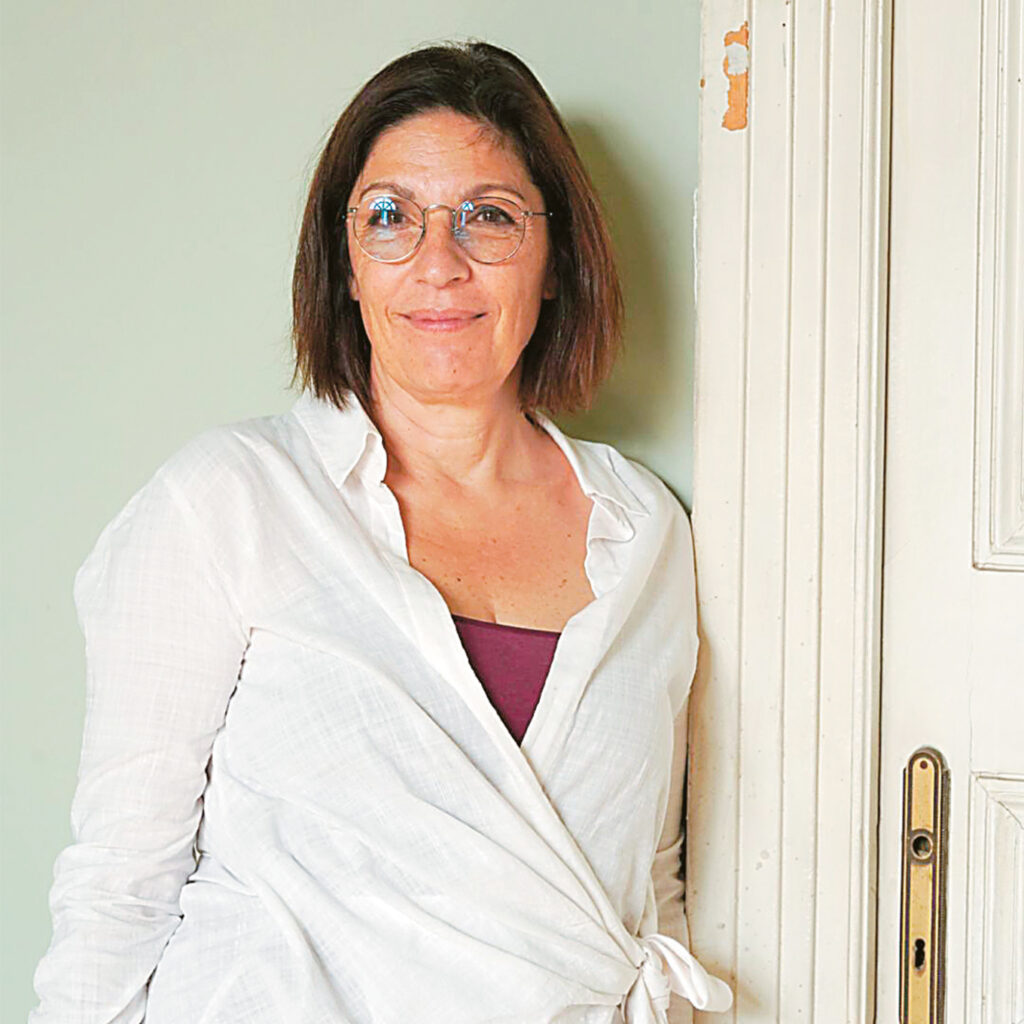
In the Mani, land of stone towers, architecture itself has become a discipline. The Mani cannot tolerate showiness, says Eleni Tsigarida, founder of ETSI Architects, based in Kardamyli, it demands restraint, precision and respect. This, she says, is the new luxury: authenticity without folklore.
The international showcase
Meanwhile, the destination has gone global. Condé Nast Traveller and the Forbes Travel Guide both named it among their top picks for the year, while CNN had already compared it to Saint-Tropez and Capri, without the crowds. The biggest boost has come from cinema: Christopher Nolan’s forthcoming film “The Odyssey” was shot last year in Pylos, at Methoni Castle and on Voidokilia beach, and Expedia has already listed the Peloponnese among its set jetting destinations.
Some caution is warranted here. However fast it is moving, the Peloponnese region still accounts for only around 2 percent of Greece’s national visitor numbers and tourism revenue, and spending per visitor, at 518 euros, remains below the national average of 541 euros.
In April, the Hellenic Statistical Authority (ELSTAT) recorded the first nationwide decline in visitor numbers after four years of growth. There is also a dimension the figures do not capture: as prices rise and foreign buyers come to dominate the market, locals are watching their own home towns become unaffordable for themselves.
Sotiris Ptochos, of logistics firm People, argues this is an opportunity, provided the planning is right, pointing to Tuscany, Provence and the Algarve as models. The true measure of success, he says, is not property values but the per capita income of the people who live and work there.
Obstacles remain. The motorway to Kalamata was completed in 2016, and the Patras to Pyrgos section was finally delivered last December, but the Pyrgos to Tsakona gap is still under study, leaving the western Peloponnese without a continuous backbone route. The railway network is not operating. Off season connectivity, retaining skilled workers in the provinces, and water management will determine whether this momentum can be sustained.
That is why “throne” is the wrong word. The Peloponnese is not seizing the crown from Crete or the South Aegean. What is happening is more interesting than any title: a region that, in an age of high prices, has become the most logical choice for Greeks and a new discovery for foreign visitors, all while testing whether growth here can stay high quality.
Industry in Tripoli, deep tech in Messini, drones in Xylokastro
At the heart of Arcadia, Tripoli is becoming a European hub for pharmaceutical production. New plants are being developed in its industrial zone by DEMO, Win Medica (part of the ELPEN group) and Faran, representing investment of around 180 million euros and more than a thousand jobs over the coming decade, with DEMO’s facility ranking among Europe’s largest producers of penicillin based and oncology drugs.
Dimitris Demos, president of DEMO ABEE, frames the project on a European scale: other companies in the sector are following their lead, he says, turning the area into one of the most significant pharmaceutical hubs in Europe. He points to the social impact too, describing pride in contributing to the transformation of an area that was hit hard by unemployment. Tripoli, he concludes, is becoming a model for decentralising industry.
Sotiris Ptochos knows this other, producing and exporting Peloponnese well. He co-founded People, a deep tech logistics company established in Messini in 2016. Built around its Container2.0 product, with more than fifteen international patents and offices in Athens and London, People is one of the few Greek deep tech ventures based outside the capital.
Growth, he says, does not come from constantly saying no, but from planning properly, executing quickly and demanding quality. Messini, he adds, is not just where the company is based, it is proof that the Peloponnese can become an international hub for technology and innovation.
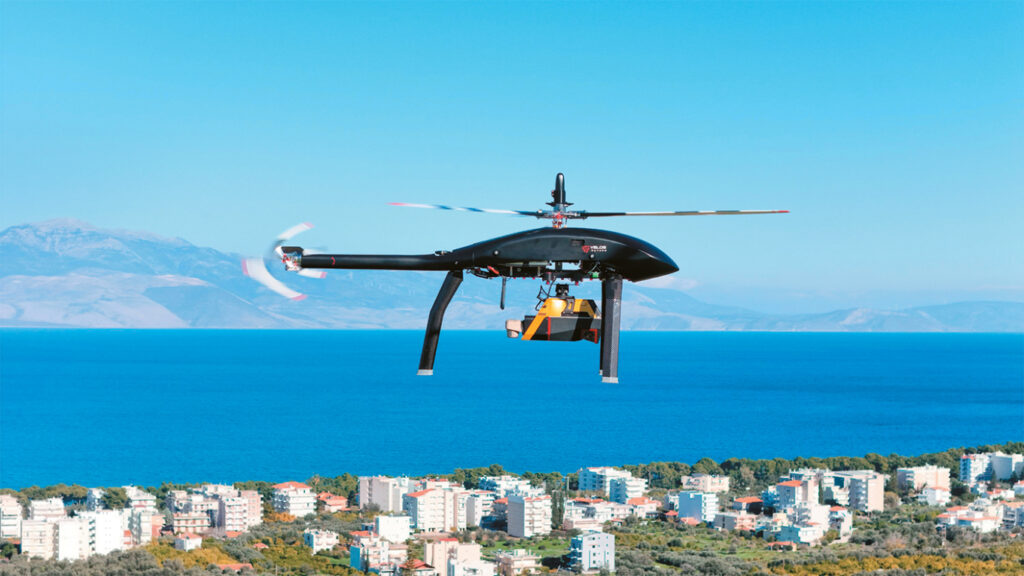
In Xylokastro, drone company Velos Rotors has set up its base, developing heavy duty electric unmanned helicopters. It was a deliberate strategic decision, says head of development Argyris Mellios, one that proves a high tech company with an international footprint can succeed outside Greece’s major urban centres.
Ask me anything
Explore related questions




