





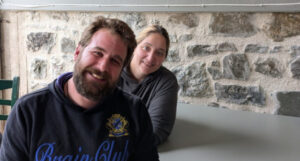
A family with six children that had moved to Fourna, Evrytania, two years ago has left the mountain village and relocated to Naxos, claiming that they experienced social exclusion and did not receive the necessary support from the local community.
The family had moved to Fourna two years ago following an online appeal by teacher Panagiota Diamanti and the village priest, Father Konstantinos Ntousikos, who invited families to relocate to the mountainous village in Evrytania as part of the “New Life in the Village” initiative.
The mother of the family, now a former resident of the village, spoke about the significant financial difficulties they faced while living there, as well as incidents of bullying that she said involved their child.
Speaking this morning on the television program Koinonia Ora Mega, she said that when they reported the incidents to the authorities, some local residents reacted hostilely by boycotting the food business the family had opened at their own expense.
“It was definitely the financial situation. When we went there, we didn’t have the business. Indeed, ‘New Life in the Village’ supported us during the first year, including with the rent. After that, we had to stand on our own feet. We struggled with the business. It wasn’t just the financial aspect; we also weren’t supported with the house or the business. We weren’t properly supported from the beginning, and the final straw was the bullying our child experienced,” she initially said.
She added:
“When the child spoke about having experienced certain things in the village, unfortunately the village took the position that people shouldn’t go to the business, because they believed that the outsider had insulted the local.”
What the president of “New Life in the Village” says
For her part, Panagiota Diamanti, president of “New Life in the Village,” said in a television interview that the family had received extensive support. This included rent being covered for an entire year, free tutoring, school meals and activities for the children, as well as assistance in finding employment and running their business.
“This particular family, which was the first family, had its rent fully funded for an entire year. We had found jobs for them initially, we had found the house, they started their lives there, and we also supported the children with activities and so on. Regarding the issue of bullying, as she says, it was an issue that had also come to our attention when the family returned from Germany and told us that this was precisely why they had left Germany as well, because their eldest child had experienced bullying.”
She continued:
“They came to the village, lived there for two years and then, two months ago, in June, the issue of bullying came up again. Something happened involving the children. The secondary education authorities got involved, the principal stepped in, and they took all the necessary measures that are required when an incident of verbal confrontation occurs between children. The matter was addressed. Their exams were completed. From our side, however, as ‘New Life in the Village,’ interpersonal relationships that develop between people are not something that can be predetermined, prevented, or created in some particular way.”
“We lived with rats”
At the same time, the parents complained about the extremely difficult living conditions in the house they had moved into, citing water and snow coming through the roof, heating problems, and the presence of rats, which they said ultimately forced them to leave the village.
“We left because we couldn’t cope and we couldn’t provide for the children. Since we also have our dignity, and at some point you have to preserve that dignity, when you can’t afford to feed your children, you don’t knock on someone’s door to ask for help. I did knock on the door to say that what they were doing to the business wasn’t right, because they weren’t attacking a business—they were attacking a mother who couldn’t feed her six children.”
She added:
“We moved into a house where rats were living, and the tradesman himself turned around and said: ‘Not even chickens could live here.’ […] The children were living with a wood-burning stove that had not been installed properly, and water and snow were coming inside. We lived with rats, and the child was constantly going to the doctor.”
Ms. Diamanti responded:
“We did not provide them with a house full of mice. The family was living in a house and decided to move to another one, signing a nine-year lease so that they would not have to pay rent while carrying out the necessary work.”
Ms. Emmanouil immediately responded:
“Apparently the priest didn’t tell you the story correctly. The family moved into that house because another family had to stay in the house where we had been living.”
In closing, Ms. Diamanti said that the program for settling families in Fourna has been successful, noting that five other families continue to live and work normally in the village without experiencing problems.
Ask me anything
Explore related questions




