





Two Hellenic Air Force pilots have died after their two-seat F-4 Phantom fighter jet crashed during a display at the Athens Flying Week airshow in Tanagra, north of Athens, on Saturday afternoon. The pilots, who belonged to the 117th Combat Wing based at Andravida in western Greece, did not have time to activate their ejection seats before the aircraft went down.
The Wing Commander, originally from Pyrgos and father of one child, was the son of an airman. The Squadron Leader was originally from Patras. Three days of mourning have been declared across the Armed Forces.
EKAV emergency crews rushed to the crash site, while Defence Minister Nikos Dendias hurried back to Athens from the Thessaloniki International Fair. President of the Hellenic Republic Konstantinos Tasoulas is also returning to Athens, postponing his attendance at an event in Methoni, in the southern Peloponnese.
The pilots belonged to the 117th Combat Wing, based at Andravida in western Greece. The two Hellenic Air Force officers did not have time to activate their ejection seats.
It all happened at around 3pm, during the Athens Flying Week airshow in Tanagra, when the two-seat Phantom (F-4) aircraft crashed.
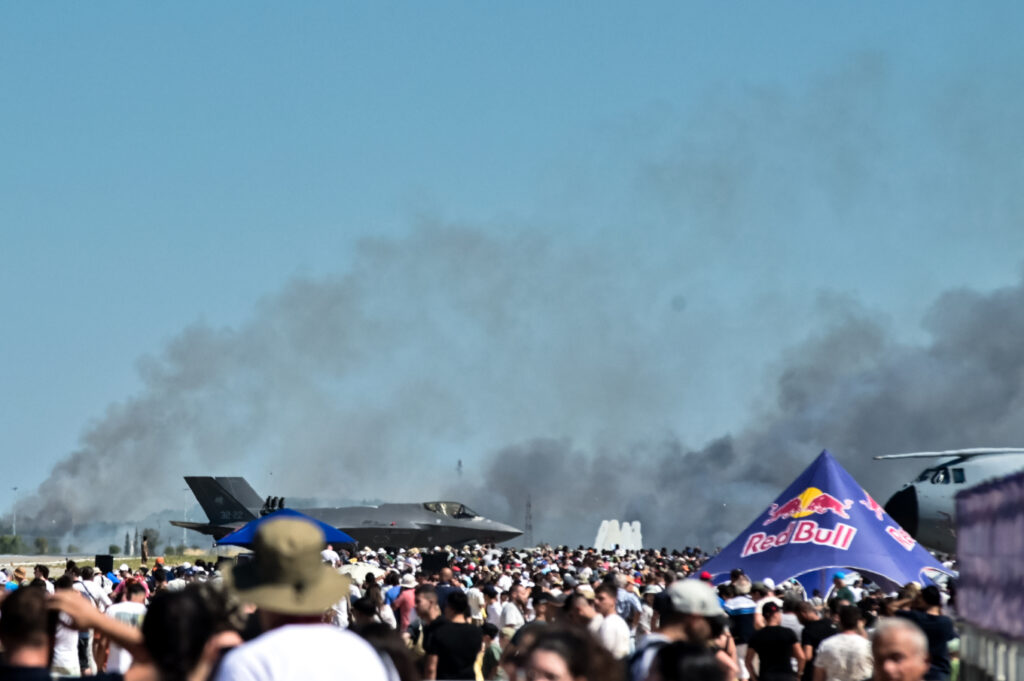
The authorities have no evidence that the aircraft’s ejection mechanism was activated. So far, there is no information from the team that has rushed to investigate. Two ambulances and two vehicles from EKAV, Greece’s National Emergency Aid Centre, responded immediately to the crash site, where a fire broke out straight away.
Footage from the airshow captured the moment the Phantom went down. One witness described seeing the F-4 Phantom II crash during the Athens Flying Week display, noting that no parachutes were visible and that the aircraft hit the ground while coming out of a turn.
WATCH: Footage shows the moment the Hellenic Air Force F-4 crashed during a solo display at Athens Flying Week in Tanagra, Greece.
— Tabz (@TabzLIVE) September 5, 2026
It hit the ground coming out of a turn. The condition of the crew is still unknown. https://t.co/ZwUW4Eu4SQ pic.twitter.com/KY2oppTPM0
The aircraft crashed shortly after beginning its display, with hundreds of people watching from close by.
According to witnesses, the jet appeared to be emitting smoke before it went down, and the same accounts say it suddenly began losing altitude before crashing.
According to the same sources, the aircraft broke in two and fires broke out at two separate locations.
Those present at the scene were left in shock, while event organisers immediately began evacuating the area.
#Τανάγρα συντριβή #Phantom Athens Flying Week 2026. pic.twitter.com/GEHQsnlToP
— Matheol (@SMatheol) September 5, 2026
Two people injured by debris from fatal Phantom crash
Wreckage from the F-4 Phantom, the Hellenic Air Force jet that crashed in Tanagra, central Greece, on the sidelines of the Athens Flying Week air show, was found scattered far from the crash site, in an accident that killed both officers on board.
Pieces of the aircraft have turned up at several points around the area, including near the buildings and warehouses of a factory close to where the jet came down.
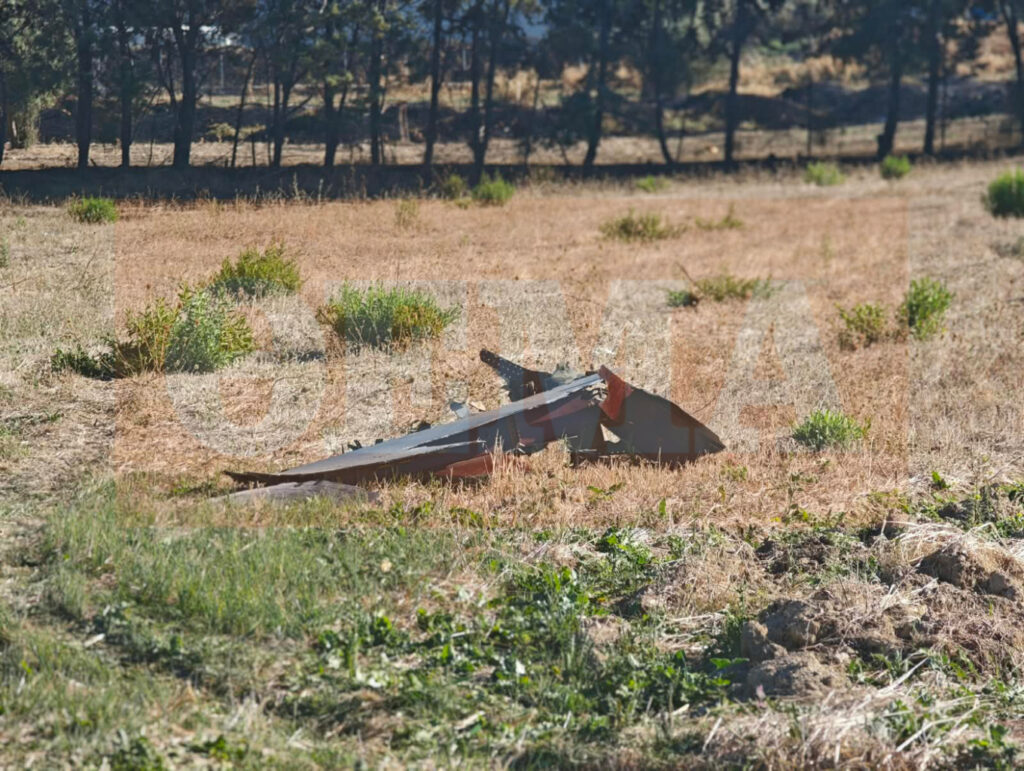
At the same time, two people were injured by fragments from the aircraft and taken to Chalkida Hospital for initial treatment, according to reports.
All evidence being gathered for the investigation
Military personnel at the scene are now focused on collecting the wreckage, so that all the material needed for the technical inquiry can be gathered.
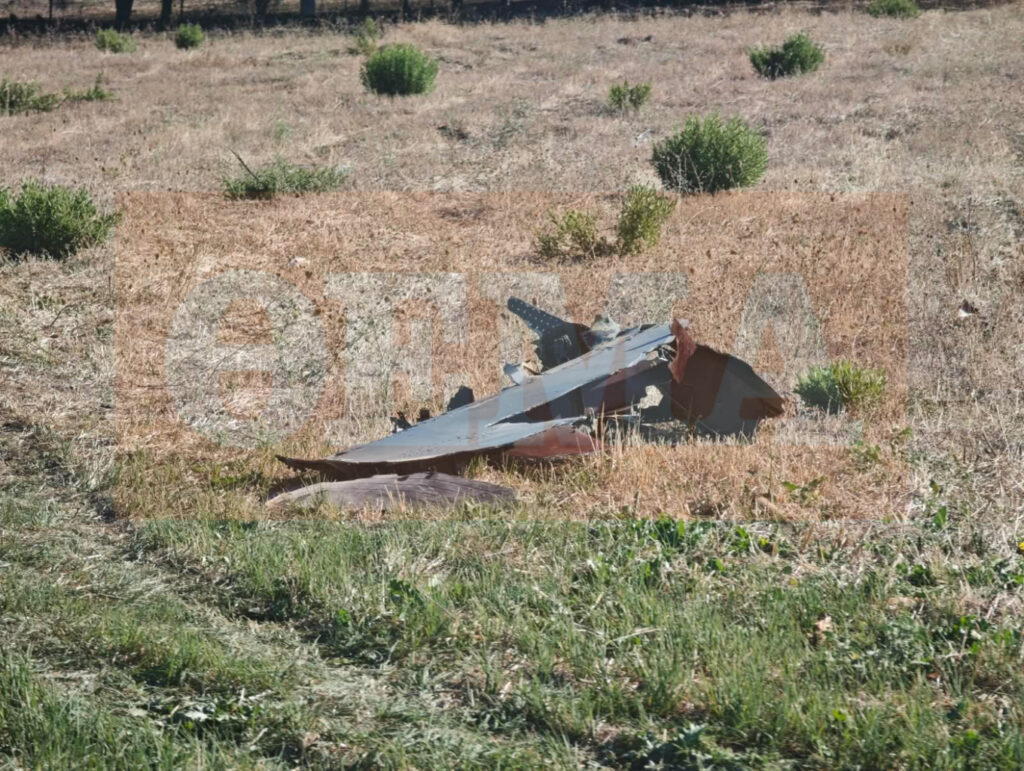
The aim is to move all the evidence to a secure location, so that experts can later carry out a detailed analysis and establish the exact causes of the tragedy.
The history of the Phantom in the Hellenic Air Force
The F-4 Phantom II is one of the most iconic fighter aircraft in aviation history. It is a two-seat, twin-engine, multi-role American-built fighter, designed to carry out air superiority, interception, bombing and reconnaissance missions.
The first F-4s rolled off the production line in the early 1960s, while the Hellenic Air Force took delivery of its first Phantoms in 1974, under the Peace Icarus defence programme.
Although it belongs to the second generation of supersonic fighters, the F-4 gained a new lease of operational life through extensive modernisation. A total of 36 Greek Phantoms were upgraded with modern electronic systems under the Peace Icarus 2000 (PI2000) programme, extending their operational service and enabling the use of modern weapons.
Today, F-4E Phantoms operate from the 117th Combat Wing at Andravida Air Base, where they form the main equipment of the 338th Squadron, known as “Aris” (Ares).
🚨 BREAKING: Greek F-4 Phantom Crashes at Athens Air Show – Both Pilots Killed.
— JAS (@JasADRxquisites) September 5, 2026
A Greek F-4 Phantom crashed Saturday during a low-altitude maneuver at Tanagra base north of Athens. Both pilots died. No spectator injuries. Fire sent black smoke skyward as rescue teams responded. pic.twitter.com/wvbSKeElwe
Technical specifications of the F-4E Phantom
The F-4E Phantom carries a crew of two, with the pilot and weapons systems officer working together to carry out missions.
KEY SPECIFICATIONS:
Crew: two
Engines: two General Electric J79 turbojets with afterburner
Thrust: approximately 17,900 lbs
Wingspan: 11.7 metres
Length: 19.1 metres
Maximum speed: 2,370 km/h (Mach 2.2)
Maximum operating altitude: over 15,240 metres (50,000 feet)
NEW: A Hellenic Air Force F-4E Phantom II has crashed while performing a solo display at Athens Flying Week in Tanagra, Greece.
— Tabz (@TabzLIVE) September 5, 2026
No parachutes were visible following the crash, and there is no official confirmation regarding the condition of the crew. pic.twitter.com/zrCHC8g3vl
The Phantom’s journey in the Hellenic Air Force
In 1972, Greece ordered its first 36 F-4E Phantom aircraft under the Peace Icarus I programme. These aircraft equipped two Hellenic Air Force squadrons: the 338th Fighter/Bomber Squadron and the 339th All-Weather Squadron.
The first six Greek F-4Es landed at the 117th Combat Wing on Friday 5 April 1974. The first aircraft to arrive at Andravida carried the US Air Force serial number 72-01500.
In 1977, the Hellenic Air Force further strengthened its fleet, ordering an additional 18 F-4Es and six RF-4E reconnaissance aircraft, significantly boosting its strike and photo-reconnaissance capabilities.
In 1990, as part of the drawdown of the US defence fleet, Greece received 28 F-4Es from the Indiana Air National Guard under the Southeastern Regional Agreement (SRA). These aircraft already had upgraded systems, including the Navigation & Weapons Delivery System (NWDS), which gave them significantly enhanced ground-attack capabilities.
The major upgrade of the Phantoms
In late 1997, after more than two decades in service, it was decided to upgrade the Greek Phantoms to keep them operational and competitive.
the Structure Life Extension Program (SLEP), for reinforcing the aircraft’s airframes
the Avionics Upgrade Program (AUP), for upgrading their electronics and combat capabilities
The contract was signed in December 1998 between the German aerospace company DASA and the Hellenic Aerospace Industry (HAI).
The upgrade included, among other things:
a new AN/APG-65GR radar
a new mission computer
a HUD system
colour multi-function displays
a GPS/INS system
a new identification friend or foe (IFF) system
modern communications systems
an image and data recorder.
These changes allowed the Greek Phantoms to carry modern weapons, such as AIM-120 AMRAAM air-to-air missiles, as well as advanced air-to-ground weapons.
The programme cost around $315 million, and once it was completed, the upgraded aircraft were given the designation F-4E Peace Icarus 2000.
The first upgraded F-4E made its maiden flight on 28 April 1999. On 18 December 2002, the Hellenic Air Force received the first production aircraft from the programme, at the HAI facilities in Tanagra.
With the upgrade complete, the Hellenic Air Force consolidated the upgraded Phantoms at the 117th Combat Wing in Andravida, where they continue to serve to this day.
Ask me anything
Explore related questions




