





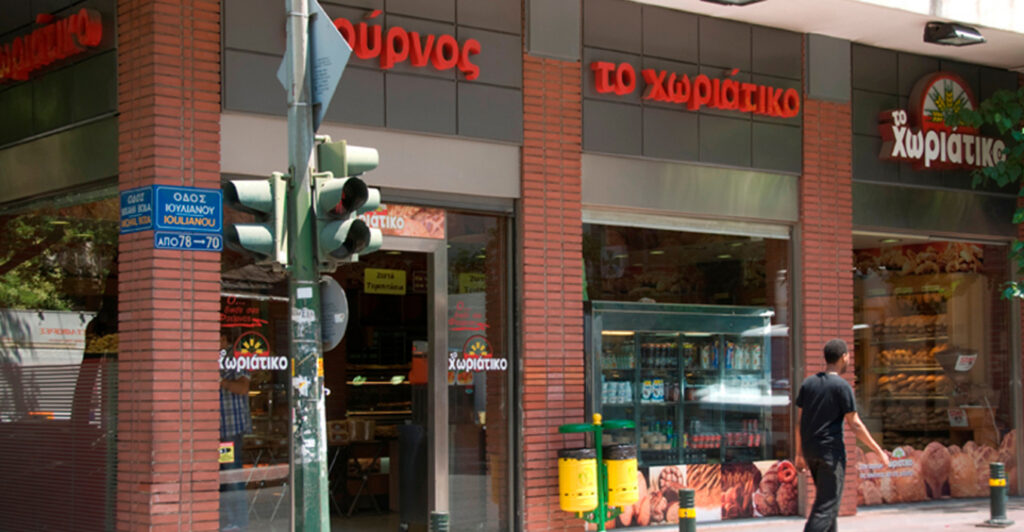
New details are emerging in the major tax fraud investigation that led to the arrest of businessman Angelos Giannakopoulos, with attention now turning to an extensive network of companies, business interests in popular Greek tourist destinations and a proposed acquisition that has reportedly come under scrutiny.
At the centre of the investigation is the Horiatiko bakery chain, which, according to information obtained by Protothema, is the first business being examined after suspected tax violations were identified. Similar information has emerged concerning Rhodes, where business interests reportedly linked to the entrepreneur are said to include six establishments.
The bakery chain operates dozens of outlets, including both company-owned and franchise stores, across numerous areas of Attica and other parts of Greece, including the city of Volos.
Apart from Giannakopoulos, Greek police have arrested 50 people in a major operation launched this morning targeting the alleged €100 million tax fraud scheme linked to the well-known bakery chain.
520 companies are implicated in the investigation
According to information from the Hellenic Police, at least 520 companies are implicated in the investigation. The large-scale operation is being carried out by officers from the Directorate for Combating Organised Crime, widely known as the Greek FBI, as part of an investigation into suspected large-scale tax evasion linked to the bakery chain’s business activities.
Giannakopoulos was arrested immediately after returning to Greece from Dubai, where he had been staying recently. According to police sources, his absence abroad had forced investigators to postpone the operation to arrest him on several occasions.
Officers from the Directorate for Combating Organised Crime had been awaiting his return and moved to arrest the businessman as soon as he was back in the country.
A dark criminal past
Almost two decades ago, in 2008, the businessman associated with the Horiatiko bakery chain became embroiled in a high-profile police investigation into an alleged human trafficking network, which subsequently developed into a lengthy legal case.
The investigation began in November 2008, when the Attica Security Police announced the dismantling of a network that, according to police assessments at the time, recruited women from Eastern European countries with promises of employment in Greece before forcing them into sexual exploitation.
Two nightclubs came under investigation: Alcatraz, on Syngrou Avenue, and Star, in Metamorfosi, a suburb of Athens.
The police inquiry subsequently expanded to examine the financial activities of those implicated.
Officers investigated whether proceeds from the alleged illegal activities had been channelled through an offshore company in Cyprus and subsequently invested in property and businesses, including bakeries belonging to the Horiatiko chain.
The case eventually reached the courts and, in April 2015, the Three-Member Court of Appeal for Felonies sentenced Giannakopoulos at first instance to 10 years and six months in prison for participation in a criminal organisation, human trafficking and instigating abduction. He was acquitted of the separate charge of money laundering.
His appeal had suspensive effect, meaning the prison sentence was not enforced pending the appeal proceedings.
Three years later, in 2018, Giannakopoulos and 19 other defendants were unanimously acquitted in a second, separate human trafficking case, after the court ruled that the charges had not been substantiated.
The current tax fraud investigation is a separate matter, and the extent of any wrongdoing or individual criminal responsibility remains to be determined.
Ask me anything
Explore related questions




