





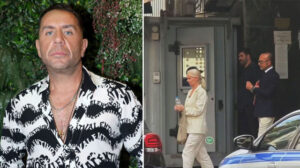
The investigation into the death of Giorgos Mazonakis is now turning toward a new and particularly critical area. As the evidence analysis progresses, indications are strengthening that the authorities are examining whether some substance may have been administered to him before or during the plasmapheresis procedure.
So far, no specific medication or substance has been identified; this is something that will also be determined by the toxicology tests. According to information available to protothema.gr, this possibility is now being investigated with particular attention.
The crucial issue is that, if it is established that a specific substance of the type being investigated was used, its administration would have had to take place under specific medical conditions and in the presence of a cardiologist and an anesthesiologist.
Investigators are therefore attempting to determine not only exactly what happened during the plasmapheresis procedure, but also what had happened before the singer was connected to the machine.
The deleted photograph in which Mazonakis appears to be asleep
Against this backdrop, one of the two photographs recovered from Ioanna Gaka’s mobile phone takes on particular significance. In one of the images, Giorgos Mazonakis is shown lying on the bed where the plasmapheresis procedure was being performed, appearing to be asleep.
The photograph had been deleted from the doctor’s phone that same afternoon, before she and Ilias Theodoropoulos were summoned by the police to give statements.
The image is another piece of evidence that the authorities are placing alongside the other data in the case and attempting to interpret in conjunction with the toxicology tests, witness statements and digital findings.
One of the photographs had been shared
As protothema.gr revealed yesterday, the Directorate of Criminal Investigations identified digital traces indicating that one of the photographs found deleted from Gaka’s device had been shared.
Close
This means that the authorities have an indication that the image was sent or shared, although they do not yet know with certainty who the recipient was. According to the information being examined, it cannot be taken for granted that the photograph was sent to the doctor’s husband.
The answer is expected to emerge through the process of lifting telecommunications privacy restrictions, as further technical analysis of the relevant communications data requires a corresponding court order.
Investigators want to determine who the image was sent to, when it was sent, through which application, and whether it was accompanied by a conversation or message.
These details could prove crucial in determining why the photograph was taken and why it was subsequently deleted.
Investigation into artificial-intelligence searches continues
At the same time, the Hellenic Police continue their efforts to recover and accurately decode searches that allegedly were carried out using an artificial-intelligence tool during the critical moments.
The main objective is to establish who used the system, at what time, exactly what they typed, and what responses they received.
Earlier indications had shown that searches were conducted concerning how a patient could be revived, while the investigation is now attempting to determine the precise content of the queries.
The timing is considered extremely important: investigators want to establish whether these particular searches were made after the machine’s first alerts, after the treatment was interrupted, or when Mazonakis’s condition had already deteriorated dramatically.
The mobile phones of three employees are considered crucial
Significant importance is now also being attached to the mobile phones of three employees of the medical office, which could provide additional evidence about what happened before, during and after the incident.
The authorities are searching the devices for communications, messages, calls, photographs, videos and other digital traces that could help reconstruct the timeline.
Of particular interest is whether there were communications between the employees and the two doctors while the singer’s condition was deteriorating, as well as whether any material was exchanged after the incident.
Examining the three mobile phones could also corroborate or contradict evidence that has already emerged from Ioanna Gaka’s mobile phone and from the medical office’s computer.
Ask me anything
Explore related questions




