





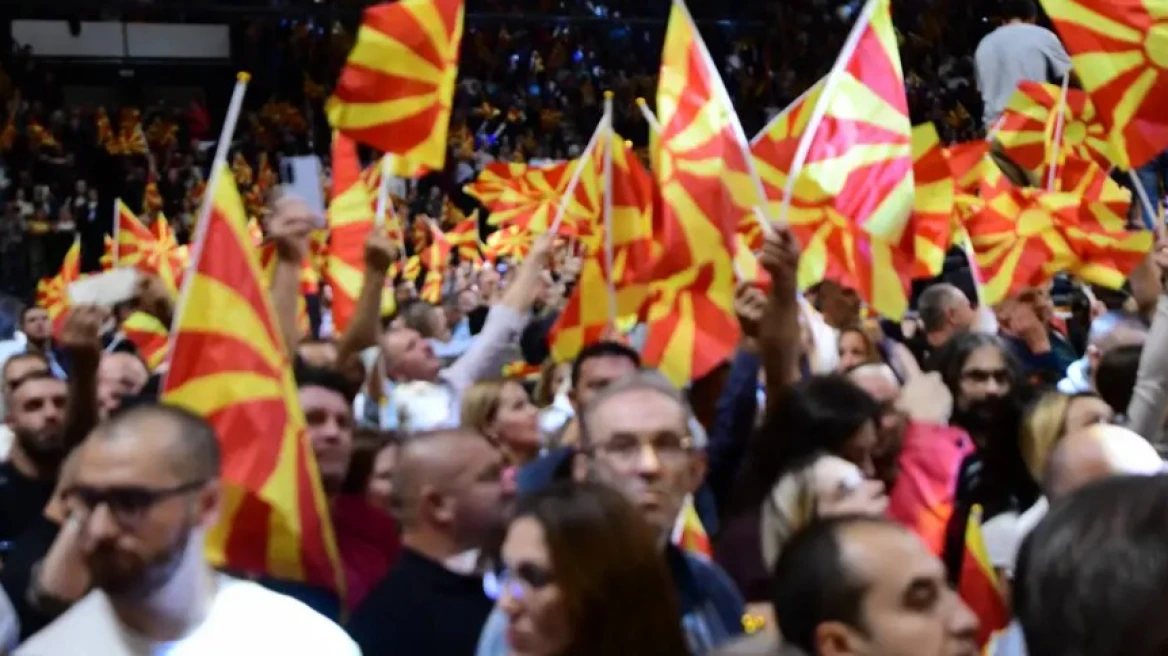
A video from a village festival in northern Greece has reignited long-standing tensions over language, history and identity in the Florina region, prompting a prosecutor’s complaint and an inflammatory response from a Skopje-based activist page.
The footage, recorded on 19 July 2026 during a festival in Meliti, shows participants singing and dancing to “Alexandar Car Makedonski” by North Macedonian singer Suzana Spasovska. The lyrics invoke Philip II and Alexander the Great as exclusively “Macedonian” kings who marched against Athens, declare that “the Greeks were wrong,” and close with the chorus “Leave, Greeks – enough with the lies.” The clip circulated widely after the page Egejski Glas (“Aegean Voice”) shared it with a caption praising “young Macedonians from Ovčari, Lerin area.”
On 8–9 September, two Greek citizens submitted the video to the Florina public prosecutor. They asked investigators to examine whether the performance and accompanying gestures distorted history, promoted division or alluded to the secession of Greek Macedonia.
The following day Egejski Glas posted a statement that went far beyond cultural defence. It described Greek authorities as “fascist occupation forces” prosecuting a “Macedonian singer from the Lerin region” merely for performing songs. If the government in Skopje failed to react, the page declared, “we Macedonians will have no choice but to self-organise, arm ourselves and move to defend our enslaved brothers in Aegean Macedonia – exactly as the UÇK (a.k.a. KLA) and NLA did.” It claimed that 20,000 armed “Macedonians” could overwhelm Greece and recalled 1946, when, according to the group, “Macedonians stood at the gates of Athens”, a reference to Slavic-speaking fighters who served in the Communist rebellion during the Greek Civil War.
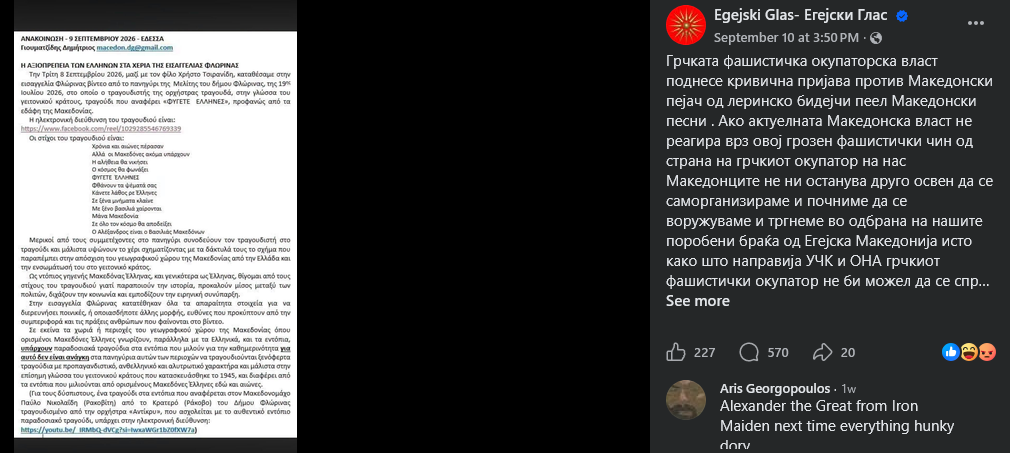
The language revives terminology rejected under the 2018 Prespa Agreement, which settled the name dispute and committed North Macedonia to refrain from territorial claims or irredentist rhetoric toward Greece. Florina (called Lerin in Slavic) and surrounding villages have small Slavic-speaking communities whose cultural practices periodically collide with Greek sensitivities rooted in the Balkan Wars, the interwar period and the Civil War. Greece officially recognises no “Macedonian” ethnic minority.
Greek officials have not issued an immediate public response to the Skopje page’s statement. The prosecutor’s office in Florina is now reviewing the original festival video.
Ask me anything
Explore related questions




