






Toxicology and histology results expected this week could finally explain why the Greek singer Giorgos Mazonakis died at a private clinic in central Athens, as investigators weigh whether more people should face charges.
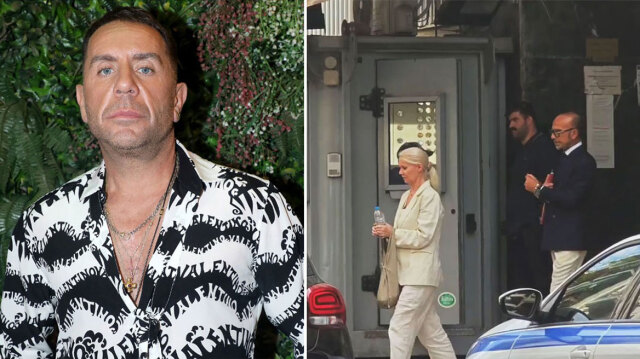
Mazonakis, 54, died on the afternoon of 9 September at a practice on Karneadou Street in the upmarket Kolonaki district, run by Ioanna Gaka, a doctor with no medical specialty, and her husband, internal medicine specialist Ilias Theodoropoulos. Both have been remanded in custody at Korydallos prison.
A post-mortem examination carried out two days after his death, attended by technical advisers for both the family and the two doctors, failed to establish a cause of death. Evidence gathered since, however, has pointed investigators towards specific theories about how he died.
Data is still being recovered from phones seized in the case after authorities were granted access to the suspects’ communications, and fresh material is being passed to the investigating magistrate by the police’s Directorate of Criminal Investigations. New people have come into the frame as a result. It is now possible that others will be brought before the courts, and that the charges against the two doctors will be upgraded further.
Gaka has categorically denied giving the singer any substance or sedation.

A nurse’s testimony
Evidence emerging day by day suggests that the doctors, who promised clients wellness and youth at their Karneadou Street practice, tried from the outset to cover up practices that breached every principle of medical ethics.
As Mazonakis lay dying in one of Gaka’s treatment rooms, a woman in the room next door was undergoing plasmapheresis, a procedure in which blood plasma is removed and replaced. It can be life-saving for certain patients, but only when carried out in a hospital.
This was the account given to the magistrate by one of the clinic’s employees. The same woman confirmed that Mazonakis had been sedated, and said it was she whom Gaka asked for the antidote once it became clear he was slipping away. Although the clinic was illegally fitted out with a range of machines, its defibrillator, a basic device found even in public spaces, did not work because it had not been charged.
According to the employee, staff called not only an anaesthetist as Mazonakis collapsed, but also the defibrillator’s supplier to ask why it was not working. The supplier simply told them it should have been charged.

“The doctor was asleep on the sofa”
The evidence of the 53-year-old nurse carries added weight because she said Gaka asked everyone present at the clinic that lunchtime to agree a common version of events. A second employee confirmed this in her own statement. Charalambos Lykoudis, the lawyer representing the Mazonakis family, has argued, however, that the nurse’s testimony serves an agenda, namely supporting the defence of Theodoropoulos.
“The doctor was asleep on the sofa,” she said. It is extremely difficult, if not impossible, to believe that a doctor could sleep on while a man was dying in his clinic, during a procedure that was carried out illegally and routinely, even at weekends. An anaesthetist was called, resuscitation instructions were sought and staff searched for antidotes to the sedative, which had also been administered illegally. Meanwhile, Theodoropoulos woke up, saw a patient and issued a prescription through the electronic prescribing system.
Lykoudis nonetheless said it was only a matter of time before the details provided by the nurse came to light. The sedation and other drugs used will show up in the toxicology results, while the phone records reveal the conversations with the anaesthetist and every other call made. Even messages the suspects tried to delete were recovered and have formed part of the case file since the first days of the investigation.
Colon hydrotherapy and hypnotherapy
Every new piece of evidence in the case has raised fresh questions. The recovery of a photograph of the singer taken at the clinic brought hypnotherapist Nasos Komianos to the centre of the inquiry, and it later emerged that he and the doctors worked together. The approach was straightforward: before the mind and soul could be “cleansed” through hypnotherapy, the body had to be cleansed first. That was what brought Mazonakis to Karneadou Street.
In less than 24 hours he underwent colon hydrotherapy, on Tuesday 8 September, followed by plasmapheresis. The second procedure was never completed. Mazonakis died 42 minutes after it began, according to data from the machine itself, which Theodoropoulos and Gaka were using illegally for “treatments” costing many thousands of euros.
The two doctors initially claimed that Mazonakis collapsed before the plasmapheresis had started.
A deadly combination
Experts say the short gap between the colon cleanse and the plasmapheresis may also have played a part. Dimitris Manikis, an anaesthetist at Attikon University Hospital in Athens, has pointed out that hydrotherapy causes dehydration, whereas plasmapheresis requires the body to be well hydrated. Forensic pathologist Grigoris Leon told Proto Thema that the danger lies not only in dehydration but, above all, in the disruption of electrolytes such as potassium and sodium, which the heart needs to function properly.
The findings of the police investigation and the statements given to the magistrate point to specific theories about the cause of death. Definitive answers will come from the toxicology results, and the family has asked, through its lawyer, for the process to be speeded up. It has also said it will commission independent toxicology tests through its own technical adviser, having been told the official results could take considerably longer.
Leon said the histology and toxicology findings, taken together with everything that was and was not done during those critical hours, would probably show that death resulted from a combination of factors. “The more information comes to light, the wider the circle of responsibility becomes,” he said. This was not a case of something going wrong, he added, but of a situation that was wrong from the start, with Mazonakis as its victim.
Unanswered questions
Drawing together everything that has emerged so far, Leon poses a series of questions.
- Gaka herself admitted in her very first statement that Mazonakis arrived at Karneadou Street “in a bad way”. Why did she not order blood tests or heart checks? She knew he had undergone hydrotherapy and, as a medical graduate, should have known the likely effects on his body. Why was not even a basic electrocardiogram carried out?
- Mazonakis was given anaesthetic drugs. How does a private practice come to hold drugs that are administered only in hospital, and how does a doctor with no specialty come to administer them? The supply of these drugs is a separate strand of the investigation and could implicate others.
- What dose of anaesthetic was given, and which antidote? Three substances have been mentioned: propofol, which has no antidote, and midazolam, along with its antidote flumazenil. The question is whether a combination of these drugs was ultimately given, which the toxicology results will show.
- What complications preceded the collapse, and when? Did his heart rate drop, did he develop an arrhythmia, did he stop breathing, did his blood pressure fall? And how was each of these handled?
- Equally critical is the fact that the two doctors sought guidance from artificial intelligence but did not call EKAB, Greece’s national emergency ambulance service. “Depending on how a member of the public describes an incident, EKAB staff are trained to give basic instructions until paramedics arrive. Not even that happened here, and we are talking about doctors. The husband is an internal medicine specialist, a frontline specialty. But they know that a call to EKAB is recorded. The fact that they did not even accompany their patient to hospital is beyond comment,” Leon said.
As analysis of the suspects’ communications continues, exchanges that have already surfaced have caused shock over the cynicism they appear to reveal. “I’ll sort him out for you,” the hypnotherapist allegedly replied when Gaka told him the singer did not want to return for plasmapheresis the day after his hydrotherapy. The remark has so far been read as meaning that Mazonakis was reluctant to go back to the clinic, but it will need to be assessed against the full exchange between Gaka and Komianos contained in the case file.
Komianos: “I’ll squeeze him in”
Komianos, who practises in the northern Athens suburb of Kifissia, gave evidence to the magistrate last Monday morning. He reportedly said he was first contacted about Mazonakis on 27 August, by someone from the singer’s professional circle. He claimed he had been unwilling to take the singer on because of his earlier stay at Dromokaiteio, a psychiatric hospital in Athens. After further contact, however, he met Mazonakis at a restaurant in the suburb of Psychiko on Monday 7 September. The same day he got in touch with Gaka, and the hydrotherapy appointment was booked for the following morning.
Komianos also referred to a message he sent Gaka that read “leave it, I’ll squeeze him in”, which he said meant he would fit the singer into his appointment schedule. The Greek verb he used can also mean to corner or put pressure on someone.
Among the questions still unanswered is why Gaka photographed Mazonakis and why she sent the picture to Komianos. The movements of Theodoropoulos also remain unclear. So far there are only his own defence claims, backed by witness statements, which failed to convince the prosecutor and investigating magistrate, who ordered him held in custody on exactly the same terms as his wife. Theodoropoulos intends to apply for his release, even if under house arrest.
Another nurse from the clinic is expected to give evidence to the magistrate in the coming days.
Ask me anything
Explore related questions




