





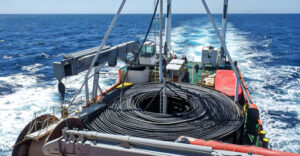
The scenarios for changing the route of the Cyprus-Crete electricity interconnection cable (GSI) in order, as reported, to bypass the Marine Park illegally established by Turkey south of and around Kastellorizo are without substance and disregard the actual facts. In another development, for the first time, the Turkey-Libya Memorandum has come under scrutiny by the Israeli Security Services.
As the final decision on the resumption of survey work for laying the Crete-Cyprus electricity interconnection cable, which is planned to reach Israel, remains pending, Athens says it is determined to proceed with the issuance of a NAVTEX as soon as the relevant request is submitted by GSI, which is now managed by French company Meridiam.
Turkey has not changed its position, demanding a say in the works in order to establish its illegal claims in the area and its challenge to Greek sovereign rights over the continental shelf in the Eastern Mediterranean, and to impose in practice the illegal Turkey-Libya Memorandum.
Scenarios for changing the cable route had also been discussed in the past, but were rejected, as they would give the impression that Turkey’s blackmail was being accepted, create new practical problems for the implementation of the GSI and, at the same time, fail to resolve the issue.
In particular, the scenario of changing the route so that the cable-laying would avoid the Fethiye Marine Park, which Turkey illegally established in the area south of and around Kastellorizo, is without substance, as from the outset the planned cable route and the surveys that will precede it run many miles south of the boundaries of the illegal Turkish marine park, and simply placing the two maps side by side makes this clear at a glance.
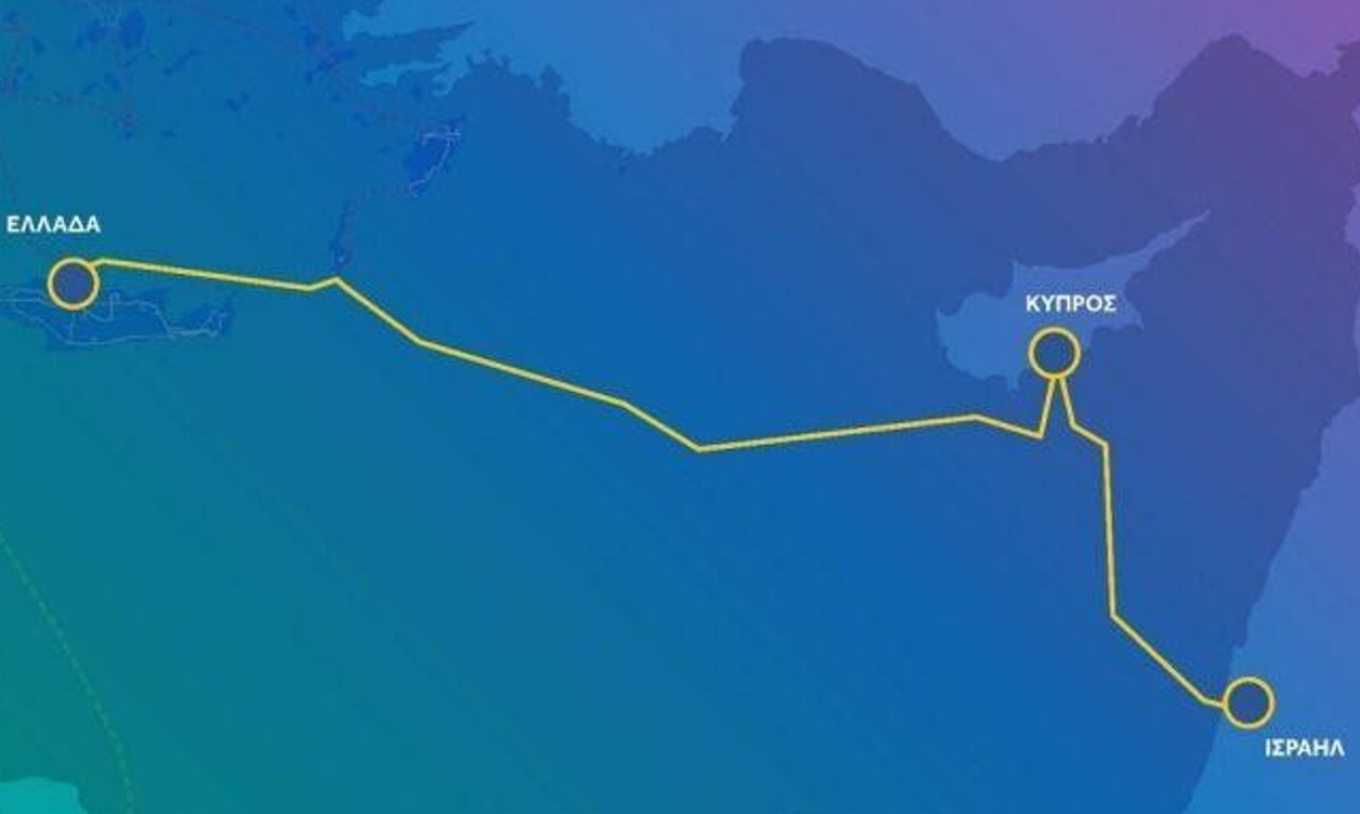
Map showing the cable route as originally planned
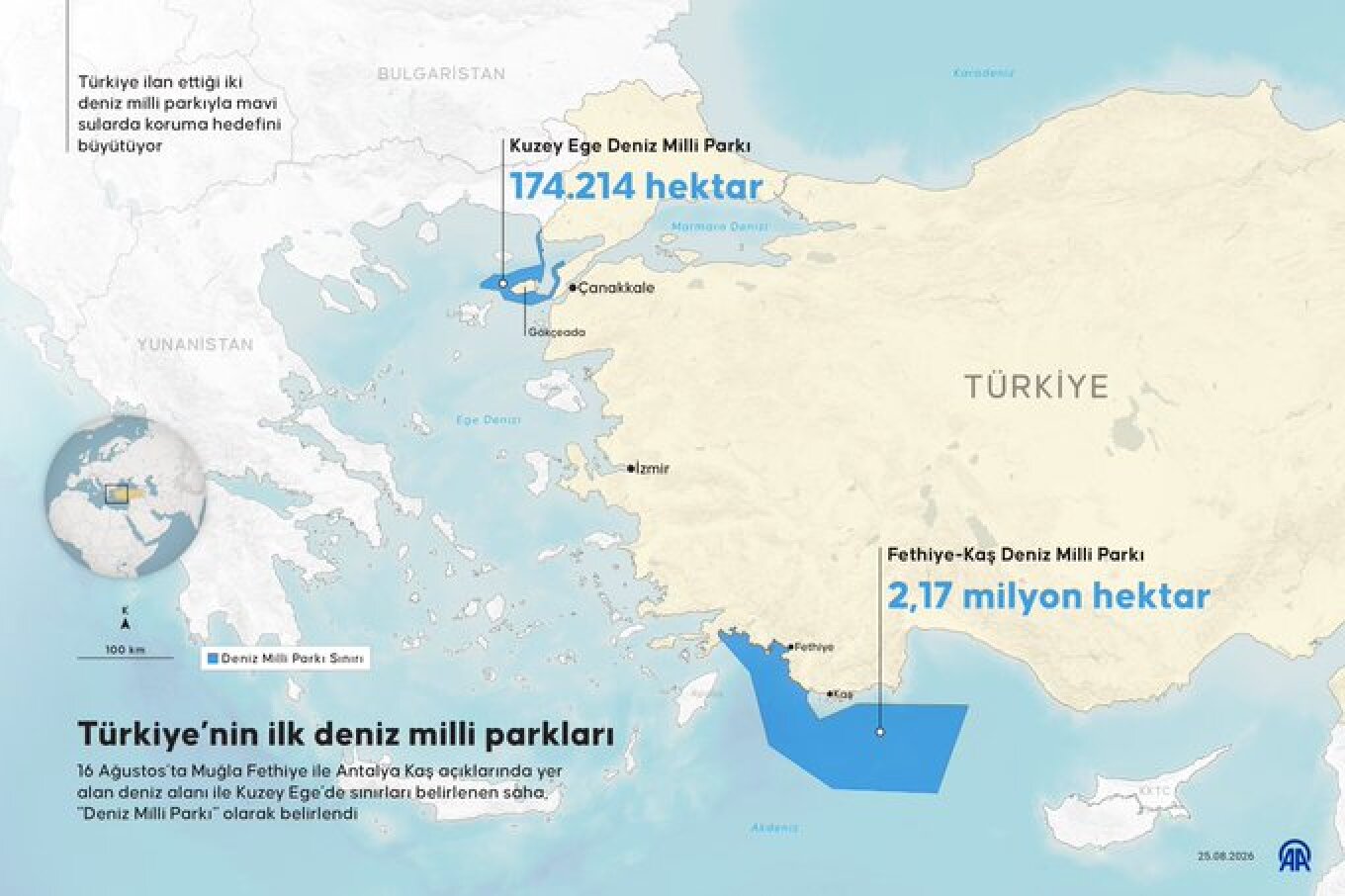
The boundaries of the Turkish marine parks, clearly showing that the cable passes much farther south
Moreover, in 2024, when the Kasos crisis occurred, the marine parks did not even exist. The reason Turkey is attempting to obstruct surveys for the cable laying is that it considers that any activity taking place within the Turkey-Libya Memorandum (and not the marine park, which is environmental in nature) should have its own approval and authorization. For this reason, in July 2024, Turkey prevented the Ievoli Relume from carrying out its surveys just outside the 6-nautical-mile territorial waters of Kasos, far from the Marine Park established by Turkey in 2026.
In this way, it seeks not only to establish the Turkey-Libya Memorandum, but also to invalidate the delimited Greek EEZ (under the Greek-Egyptian agreement), which overlaps with the Turkey-Libya Memorandum.
While the cable route is already planned to run many miles south of the Marine Park, the problem with Turkey remains, as the cable, starting from Kasos, or even from Crete, and heading east, would necessarily have to pass through the area that Turkey considers its continental shelf and EEZ under the Turkey-Libya Memorandum. Moreover, even the other scenarios previously discussed for rerouting the cable further south, so that it would pass through the Egyptian EEZ, raised major concerns over the project’s viability due to the geological characteristics and great depth of the seabed, as well as the significant increase in the length of the cable, and were therefore rejected.
The area that Turkey considers its own continental shelf
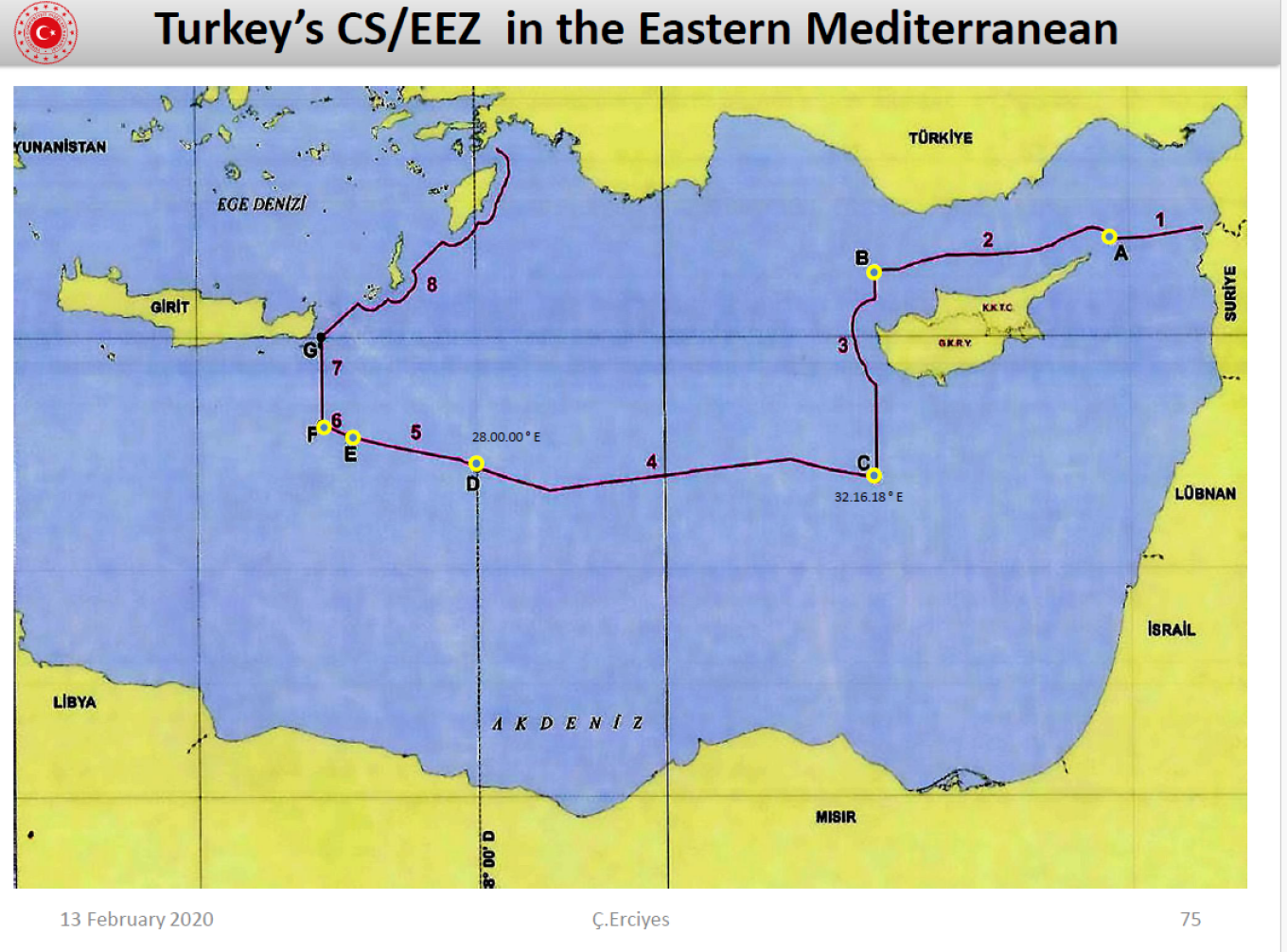
The So-Called Turkey-Libya Memorandum Comes Under Israeli Scrutiny
Meanwhile, amid the ongoing discussions and while developments on the cable issue are awaited, a report published today in Tel Aviv is significant, according to which the so-called Turkey-Libya Memorandum has come under Israeli scrutiny, as the IDF Intelligence Directorate is examining the consequences of Turkey’s attempt to divide the Eastern Mediterranean in two for Israel’s security and its maritime interests in the Eastern Mediterranean. According to a report by the Jerusalem Post, the delineation of the Turkey-Libya Memorandum and Turkey’s demand that any project in the area receive its approval are intended to prevent—or at least disrupt—the construction of a natural gas pipeline from Israel to Cyprus and Greece and ultimately to Europe, as well as the development of subsea communications infrastructure and electricity interconnection cables.
Israeli defense officials cited by the respected newspaper stress that the Intelligence Directorate has not ignored developments in the region and must examine any development that could affect the interests of Israel and its allies, while there are also concerns about possible harm to Israel’s freedom of navigation, with 98% of Israeli imports arriving by sea.
Israel’s defense establishment, particularly the Intelligence Directorate of the Israeli military, the Mossad and the Israeli Navy’s intelligence branch, is concerned about Turkey’s moves in the region, as senior officials regard them as attempts to constrain and isolate Israel, in addition to what they see as clear and direct threats from Erdogan.
The defense establishment, the JP points out, is particularly sensitive to movements and changes along maritime trade routes, amid tensions in the Strait of Hormuz and the Bab el-Mandeb Strait in the Red Sea, due to their potential impact on Israel’s economy and security interests. This development also comes as a result of the escalating Turkey-Israel confrontation, which peaked in recent days both at and on the sidelines of the UN General Assembly, and constitutes another indication of the strategic character being assumed by this regional Turkey-Israel rivalry.
Ask me anything
Explore related questions




