





Greek Prime Minister Kyriakos Mitsotakis has told Britain that Greece will neither recognise foreign ownership of the Parthenon Sculptures nor borrow what he called the country’s own treasures.
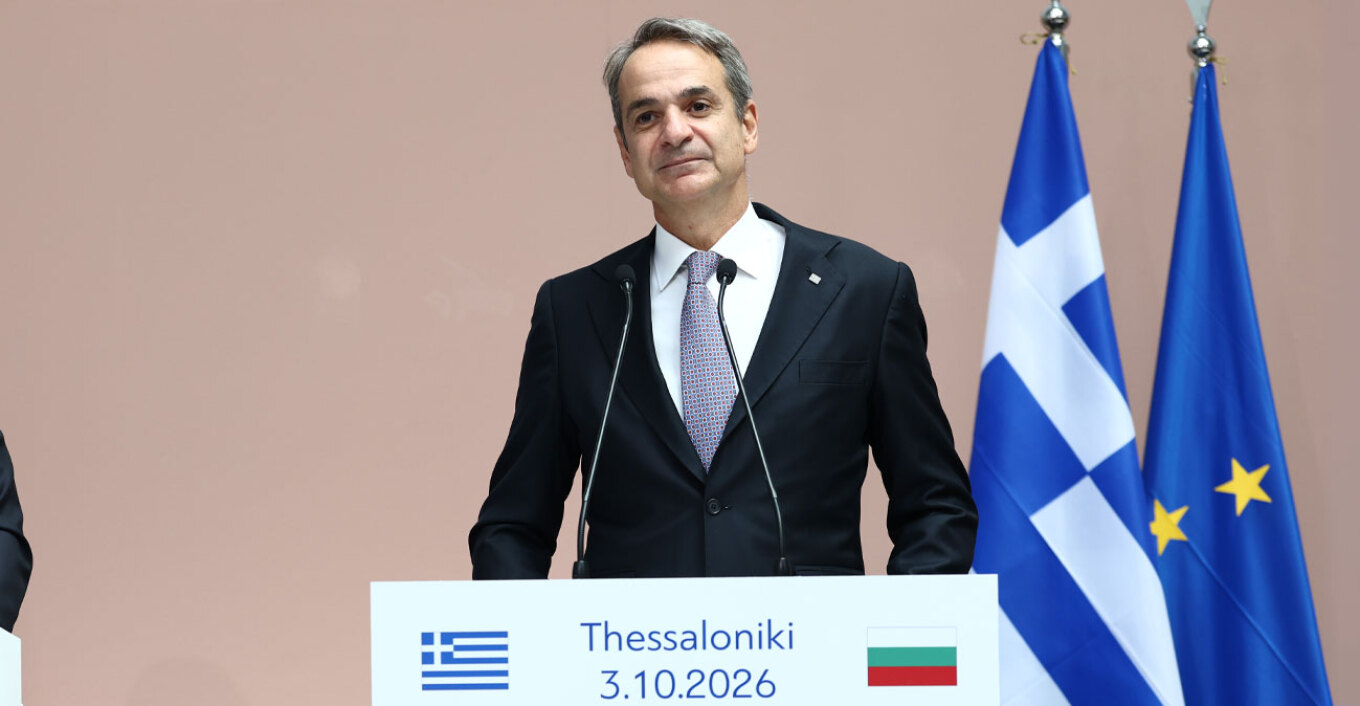
Speaking in Thessaloniki at the signing of protocols for the exchange of historical relics and anthropological material between Greece and Bulgaria, Mitsotakis said the Parthenon was a universal monument. The sculptures are held in the British Museum in London.
“The Parthenon Sculptures are not lifeless evidence of yesterday. When you tear them from the setting that created them, you mutilate the history that gave them life,” he said. Greece’s position, he added, was not a vague national claim and did not question the mission of museums around the world.
He described the Parthenon as a unique, self-contained case, concerning the restoration of a universal monument that remains violently dismembered. “My homeland will not accept arrangements that imply foreign sovereignty, or agree to borrow,” he said. “The time for truth and justice has come.”
The ceremony completes a memorandum of understanding signed recently by the two countries’ culture ministers, Lina Mendoni of Greece and Efthim Milosev of Bulgaria. The Ministry of Culture said it followed years of systematic negotiations.
Under the deal, 48 relics are returning to Greece. They were taken in 1917, during the First World War, and had since been kept or displayed at the National History Museum in Sofia. They come from the Holy Monastery of Panagia Eikosifoinissa, the Holy Monastery of the Honourable Forerunner (Timios Prodromos) near Serres, and the Holy Metropolis of Serres and Nigrita.
Mitsotakis said the collection includes sacred icons and crosses, vestments, a reliquary and a bishop’s throne, objects of priceless cultural, spiritual and emotional value. They will be displayed at the Museum of Byzantine Culture in Thessaloniki until 5 November 2026, after which they will be handed permanently to the monasteries and the Metropolis they were taken from.
The agreement is a two-way exchange. Greece will hand Bulgaria the remains identified as those of Tsar Samuel, who ruled from 997 to 1014, along with the other anthropological material from four sarcophagi in the Basilica of Saint Achilleios in Prespa. The finds were uncovered in the 1960s by Professor Nikolaos Moutsopoulos and had been kept in recent years at the Museum of Byzantine Culture.
Mitsotakis said the remains had been preserved by the Greek state for decades and now return to the Bulgarian people, to be honoured in whatever way Bulgaria considers most fitting. He noted the presence of the Bulgarian prime minister’s wife at the event and said he was moved by it.
He said the deal ends a negotiation that began about half a century ago, with first contacts made in the 1970s by Konstantinos Karamanlis and the then Bulgarian leader Todor Zhivkov. “It took time, and above all will and determination, to overcome the rigidities of the past,” he said.
The prime minister thanked his Bulgarian counterpart, the previous governments of both countries, the two culture ministries and the management and staff of the Museum of Byzantine Culture. “This channel of bilateral cooperation is now opening,” he said, calling the agreement a first step towards closer ties and the return of further cultural objects to both countries.
Mitsotakis said past progress had often been held back by inertia and, at times, maximalist demands. Cultural diplomacy, he argued, works quietly but productively, citing the return of a fragment from Sicily, a deal praised by UNESCO. “Monuments and historical relics cannot be treated as spoils of war, nor as victims of circumstances that came after their creation,” he said.
Turning to relations between the two countries, he noted that Greeks and Bulgarians have shared the same region for 15 centuries, through conflict, division and hardship. “We do not prettify history, nor should we erase it. But we must learn from its darker pages, putting first what unites us: our shared cultural and religious roots, mutual recognition of each other’s identity and, above all, our common future,” he said.
He called bilateral relations the best they have ever been, with room for closer cooperation in trade, energy, tourism, the environment, water management and culture. “In a troubled world, let us make our cooperation an example of security, stability and progress, with today’s agreement as the first step, the seal on this optimistic choice,” he said.
The Holy Synod of the Church of Greece welcomed the return of the 48 relics “after more than a century” of arduous negotiations. It called the agreement a success for the nation that reflects cooperation between State and Church, and hoped the memorandum would be “only the good beginning”, with further deals to return other church relics taken from churches, monasteries and sites in Eastern Macedonia and Thrace.
The Synod congratulated Metropolitan Theologos of Serres and Nigrita and Metropolitan Dorotheos of Drama for their persistence, and paid tribute to the late Metropolitan Pavlos of Drama, whom it described as the “architect and leading force” of the effort.
The Culture Ministry stressed that the signing does not end the process. Both sides have agreed to keep negotiating on identifying further historical objects of mutual interest, to be included in a later agreement.
Ask me anything
Explore related questions




