





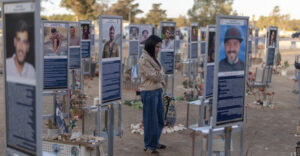
Three years later, October 7, 2023, is no longer merely the date of the deadliest attack Israel has suffered since its founding. It is the starting point of a chain of events that changed the balance of power in the Middle East, overturned military and political assumptions that had stood for decades, brought Israel and Iran from a shadow war into direct confrontation and, three years later, has now openly involved the United States in a war whose consequences stretch from Gaza and Beirut to the Strait of Hormuz and international energy markets.
The Middle East of October 6, 2023, no longer exists. At the time, Israel believed Hamas could be contained inside Gaza through deterrence, technology, intelligence and periodic military operations. Hezbollah represented the main threat on the northern border, but the mutual deterrence that had developed after the 2006 war appeared to be working.
Iran and Israel had already been at war for years, but primarily through covert operations, cyberattacks, strikes in Syria and regional organizations funded and armed by Tehran. At the same time, Washington was trying to bring Saudi Arabia and Israel toward a historic normalization agreement. All of this began to collapse within a matter of hours.
October 7, 2023: The day certainties collapsed
On Saturday morning, the Qassam Brigades of Hamas and other Palestinian organizations breached the Gaza Strip’s border from dozens of points, while thousands of rockets were launched toward Israeli territory. Kibbutzim, small towns, military installations and the Nova music festival came under attack within hours.
Some 1,200 people were killed, the vast majority of them civilians, while 251 people were taken hostage to Gaza. The attack included the killing of civilians, kidnappings and acts for which the International Criminal Court later issued an arrest warrant for Hamas military leader Mohammed Deif on charges of war crimes and crimes against humanity. The case against him was terminated after his death was confirmed.
For Israel, however, October 7 was more than a military defeat. It was the collapse of an entire national-security doctrine. The security fence, surveillance systems, intelligence and the belief that Hamas was being deterred proved inadequate against an attack that had been prepared without the Israeli system realizing in time its scale and, above all, when it would take place.
That trauma continues to shape Israel three years later. Security became an almost absolute political priority, trust in the state and its institutions was damaged, and the debate over the responsibility of the political and military leadership never came to an end. In the October 27, 2026 elections, the first since the massacre, families of victims and hostages are still running as candidates, in a country where October 7 remains both a national trauma and an unresolved political reckoning.
From the attack to the largest operation in Gaza
Israel’s response was immediate. Benjamin Netanyahu’s government declared war and set as its main objectives the destruction of Hamas’s military and governmental capabilities and the return of the hostages.
After weeks of airstrikes, the ground operation began on October 27. Israeli forces initially moved into the northern part of the Strip and then toward the center and south. Hamas’s underground tunnel network, operations in an extremely densely built urban environment and the presence of fighters among the civilian population turned Gaza into one of the most difficult operational theaters the Israeli military had ever faced.
The gap between Israel’s military objectives and the cost being paid by the Palestinian population quickly became the focus of international debate. Entire neighborhoods were destroyed, hundreds of thousands of people were repeatedly displaced, the healthcare system was pushed to its limits, and the entry of food, medicine and fuel became a permanent point of confrontation between Israel, the United Nations and humanitarian organizations.
It was the moment when two realities began to coexist without one canceling out the other. On the one hand, Israel was fighting an organization that had carried out the largest massacre of civilians in the country’s history and continued to hold hostages. On the other, the Palestinian civilian population was paying a cost that over the following months and years would reach unprecedented levels for Gaza.
The hostages and the first truce
In November 2023, the first substantial pause in the war took place. The agreement reached through the mediation of Qatar, Egypt and the United States allowed more than 100 hostages and hundreds of Palestinian prisoners to be released.
The truce, however, lasted only one week.
From that point onward, the hostages were no longer merely a humanitarian and military issue. They became a central political fault line within Israel itself. Their families pressed for an agreement even at significant military cost, while the government insisted that only pressure on Hamas could lead to their return. This disagreement would accompany Israeli society for almost two years.
Gaza becomes an international crisis
By early 2024, the war had ceased to be exclusively a military confrontation between Israel and Hamas. The humanitarian crisis, civilian casualties and restrictions on aid brought the Israeli government into conflict even with close allies.
On February 29, 2024, more than 100 Palestinians were killed near a humanitarian-aid convoy in Gaza. Palestinian authorities accused Israeli forces of opening fire. Israel said that much of the loss of life was caused by trampling and vehicles amid the chaos, while acknowledging that soldiers fired in limited circumstances when they felt threatened. The incident illustrated the widening gap between the two narratives, as well as the reality of an area where the distribution of food could turn into a deadly event.
In May came the operation in Rafah. More than one million people had taken refuge in the area following earlier evacuation orders. Israel argued that the last organized Hamas brigades were located there. Within days, hundreds of thousands of Palestinians once again fled the area.
At the same time, the war moved into international courtrooms. The International Court of Justice in The Hague, considering South Africa’s case under the Genocide Convention, ordered provisional measures against Israel. It did not rule at that stage that genocide had been committed, but determined that binding measures were required to protect Palestinians and provide humanitarian aid. In November of the same year, the International Criminal Court issued arrest warrants for Benjamin Netanyahu and then-Defense Minister Yoav Gallant for alleged war crimes and crimes against humanity. Israel rejected the accusations and challenged the Court’s jurisdiction.
This was another change brought about by October 7. Israel had initially received almost universal Western support following the Hamas attack. Over the following months, that picture began to change as casualties and destruction in Gaza increased.
October 8: The second front had already opened
The regional war had, in reality, begun one day after Hamas’s attack.
On October 8, 2023, Hezbollah opened fire from Lebanon, saying it was acting in support of Gaza. For months, the two sides attempted to keep the conflict below the threshold of all-out war. Rockets, anti-tank weapons, drones and Israeli strikes became routine in the border area.
Tens of thousands of Israelis left the towns and villages of the north. Likewise, tens of thousands of Lebanese were displaced from the south. The return of northern Israeli residents to their homes gradually became another strategic objective of the Israeli government.
But the more important development was elsewhere. The conflict had now operationally linked Gaza to the “Axis of Resistance” that Iran had built over decades.
The Houthis and the war reaches the world’s seas
In November 2023, Yemen’s Houthis began attacking ships in the Red Sea, saying they were acting in solidarity with the Palestinians.
A local front thousands of kilometers from Gaza immediately acquired global economic significance. Major shipping companies began bypassing the Red Sea and the Suez Canal and sending their vessels around the Cape of Good Hope. Transit times and insurance premiums increased. Egypt estimated that in 2024 alone it lost approximately $7 billion in Suez Canal revenues.
October 7 had now affected not only Israel and the Palestinians, but one of the planet’s most important commercial arteries.
April 2024: Israel and Iran emerge from the shadows
For decades, Israel and Iran had avoided open, direct military confrontation. Iran supported Hezbollah, Hamas, Islamic Jihad and other organizations. Israel carried out operations against Iranian targets in Syria and covert actions against Iran’s nuclear program.
In spring 2024, this model began to collapse.
On April 1, a strike on the Iranian diplomatic compound in Damascus, attributed to Israel, killed senior members of the Islamic Revolutionary Guard Corps. On April 13–14, Iran responded directly from its own territory, launching hundreds of drones and missiles toward Israel.
The overwhelming majority were intercepted, with the participation of the United States and other countries. The military damage was limited. The strategic significance, however, was enormous.
For the first time, Tehran had openly and massively attacked Israel from Iranian territory. Israel responded several days later with a limited strike inside Iran. The taboo had been broken.
Summer and autumn 2024: The war changes character
On July 31, Hamas political leader Ismail Haniyeh was killed in Tehran. He had traveled to Iran for the inauguration of the new president. The assassination inside the Iranian capital was itself highly symbolic. The message was that even senior figures in the network of organizations supported by Iran were not safe, even in Tehran itself.
A few weeks later came the heaviest blow to Hezbollah.
On September 17 and 18, thousands of pagers and radios used by the organization’s operatives and members exploded simultaneously across Lebanon. At least 37 people were killed and more than 3,000 injured. Hezbollah considered these devices safer than mobile phones against Israeli surveillance capabilities. The operation revealed that the penetration had reached deep into the organization’s own supply chain.
On September 27 came the strike that definitively changed Hezbollah. Hassan Nasrallah, the man who had led the organization for more than three decades and had become a central pillar of Iran’s strategy in the Middle East, was killed in an Israeli airstrike in the southern suburbs of Beirut.
Hezbollah did not disappear. But within a very short period it lost much of its senior leadership, members of its military command, communications systems and a significant part of its operational freedom.
Israel subsequently moved to ground operations in southern Lebanon.
October 1, 2024: The second Iranian attack
Iran responded with a new mass ballistic-missile attack against Israel. This time, the missiles arrived much faster, and some penetrated Israeli and allied air defenses.
On October 26 came the Israeli response, with strikes on Iranian military installations and air-defense systems.
Within six months, Iran and Israel had exchanged two rounds of direct attacks. The mechanism that for years had kept the conflict within the realm of “plausible deniability” had effectively ceased to function.
Assad’s fall and the rupture in the Iranian corridor
On November 27, 2024, the ceasefire between Israel and Hezbollah took effect, following 14 months of fighting that had killed more than 3,700 people in Lebanon and displaced approximately 1.4 million.
A few days later, something even more significant happened.
On December 8, Bashar al-Assad’s regime in Syria collapsed. For Iran, the loss of Damascus was not simply another geopolitical defeat. For decades, Syria had been the main land bridge between Iran and Hezbollah in Lebanon. Weapons, expertise and equipment were transported through Syrian territory.
Hamas had suffered enormous losses in Gaza. Hezbollah had sustained the heaviest blow in its history. Assad had fallen. The regional architecture Tehran had built over decades had begun to recede simultaneously at multiple points.
This sequence is crucial to understanding what followed.
2025: The Gaza ceasefire and the return to war
On January 19, 2025, a new Gaza ceasefire agreement took effect. The first phase provided for the release of 33 hostages in exchange for nearly 2,000 Palestinian prisoners and a gradual Israeli withdrawal from certain areas.
For the first time in many months, it appeared possible that the war could be brought to a permanent halt.
It did not happen.
Negotiations over the second phase became stuck on the same fundamental problem that had blocked previous agreements. Hamas demanded a permanent end to the war and a full Israeli withdrawal. The Netanyahu government would not agree to end operations without eliminating Hamas’s military and governmental power.
In March 2025, large-scale Israeli operations resumed.
Gaza entered the second year of a war that had by then transformed both the enclave itself and Israel’s international standing.
June 2025: The first real Israel-Iran war
On June 13, 2025, the conflict moved to the next level. Israel launched Operation “Rising Lion” against Iran. Nuclear facilities, ballistic capabilities, senior officers and scientists were targeted. Among those killed were Islamic Revolutionary Guard Corps commander Hossein Salami, Iranian Armed Forces chief Mohammad Bagheri, and a number of senior military officials and nuclear-program scientists.
Iran responded with hundreds of ballistic missiles and drones against Israel. Missiles struck Tel Aviv and other cities, homes, university facilities and Soroka Hospital.
On June 22, the United States entered the war directly. American bombers struck the nuclear facilities at Fordow, Natanz and Isfahan.
The war lasted 12 days. According to Iran’s official tally, at least 935 people were killed in Iran. An independent human-rights organization recorded a higher figure, approximately 1,190 deaths. In Israel, 28 people were killed by Iranian strikes.
The significance, however, was not measured only in those killed or the facilities destroyed. For the first time, Israel and Iran had fought a prolonged direct war. And for the first time, the United States had used strategic bombers against the Islamic Republic’s nuclear program. The distance from October 7 to Fordow was now unmistakable.
October 2025: Gaza stops fighting as before, but it is not at peace
In October 2025, two years after the attack, Donald Trump’s 20-point plan opened a new path toward a ceasefire.
On October 10, the first phase took effect. Three days later, Hamas released the last 20 hostages confirmed to be alive, while Israel released Palestinian prisoners. The remains of the remaining hostages were gradually returned, and the third anniversary is the first in which none of the hostages from October 7 remain in Gaza, alive or dead. The agreement, however, did not resolve the fundamental political problem.
A year after the ceasefire, Hamas has not been disarmed, postwar governance of Gaza has not been agreed upon, the proposed international stabilization force has not been established, and reconstruction remains in its infancy. Israel continues to control approximately two-thirds of the Strip, while more than 1,400 Palestinians have been killed in incidents and Israeli strikes since the ceasefire began. Gaza did not return to October 6. It could not have.
The diplomatic change the war also brought
2025 also saw another transformation with long-term significance.
Britain, France, Canada, Australia and a number of other countries formally recognized the State of Palestine. For countries that had maintained particularly close ties with Israel for decades, the move was historic. Their governments said the goal was to preserve the prospect of a two-state solution. Israel responded that these decisions rewarded Hamas following the October 7 attack.
The issue had also changed Western societies. Support for Israel was no longer an automatic political consensus across much of Europe and even in the United States. In 2026, traditionally bipartisan American support for Israel shows deep divisions, particularly within the Democratic Party.
At the same time, the period following October 7 was accompanied internationally by a major increase in antisemitic incidents as well as anti-Muslim hatred. The war spread from the Middle East to universities, streets, parliaments and election campaigns across the West.
February 28, 2026: The conflict becomes an American-Israeli war with Iran
What had seemed unimaginable in 2023 finally happened on February 28, 2026. The United States and Israel launched a joint large-scale attack against Iran. Washington named its operation “Epic Fury,” while Israel called its operation “Roaring Lion.”
The first strikes killed Supreme Leader Ayatollah Ali Khamenei, the man who since 1989 had shaped the Islamic Republic’s foreign and defense policy and invested enormous resources in Tehran’s network of regional allies.
The Iranian response was not limited to Israel. Missiles and drones were directed against American bases and facilities in Gulf countries. The conflict spread into Lebanon again. The Houthis escalated their operations. The Strait of Hormuz, through which approximately one-fifth of the world’s oil supply passed before the war, became a central arena of military and economic pressure.
A temporary ceasefire was reached in April. A new agreement followed in June, which also quickly began to unravel. In October 2026, the war has not ended. The United States and Iran continue to seek a way out through intermediaries, while Tehran is linking any agreement to the blockade of its ports and the status of the Strait of Hormuz.
The original Gaza crisis had now turned into a war affecting global energy supplies. In September, oil exports from the Gulf, excluding Iran, had recovered to approximately 81% of prewar levels, but prices, freight rates and insurance premiums remained elevated. The U.S. Energy Information Administration now forecasts an average Brent price of approximately $98 for 2026.
Three years earlier, the conflict had begun with armed men crossing a fence on Israel’s southern side. Today, it affects energy flows, the United States’ strategic missile reserves, shipping through two of the world’s most important maritime passages, and political balances in Europe and America.
The Israel that emerged from October 7
Israel in 2026 is different from Israel in 2023. Its leadership believes that the old approach of containing its adversaries failed. Deterrence has largely been replaced by a logic of preemptive action and removing threats before they reach a level Israel considers unmanageable.
Hamas has suffered devastating blows but has not disappeared. Hezbollah lost much of its historic leadership and capabilities developed over decades, but it continues to exist. The Assad regime, Iran’s crucial ally in Syria, is gone. Iran itself has been repeatedly struck on its territory and has lost its supreme leader. The Israeli state demonstrated that it possesses intelligence, air-power and deep-penetration capabilities that few countries possess.
The price, however, is also real. The country has counted hundreds of soldiers killed since October 7, tens of thousands of people recognized as victims of hostile actions, and a society in which the psychological consequences of the war are now visible. At the end of September 2026, the Israeli military recorded 970 soldiers killed since the beginning of the war and 6,424 wounded. Israel’s Ministry of Defense, calculating the total for the armed forces, police, Shin Bet and other security bodies, puts the number of those killed since October 7 at 1,318.
And above all, the question of October 7 has not yet been fully answered: how could a state that had built much of its identity around its ability to anticipate and prevent the next attack be caught by surprise on such a scale?
Gaza three years later
On the other side of the border, the picture is that of an area transformed almost beyond recognition.
More than 74,000 Palestinians have been killed since the beginning of the war, according to Gaza’s Ministry of Health, whose figures are used in UN reporting. More than 175,000 have been injured. The ministry does not distinguish civilians from combatants in its overall tally, while Israel argues that a significant proportion of those killed were members of armed organizations.
Much of the building stock has been destroyed or damaged. Hundreds of thousands of people continue to live in tents or makeshift shelters. More than 1.2 million people still face acute food insecurity, while the actual cost of reconstruction is now estimated at more than $70 billion.
The end of major ground operations does not amount to a return to normality. For a large number of Palestinians, the normality that existed before 2023 no longer exists.
Three years, the numbers that remain
Numbers do not by themselves describe a war and must be treated carefully, because they come from different sources and cannot be added together without distinctions. Approximately 1,200 people were killed in the October 7 attack and 251 were abducted. Since the beginning of the war, Israel’s National Insurance Institute has recorded 1,029 civilians killed in hostile actions across all fronts, a figure that includes victims of October 7 itself but not members of the security forces. The Ministry of Defense separately records 1,318 members of the armed forces and security services killed.
In Gaza, more than 74,000 deaths and more than 175,000 injuries have been reported. In the 2023–2024 Israel-Hezbollah war, more than 3,700 people were killed in Lebanon, while the new regional conflagration of 2026 had added at least another 1,530 deaths in the country by early April. In the 12-day war of 2025, Iran officially recorded 935 deaths and Israel 28. In the much larger conflict that began on February 28, 2026, available tallies as early as the beginning of April put the number of deaths in Iran alone at between 1,900 and 3,636, along with 23 Israeli civilians and 13 American service members, with no single independently verified overall toll yet available for all months and all fronts.
Three years later, perhaps this is the most important difference from the morning of October 7, 2023. At that time, the crisis appeared to concern two sides on a strip of land approximately 40 kilometers long. Today, none of the main fronts that opened since then has truly returned to its previous state. Gaza remains devastated and without an agreed political future. Israeli society continues to seek answers over the greatest security failure in the country’s history. Lebanon has once again paid a heavy price. Syria has changed regimes. Iran’s regional architecture has suffered blows that three years ago would have been considered unimaginable. And Israel, Iran and the United States are now involved in a conflict that is no longer being fought through proxies but directly.
October 7 first changed Israel. The war that followed changed Gaza. Its expansion changed the Middle East. And within three years, the conflict has come to affect energy markets, global maritime routes, the West’s relations with Israel, and the strategic choices of the world’s major powers.
Ask me anything
Explore related questions




