





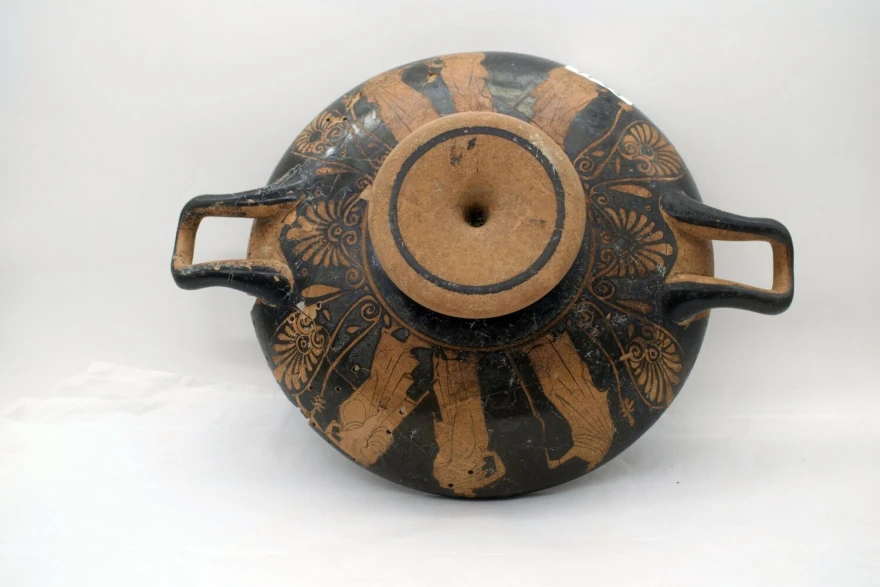
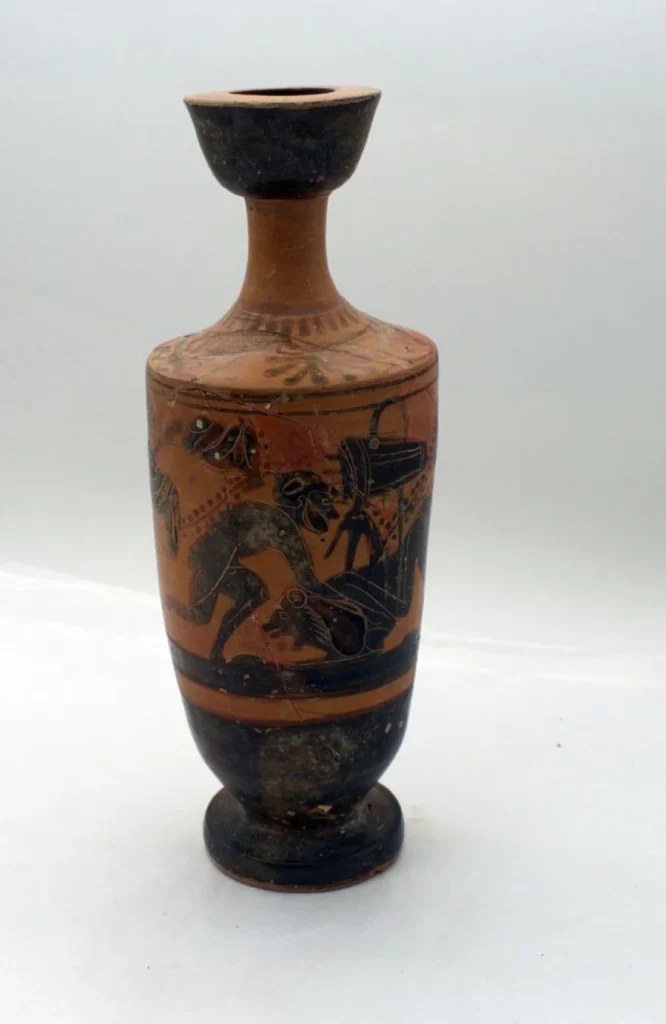
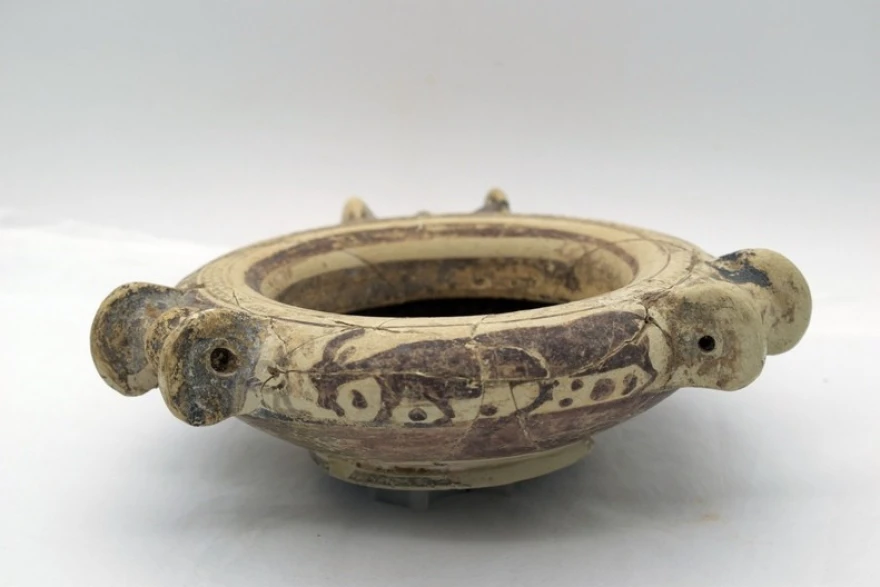
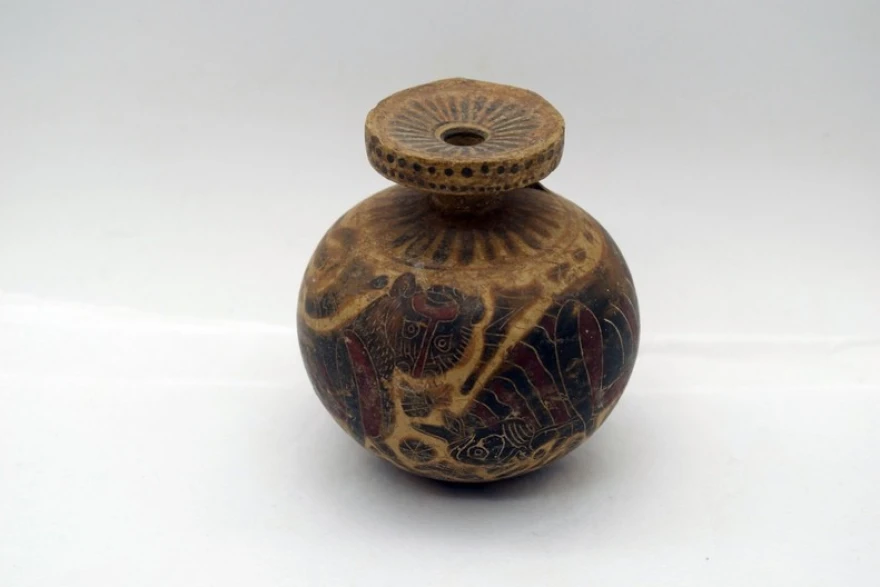
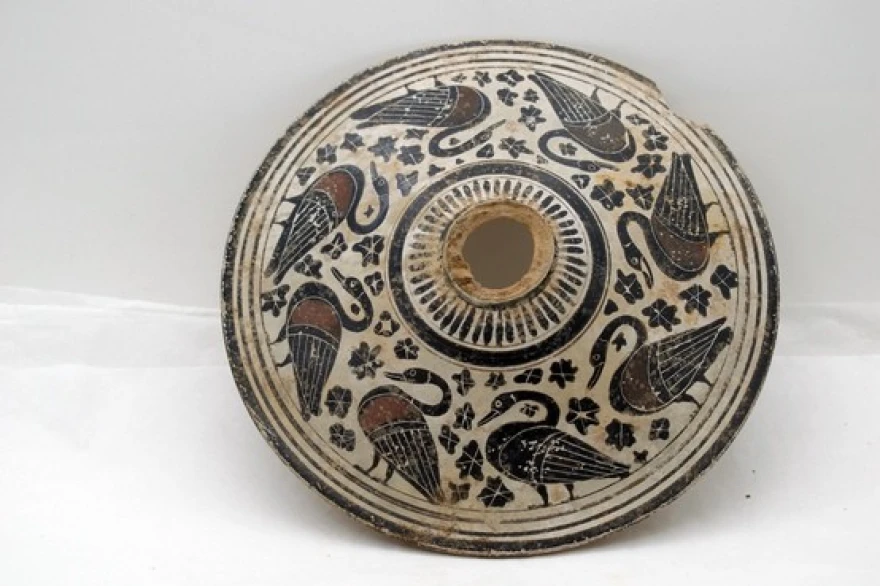
Valuable Attic and Corinthian vases dating from the Archaic and Classical periods, depicting mythical figures such as Heracles, Satyrs and Dionysus, as well as athletes, animals, birds and scenes from everyday life, are among the 22 antiquities Israel has returned to Greece. The objects had been illegally removed from the country and were located and seized by the Loot Prevention Unit of the Israel Antiquities Authority.
The antiquities were handed over to Greek Culture Minister Lina Mendoni by Israel’s Ambassador to Greece, Pninat Yanay, during a special ceremony held today at the National Archaeological Museum. The ceremony was attended by Amir Ganor, director of the Israel Antiquities Authority’s Loot Prevention Unit.
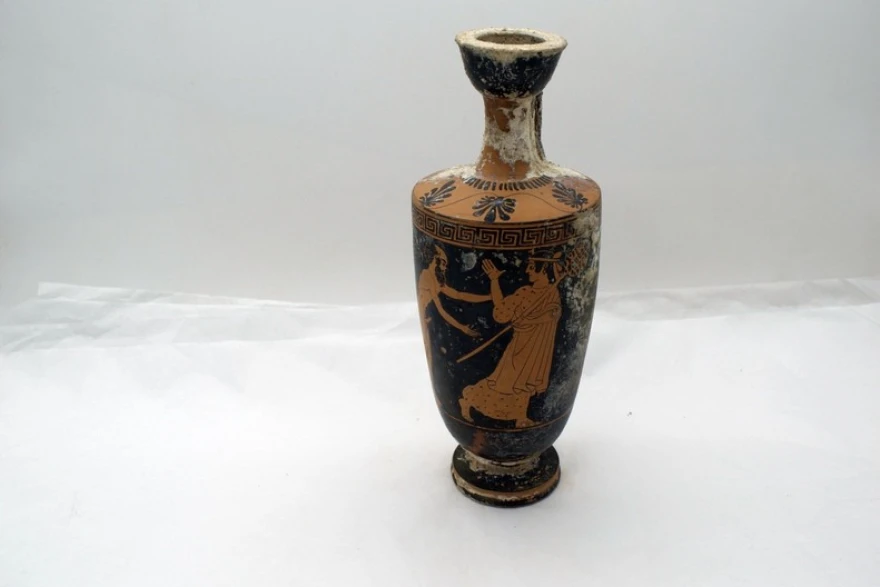
This first-ever return of antiquities from Israel to Greece includes 15 vases of Attic origin, six vases from Corinthian workshops and a small bronze statuette depicting a female figure.
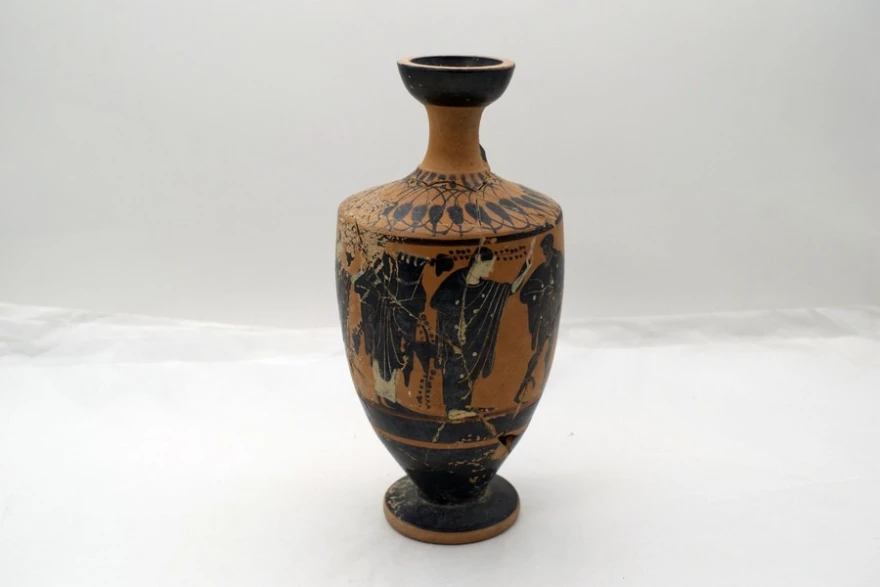
Of the Attic vases, 11 are black-figure, three are red-figure and one has a black-glazed finish. They date from the Archaic and Classical periods. The six vases from Corinthian workshops date to the Archaic period. The authenticity of the small bronze female statuette requires further investigation.
“Today’s return of the 22 antiquities from Israel to our country is of particular significance. This is the first time Israel has returned antiquities to Greece, marking the starting point for closer cooperation between the two countries in protecting cultural heritage. This return confirms that cooperation between states can make a substantial contribution to combating antiquities trafficking.
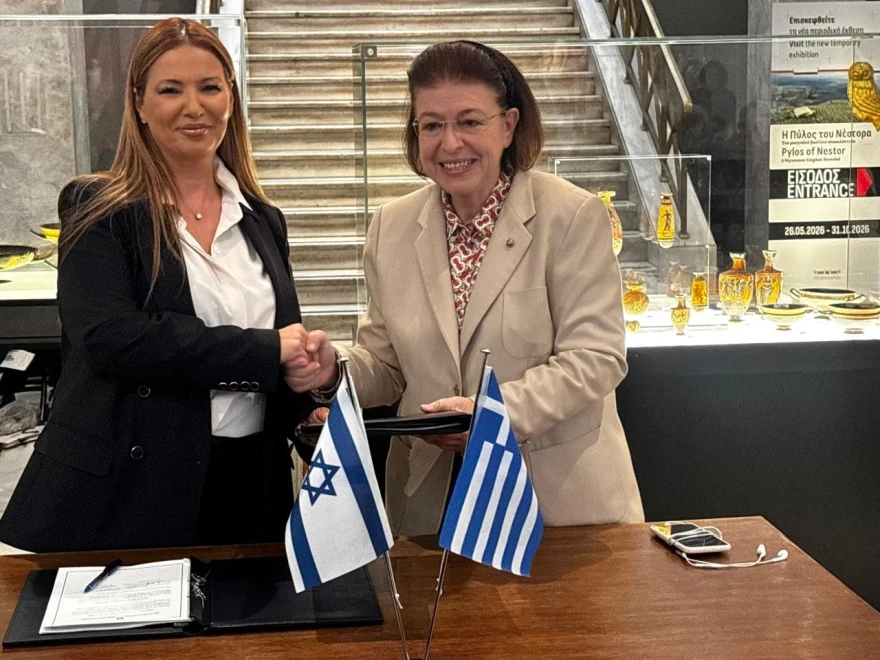
“Greece’s priority is the protection of its cultural heritage and the fight against antiquities trafficking, through support for coordinated international action and close cooperation between the relevant authorities,” Culture Minister Lina Mendoni said.
She added: “Every return of a cultural artifact to its place of origin has a broader symbolic and moral significance. It reminds us that protecting cultural heritage is a collective responsibility. Effectively tackling the illegal trade in cultural property requires cooperation, mutual trust and a shared commitment to the rule of law.
“I am confident that cooperation between Greece and Israel will continue to deliver meaningful results in safeguarding our cultural heritage.”
Israel’s Ambassador to Greece, Pninat Yanay, remarked: “Let us try to imagine a child looking at one of these ancient vases today and feeling a spark of wonder. The child sees something that another child may have seen and felt 2,000 years ago, thus becoming another link in a chain of generations that had been broken.
“[…] For me, there is also something deeply moving in the thought that I have the privilege, as Israel’s Ambassador, of returning this ancient object to your worthy hands, and that my country has had the honor of contributing to this important moment and mission.”
Ask me anything
Explore related questions




