





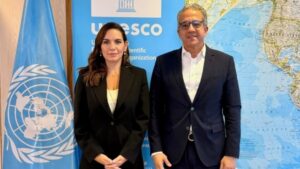
The strategic importance of cultural tourism and the strengthening of cooperation between Greece and UNESCO to protect and promote cultural heritage were at the centre of a meeting held today in Paris between Greece’s Minister of Tourism, Olga Kefalogianni, and UNESCO’s leadership: Director-General Khaled El-Enany, a former Egyptian Minister of Tourism and Antiquities, and Assistant Director-General for Culture Nayef Al-Fayez, a former Jordanian Minister of Tourism and Antiquities.
The meetings were also attended by Greece’s Permanent Representative to UNESCO, George Koumoutsakos, while the Minister was accompanied by Vasiliki Koutsoukou, Secretary-General for Tourism Policy and Development.
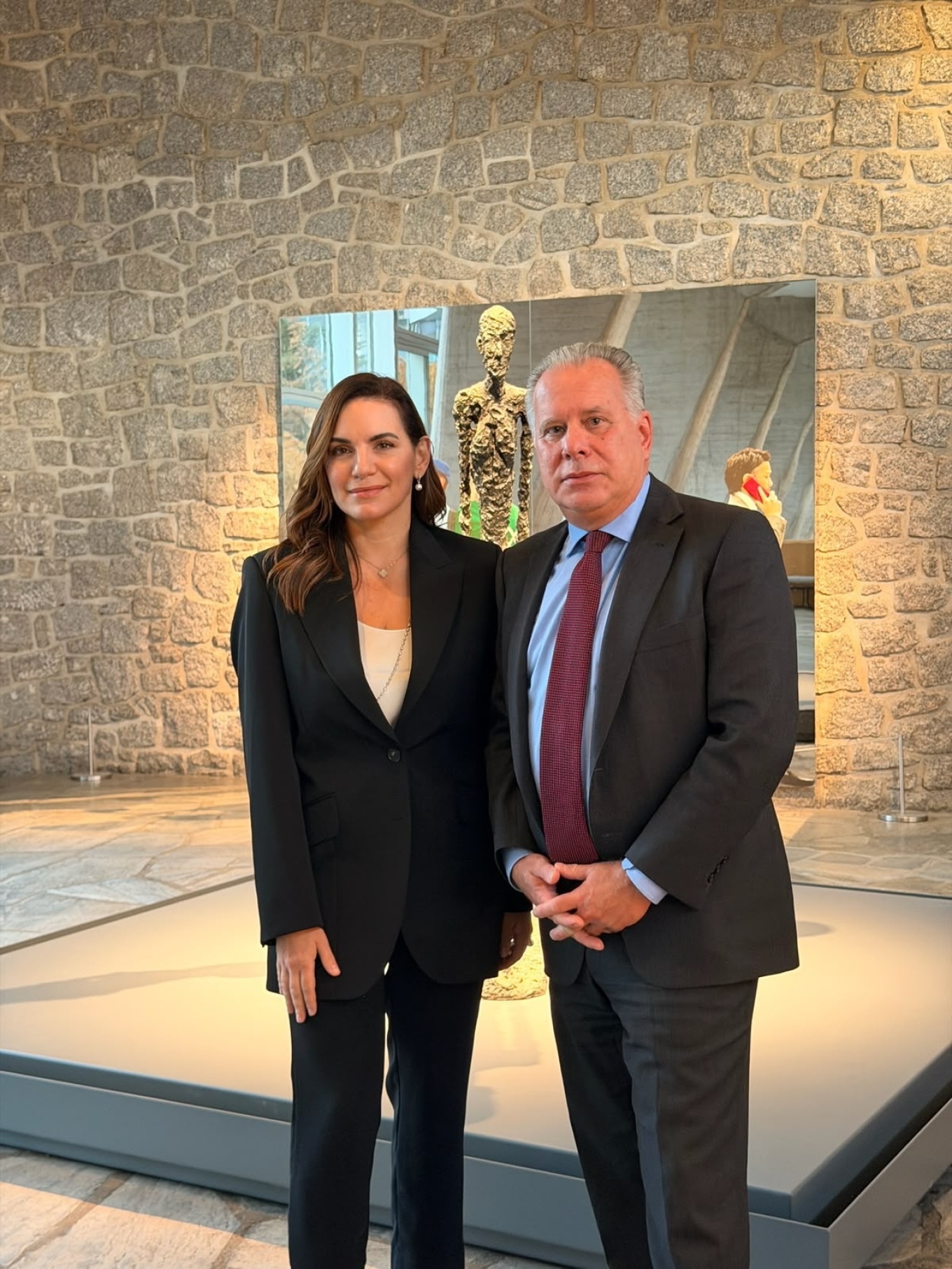
Olga Kefalogianni and George Koumoutsakos
It was emphasised that culture is not merely a motivation for travel, but a key pillar of a high-quality, sustainable and resilient tourism model. Greece is promoting an approach that highlights not only monuments and archaeological sites, but also intangible cultural heritage, local traditions, gastronomy and the creativity of local communities. This contributes to extending the tourist season and spreading the benefits of tourism across more regions of the country.
Particular emphasis was placed on the need to ensure that tourism development is meaningfully linked to the protection and preservation of cultural heritage for future generations, through the responsible management of visitor numbers, strengthening the resilience of cultural sites in the face of climate change, and the active participation of local communities.
UNESCO recognises the importance of linking culture and tourism, promoting approaches that combine cultural heritage protection with sustainable tourism development, the active participation of local communities and intercultural dialogue. Through its work on the management of World Heritage Sites, the promotion of intangible cultural heritage and the exchange of expertise, the organisation contributes to the development of responsible tourism practices that strengthen the protection of cultural identity and the sustainability of destinations.
In this context, opportunities to strengthen cooperation between Greece and UNESCO were explored through joint initiatives on sustainable cultural tourism, the exchange of expertise and the development of cultural routes. The shared objective is to shape a tourism model that does not simply benefit from cultural heritage, but actively contributes to safeguarding, promoting and passing it on to future generations.
In particular, Ms Kefalogianni stressed the importance of strengthening cooperation between UNESCO and the United Nations World Tourism Organization (UN Tourism), proposing the development of joint initiatives to highlight the links between culture and tourism and promote a sustainable, responsible and inclusive model of tourism development.
The initiative aims to strengthen international dialogue, facilitate the exchange of expertise and promote practices that ensure tourism makes a meaningful contribution to protecting cultural heritage, supporting local communities and harnessing countries’ cultural wealth as a bridge between their societies.
Ask me anything
Explore related questions




