





A Greek charity established to help seriously ill children allegedly operated an elaborate fraud scheme for eight years, collecting millions of euros from donors while passing on only a fraction of the money to the families it promised to support.
The investigation into Child’s Happiness, a non-governmental organisation (NGO) based in northern Greece, has revealed allegations of misleading fundraising campaigns, photographs of children being used under different identities, unexplained bank transfers and extensive gambling activity.
According to the Greek police, the suspected criminal operation generated more than €3.2 million in illicit proceeds, while transactions recorded through the charity’s accounts exceeded €4.5 million.
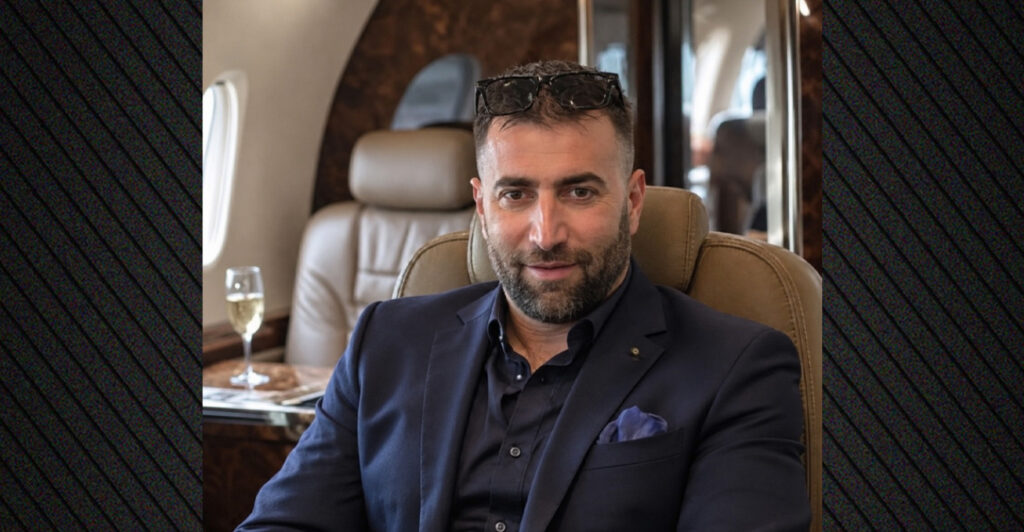
At the centre of the investigation is 37-year-old Konstantinos Firinidis, the organisation’s president, who allegedly controlled the donations while also secretly financing two football clubs in Pieria, a regional district of northern Greece.
Investigators believe that money donated to help children undergoing cancer treatment and other medical procedures was diverted towards personal expenditure, business activities, football clubs and online betting.
Six people were arrested on Friday, 30 October, following an extensive investigation by the Greek police’s organised crime division, widely referred to in Greece as the “Greek FBI”.
The case involves alleged offences including fraud, embezzlement, money laundering, forgery and bribery linked to the manipulation of football matches.

A charity built around appeals for sick children
Child’s Happiness, officially known as “Paidiki Chara – Child’s Happiness”, was founded on 15 October 2018 with the stated objective of supporting children with serious illnesses or disabilities.
Its fundraising activities were conducted primarily through Facebook and Instagram, where emotional appeals encouraged members of the public to donate money towards specialised medical treatment, surgical procedures and travel to hospitals abroad.
Other campaigns sought assistance for families struggling to meet essential living expenses.
Each fundraising appeal was presented as supporting a particular child, with organisers assuring donors that their contributions would be used exclusively for that beneficiary.
The charity also claimed that its activities were carried out entirely by volunteers, without remuneration, and promised to publish detailed financial statements and supporting documents after each campaign.
According to investigators, however, the reality was substantially different.
Police identified cases in which photographs of children unrelated to particular fundraising campaigns were used to encourage donations.
In other instances, the same child appeared under different names, allowing repeated appeals to be launched without donors, or even some volunteers, realising that the same beneficiaries were being presented more than once.
Investigators also discovered cases where medical expenses had already been covered by insurance providers, despite fundraising appeals claiming that donations were required to pay for treatment.
In other instances, the cost of medical care was allegedly exaggerated.
Another significant finding was that the organisation had not obtained authorisation to conduct any of its fundraising campaigns, according to information provided to police by the relevant authorities.
The 92 fundraising campaigns and the missing millions
Police identified 74 cases involving 92 separate fundraising campaigns, some of which repeatedly featured the same children.
Investigators identified 55 children and obtained statements from parents representing 35 families.
Their testimonies played a central role in establishing the discrepancy between the donations collected and the sums eventually received by the intended beneficiaries.
According to the case file, approximately €3,985,722 was collected in the cases examined, while the families received around €1,115,176.
The difference exceeded €2.85 million.
Police believe that this money was misappropriated and estimate that the overall unlawful financial benefit exceeded €3.2 million when other findings are taken into account.
The alleged mechanism was relatively straightforward.
Charity administrators would inform families about only part of the donations collected, without disclosing the full amounts deposited into the organisation’s various bank accounts.
Consequently, parents could believe they had received all the financial assistance raised for their children, although the actual donations were substantially higher.
Initially, payments were made through cash transfers or bank deposits.
From 29 May 2026, however, the charity also began using prepaid payment cards following an agreement with a company providing the service.
Investigators identified transactions totalling €100,977.13 from one charity account to the prepaid card provider between 13 May and 26 August 2026.
According to police, the cards did not enable families to establish how much money had actually been raised for them, because the administrators decided how much to load onto each card.
Millions through bank accounts and personal IRIS payments
The financial investigation uncovered an extensive network of transactions involving the charity’s accounts, personal bank accounts, electronic transfers, cash withdrawals and payments between associated individuals.
Between the organisation’s establishment and 26 August 2026, credits totalling €4,533,227.03 were recorded in its accounts, including PayPal transactions.
The annual figures illustrate the scale of the fundraising operation:
- 2023: €941,083.75
- 2024: €751,637.23
- 2025: €900,504.71
- First eight months of 2026: €707,520.12
Approximately €3,597,184 was disbursed from the charity’s accounts by Firinidis and Vasiliki Manisioti, another central figure in the investigation.
Police also examined a personal bank account belonging to Firinidis through which €1,168,284.94 had passed.
Most of the incoming transactions consisted of relatively small donations made by members of the public through IRIS, Greece’s instant bank payment service, with payment descriptions referring to the charity’s activities.
Investigators additionally identified transfers of tens of thousands of euros from the organisation’s accounts into Firinidis’s personal accounts.
Two such transfers amounted to €89,461.84 and €97,572 respectively.
According to the police, repeated transfers between accounts, cash withdrawals and subsequent redeposits indicated attempts to conceal the original source of the funds.
Tax investigations also revealed significant discrepancies between declared income, bank transactions and the lifestyles maintained by key suspects.
A divorce followed by two new companies just six days later
One of the more unusual aspects of the investigation concerns the relationship between Firinidis and Manisioti, and the establishment of two companies in April 2026.
The couple married in March 2021 but divorced on 15 April 2026.
Just six days later, on 21 April, two limited partnerships were established, one providing services in the healthcare sector and the other operating in digital media.
Manisioti was listed as the manager and principal partner in both companies, holding a 99% stake, while her brother owned the remaining 1%.
According to police, the businesses appeared to have been used as intermediaries for transferring money originating from donations to the charity.
Investigators identified seven invoices and transactions involving at least €123,000.
Some of the money was withdrawn in cash, while other amounts were allegedly spent on personal expenses.
The investigation also found that, despite their official divorce, Firinidis and Manisioti reportedly continued living together as a couple.
Police surveillance and intercepted telephone conversations were cited as evidence supporting that conclusion.
Luxury suites, expensive restaurants and cash for property
While Child’s Happiness was appealing to the public for small contributions towards children’s medical treatment, intercepted conversations allegedly revealed a lifestyle involving expensive hotels, luxury purchases, travel and nightlife.
On 18 August 2026, Firinidis contacted an employee at a luxury hotel in Thessaloniki, Greece’s second-largest city.
During the conversation, he described himself as a regular customer and said he usually preferred a corner suite on the first or second floor.
He was seeking a room for a short stay that evening.
In another intercepted conversation on 7 October, he arranged a suite at a luxury hotel in Athens costing €590, plus a €15 tax.
On 22 October, Manisioti contacted the same hotel to arrange a two-night stay, explaining that they were regular guests.
Investigators also identified spending at expensive restaurants in Mykonos, a two-hour cruise costing €250, frequent flights and purchases of costly electronic equipment.
In another telephone conversation, dated 19 October 2026, Firinidis allegedly expressed interest in purchasing a property valued at up to €250,000.
He reportedly told an estate agent that he already had the money available and wanted to pay in cash.
Police believe the spending patterns were incompatible with the declared financial circumstances of the suspects.
For example, Firinidis declared just €295.03 in net profits from professional activities in 2024, while his declared expenditure on goods and services exceeded €56,000.
During searches, police also seized two vehicles belonging to him, expensive personal items and electronic devices.
Two watches bearing the Versace name were discovered inside a vehicle he used.
The €2.6 million deposited with betting companies
Another major part of the investigation concerns Firinidis’s extensive online gambling activity.
According to police records, between 16 October 2018 and 8 March 2026 he deposited a total of €2,656,661.98 and $5,898.18 into accounts held with online betting companies.
During the same period, withdrawals and payouts amounted to €2,095,897.38 and $595.35.
Police suspect that gambling may have been used as another means of circulating money allegedly diverted from charitable donations, potentially allowing the proceeds to be presented as legitimate gambling winnings.
Investigators also uncovered 62 separate bets involving matches played by Aiginiakos during the 2024-25 football season, when Firinidis was allegedly acting as an unofficial financial backer of the club.
In several instances, he reportedly placed bets on the defeat of the team with which he was associated.
Police say some of these bets produced winnings, prompting further examination of whether matches had been deliberately manipulated.
From charitable donations to financing football clubs
The investigation also established alleged financial links between Firinidis and two football clubs in Pieria, Aiginiakos and Vataniakos.
According to police information, more than €250,000 was used to finance the two clubs.
Much of this funding allegedly took place outside the formal banking system, with cash payments to players, coaches, technical staff and suppliers.
Police believe the money originated from funds misappropriated from Child’s Happiness.
Firinidis was allegedly involved first with Aiginiakos and subsequently with Vataniakos, where investigators say he sought to help the club secure promotion to Greece’s third-tier national football competition.
The alleged activities exposed a second network of individuals suspected of influencing referee appointments and football results.
The Vataniakos-Aiginiakos match and alleged referee payments
One of the key matches examined by investigators took place between Vataniakos and Aiginiakos on 19 September 2026.
According to information from the investigation, intercepted communications dating from 15 September recorded discussions between Firinidis and a Vataniakos official concerning the appointment of a referee.
Police allege that arrangements were subsequently made for a referee who would influence the match in Vataniakos’s favour to be appointed.
Investigators believe that the referee ultimately selected did influence the outcome of the fixture.
The case file refers to alleged payments of €300, €500 and €1,000, depending on the significance and circumstances of particular matches.
Investigators also uncovered references to planned interference in Vataniakos’s forthcoming fixtures against Svoronos and Paralia, scheduled for 7 and 14 November 2026 respectively.
Both matches were considered important to the club’s promotion ambitions.
According to police, the alleged arrangements went beyond influencing the appointment of referees and included expectations of specific decisions during matches that could affect the final result.
The allegations form part of a wider investigation into possible match-fixing in Greek football.
Police raids and evidence seized
The police operation took place on 30 October 2026 and resulted in six arrests.
During searches at the home shared by Firinidis and Manisioti, investigators discovered €12,170 in cash, documents relating to the charity and a forged firearm possession and carrying permit.
Officers also seized a private agreement dating from 2024 that referred to a €37,000 cash payment connected with a business transaction.
Additional searches uncovered more cash, mobile telephones, computers, banking documents and other financial records.
The total amount of cash seized during the operation was €18,330.
Two vehicles belonging to Firinidis were also confiscated, with investigators suspecting that they were connected to the alleged laundering of criminal proceeds.
How the investigation began
The case originated from complaints raising questions about the charity’s transparency, management structure, the authenticity of information published on its website and the handling of donations.
A prosecutor subsequently ordered a preliminary investigation.
Police examined extensive banking and tax records, statements from parents, information obtained from hospitals in Greece and abroad, surveillance material and intercepted telephone communications.
The evidence collected led investigators to conclude that what had been presented as a charitable operation supporting vulnerable children was allegedly being used to generate substantial personal financial benefits.
The investigation has also raised questions about the supervision of charitable fundraising in Greece, particularly campaigns conducted through social media and instant payment platforms.
At the centre of the allegations are the families who believed they were receiving the full support of donors, and the members of the public who contributed money in the belief that it would finance potentially life-saving treatment.
The allegations against Firinidis and the other suspects remain subject to judicial examination. Their criminal responsibility has not been established by a court.
SEO headline suggestions
- Greek charity fraud: How €3.2m meant for sick children allegedly funded luxury living and football betting
- Inside Greece’s €3.2m charity scandal: Misleading photos, prepaid cards and €2.6m in bets
- Greek children’s charity allegedly diverted millions in donations to luxury spending and football clubs
Editorial notes
The article is written in British English for an international audience, with explanations of IRIS, Pieria, the Greek police’s organised crime division and the football clubs’ background.
The financial figures, dates and allegations have been retained from the supplied text. The distinction between money deposited with betting operators and actual gambling losses has also been preserved.
The source material does not establish that every euro deposited with betting companies originated from charitable donations, nor does it demonstrate that every football match under investigation was fixed. These remain allegations attributed to investigators. No independent verification of the underlying police case file was undertaken for this adaptation.
Ask me anything
Explore related questions




