





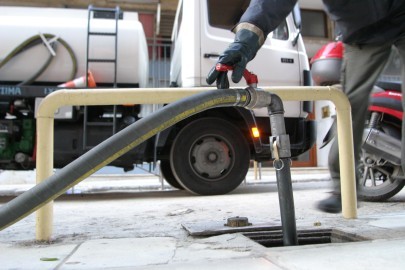
The government’s new economic team is seeking heating fuel to be made available from October with a decrease of 15% -20% in the excise tax.
The request has already been set and the government is preparing to negotiate with lenders in autumn time , in the new evaluation round which starts in September, arguing that the increase in tax on petrol proved to be an ineffective measure in the past and affected consumptions and revenues, beyond the negative impact that it had on society and the environment.
At the same time, an increase to the number of installments payable to tax authorities will be requested. Those payments have predominantly been unpaid so far, with the consequence of overdue debts reaching and surpassing 65 billion.
According to a source, the General Accounting Office mentioned that the measure of equalization taxes on heating fuel has led to a drop of 70% in consumption, and had the opposite effect. Hence, rather than increasing the revenue, it has opened a ‘hole’ of 400 million in receipts.
The economic team have calculated that a “moderate reduction” in heating fuel tax by 15% or 20% can relieve households and businesses, stimulate consumption and, consequently, increase the revenue receipts from excise VAT so no further equivalent measures will be needed.
It seems however, that there is no room for reduction ,because Greece is already at the lowest level of the EU.
The same source claims that the government plans to ask that VAT remains at 13%, and even more installments be available for the loan arrangements.
Finally, the team on their part, is afraid that Troika will attempt to block the cuts, by pushing for more structural changes and reforms that haven’t progress so far, one being the layoffs in the public sector.
Ask me anything
Explore related questions




