





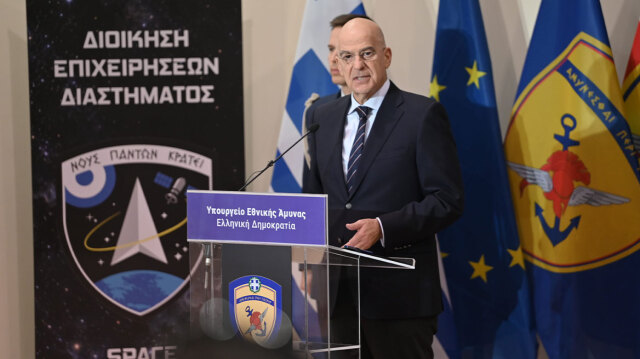
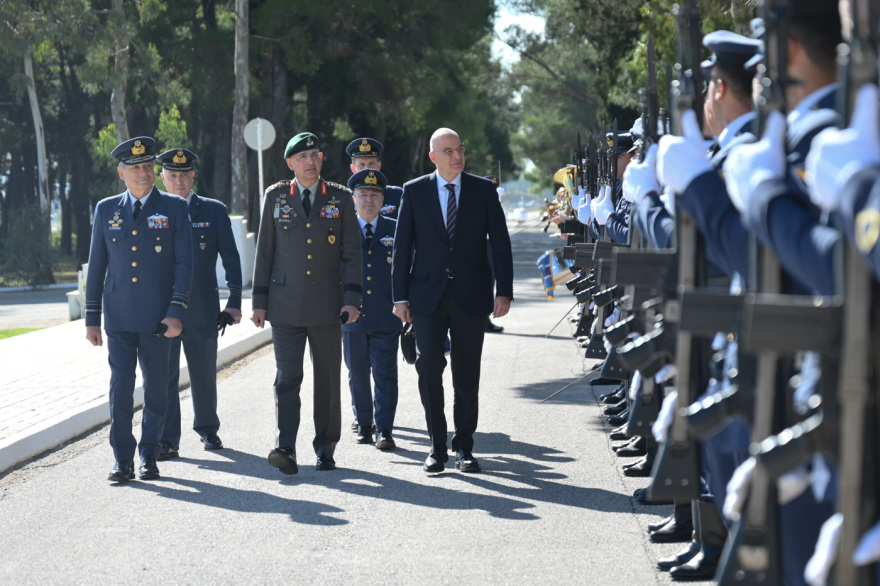
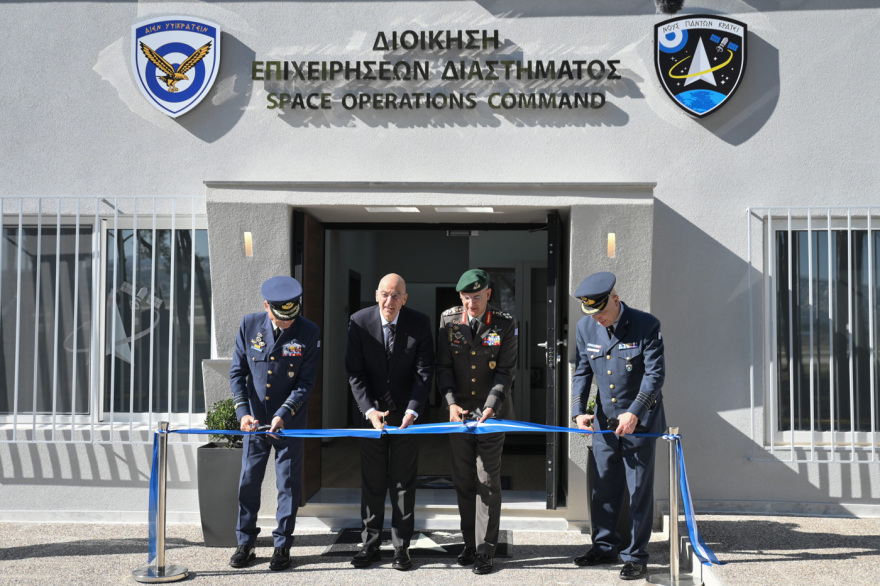
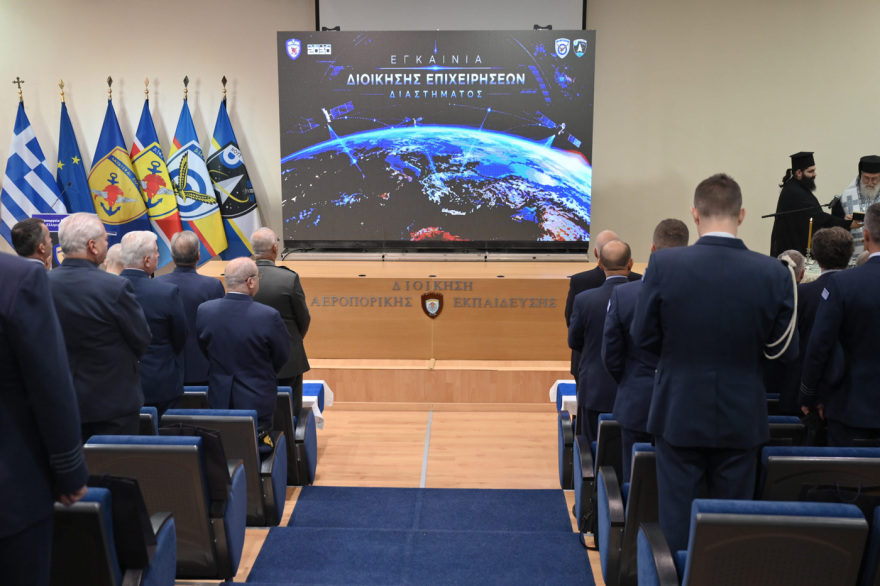
Defence Minister Nikos Dendias today inaugurated the Space Operations Command at Dekeleia Air Base, marking the transition of the Greek Armed Forces into a new, satellite-enabled era.
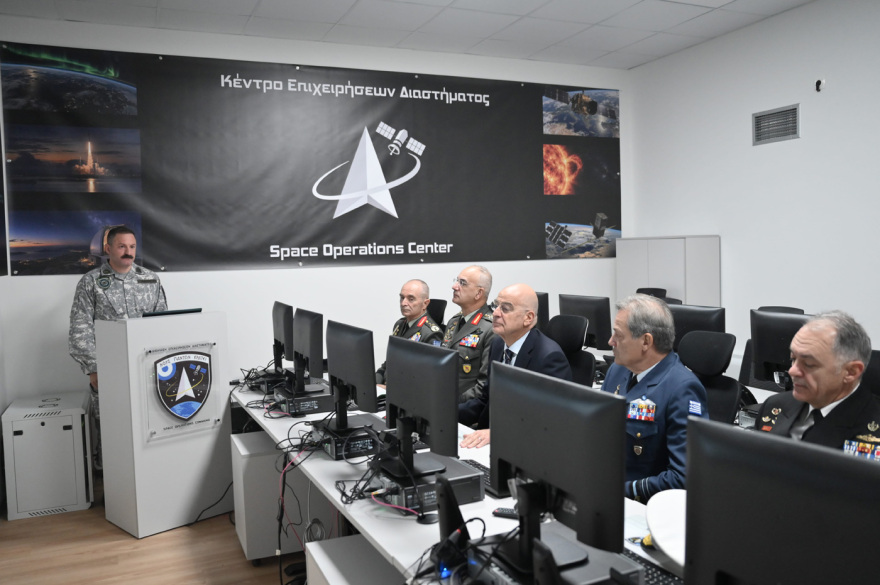
The Defence Minister was subsequently briefed on the mission of the Space Operations Command and watched related audiovisual material. He also visited the Command’s facilities, where he was given a demonstration of the Space Operations Centre.
Referring to the Command’s mission, Mr Dendias said it was “the systematic use of satellite capabilities and their integration into the operational planning and operations of our Armed Forces”. He stressed that “it is absolutely essential that satellite intelligence be Greek-owned and integrated into command-and-control systems, so that it can be made available for use in good time at every level of operations”.
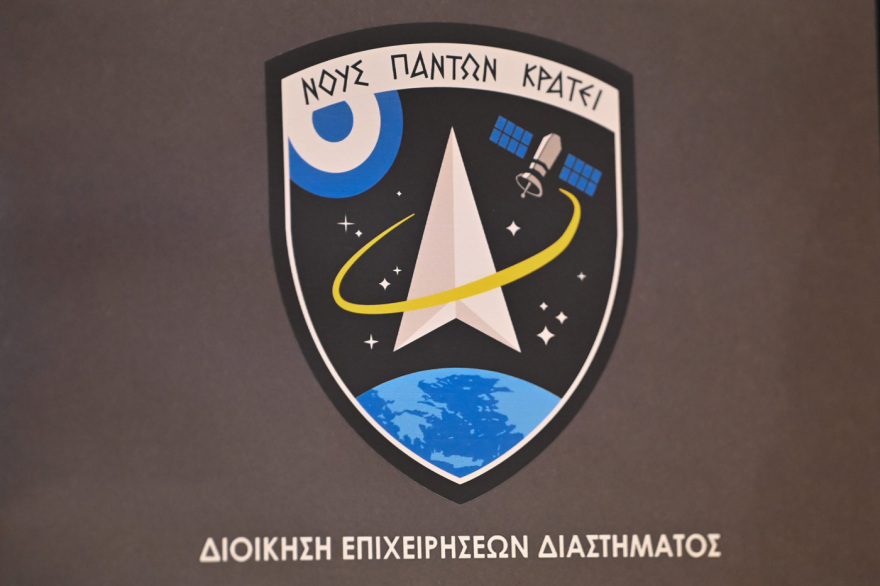
The Space Command forms part of the “Agenda 2030” framework, which aims to fully develop the Armed Forces’ space architecture by strengthening existing capabilities and infrastructure and acquiring new ones. The vision behind the creation of the Space Operations Command is for Greece to become a significant player in this field while safeguarding its national interests.
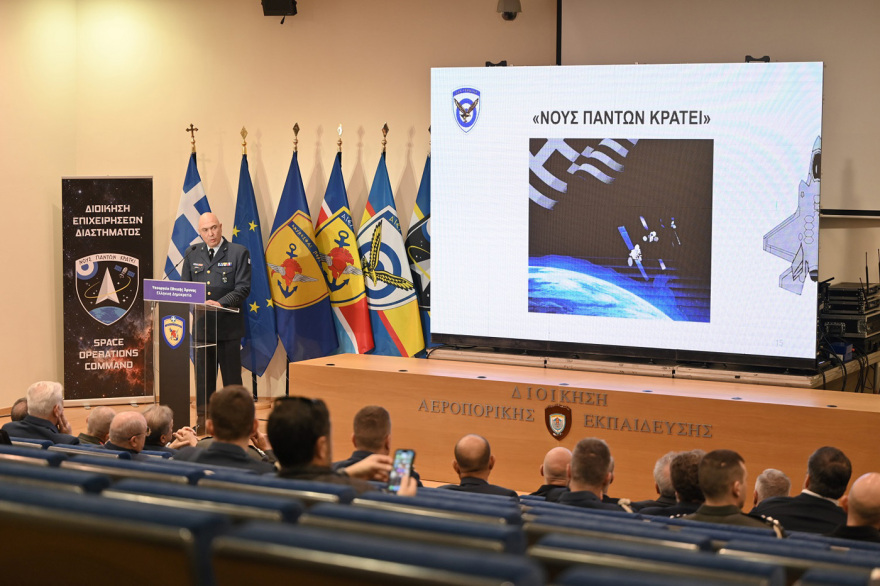
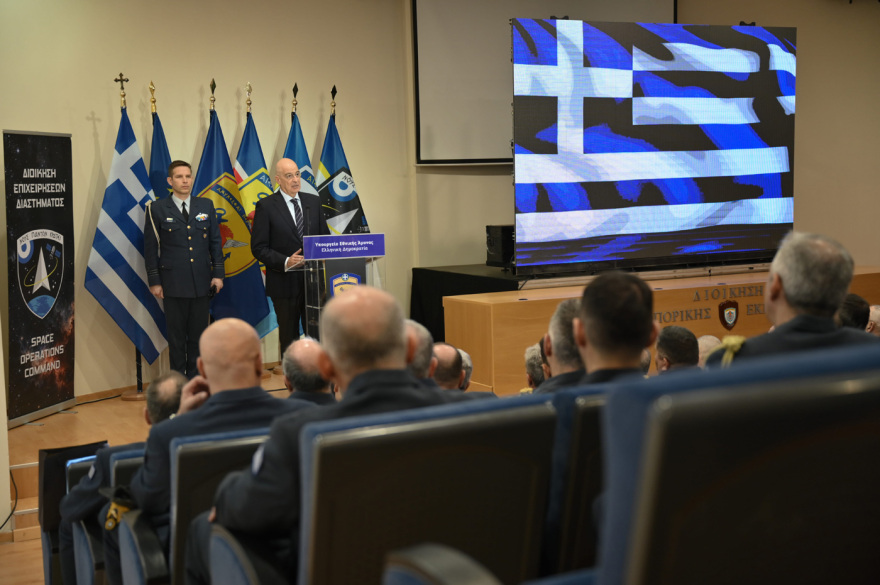
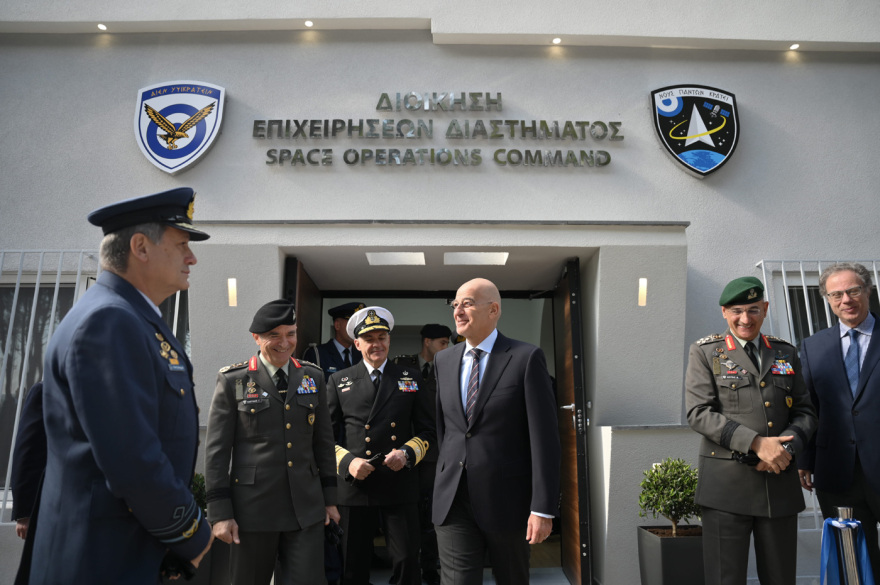
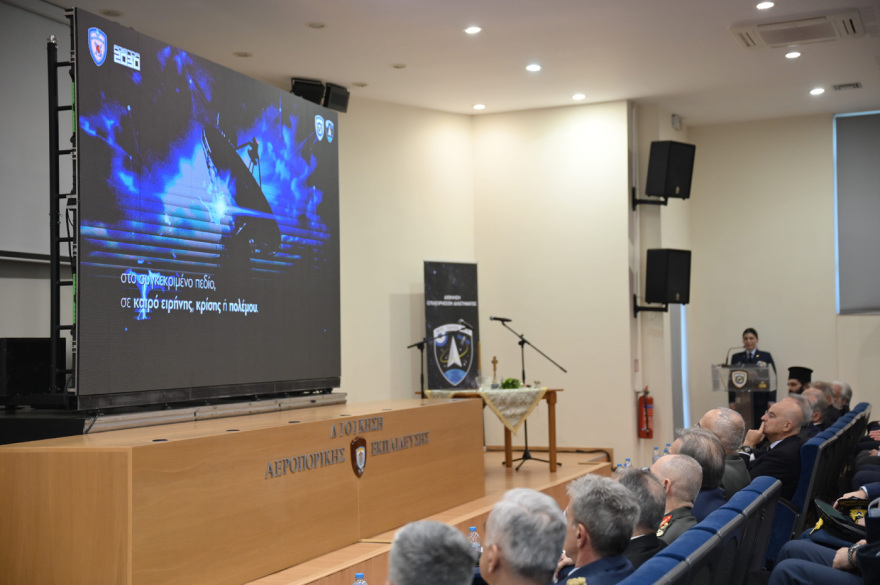
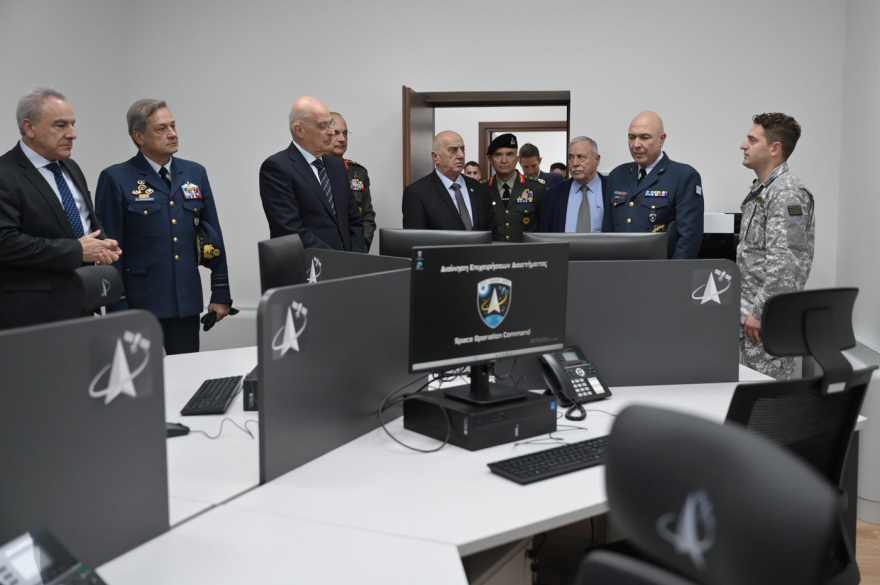
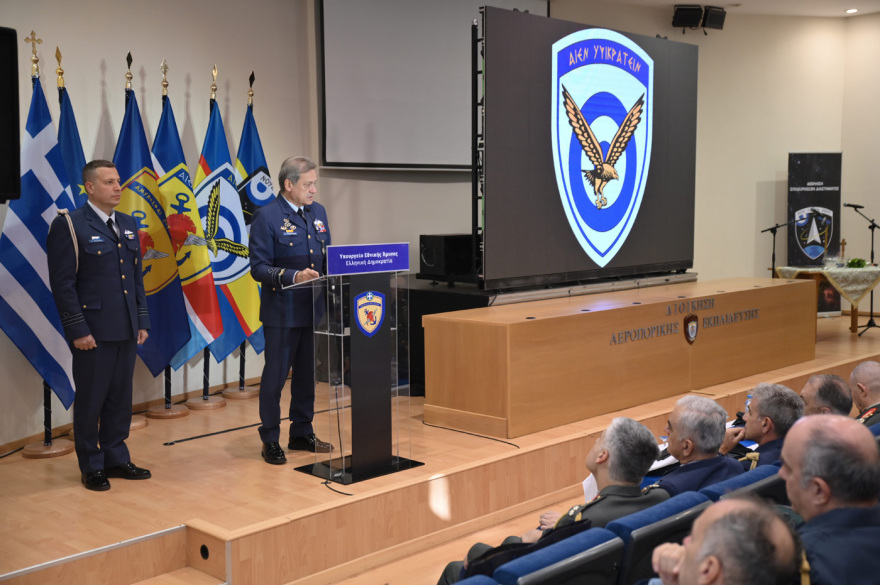
Nikos Dendias’s address
“Today, as we inaugurate the Space Operations Command Centre of our Air Force, marks – if you will allow me to say so – a very substantial step in the transition of the Armed Forces into a new era.
During the recent presentation of Phase III of the New Force Structure 2024–2035, I also stressed the need for the Armed Forces to adapt to the modern framework of joint, multi-domain operations. This is a new reality that is already upon us, in which space, cyberspace and the electromagnetic spectrum are combined with the traditional domains of operations: sea, air and land.
The lessons we have already learned show that space is a critical dimension of military operations. Consider what happened to Ukrainian communications some time ago, when they lost access to space-based capabilities.
The creation of the Centre we are inaugurating today is our response to this new reality, which has already overtaken us. Its mission, as explained by the Commander and the Chief of the Hellenic National Defence General Staff, is the systematic use of satellite capabilities and their integration into the operational planning and operations of our Armed Forces.
Until now, we have been buying these services from foreign providers, and that is clearly not enough. It is absolutely essential that satellite intelligence be Greek-owned and integrated into command-and-control systems, so that it can be made available for use in good time at every level of operations.
This is precisely the purpose of the transition from the old C4I model to the new C5 ISRT architecture, which brings together Command, Control, Computing, Communications, Cyber, Intelligence, Surveillance, Reconnaissance and Targeting. In other words, it is an integrated, vertically structured operational architecture.
Through this system, information from satellites and sensors – of which there are many, the closest to the soldier being the sight mounted on their helmet – will be available to ships, aircraft, ground units and the Armed Forces as a whole.
In other words, we are addressing a major and very real gap. We are not pioneering something new. We are filling a huge gap that already exists. I want this to be absolutely clear, particularly given that other countries – including countries right here in our region – already have a strong presence in space.
And, of course, you understand that, for example, having our country’s communications rely in a time of crisis on a private company from a third country – on a satellite owned by a private company in another country, with beneficial ownership in a third country – is not an acceptable solution for the 21st century.
We are therefore implementing a multi-layered system that is absolutely essential. First, we are making use of, modernising and incorporating everything that already exists. As you know, a satellite ground station for the European military programme HELIOS-II has already been developed at the 114th Combat Wing at Tanagra.
There is also the satellite communications ground station at Atalanti.
Now let us turn to what has already been developed in recent months. We have already acquired 16 dual-use optical low-Earth-orbit satellites, in cooperation with the Ministry of Digital Governance. I would like to thank the Minister, Mr Papastergiou, for this. However, these capabilities are nowhere near sufficient. To strengthen them further, the plan currently being implemented provides for the development of six optical observation satellites, three signals intelligence (SIGINT) satellites and three synthetic aperture radar satellites.
All this may sound a little strange to listeners or observers – though not to you, most of whom are specialists in the field. Why do we need both optical satellites and radar satellites? What happens when there is fog? What can an optical satellite do then? And at a time when we should, in theory, have a complete understanding of what is happening in our wider region, which minister can afford to wait 24 hours for an image of the area to be purchased from a foreign provider?
Ladies and gentlemen, the plan is therefore aimed at establishing an integrated system of low-Earth-orbit satellite surveillance and intelligence gathering, ensuring immediate operational awareness.
However, this requires a secure and reliable means of transmitting information. Consequently, the development of military satellite communications is another absolutely critical and essential element of our national planning.
One of the two European hubs of the GOVSATCOM programme has already been selected to be hosted in Attica, which is very important. It will support secure government communications, the protection of critical infrastructure and crisis management. It will also give us a role in Europe’s security architecture.
There is also our participation in the European Secure Satellite Communications Programme, IRIS². This is linked to plans to acquire three medium-Earth-orbit telecommunications satellites. We are always seeking to make the most of the opportunities offered by our participation in the European project.
However, we also need an independent presence: a national military satellite communications system. That is why the Long-Term Defence Procurement Planning Programme provides for the rapid acquisition of a military-grade geostationary telecommunications satellite.
This is an absolute national necessity. Without it, the country would face immense problems in a time of crisis.
To this end, the National MILSATCOM Programme aims to establish an integrated, Greek-owned system, with full national operational control over the satellite, ground infrastructure and communications network.
The strategic importance of this – something I do not need to explain to military officers – lies in ensuring that our country can control its critical military communications without depending on third-party services, particularly in times of crisis.
An essential complement to the development of national space capabilities is the establishment of a domestic technological base capable of ensuring the maintenance and development of satellites.
In this respect, the operation of Greece’s own facility for the assembly, integration and testing of space equipment at the facilities of the Hellenic Aerospace Industry has already been incorporated into the plan. I visited it last week for precisely this reason. It gives us the ability to carry out work in our own country, strengthen our expertise and ensure the participation of Greek industry in space programmes. This, too, is part of our autonomy.
Ladies and gentlemen, what has been presented to you is therefore a comprehensive network of activities supporting our presence in space.
As I have said, all this is not simply about taking a step into the future. It is also about addressing gaps that have been inherited from the past.
The capabilities of the Armed Forces must always meet the demands of our time. This is how they guarantee our country’s security and independence, as well as the right of Greek society and the Greek people to determine their own future freely.
Thank you very much.”
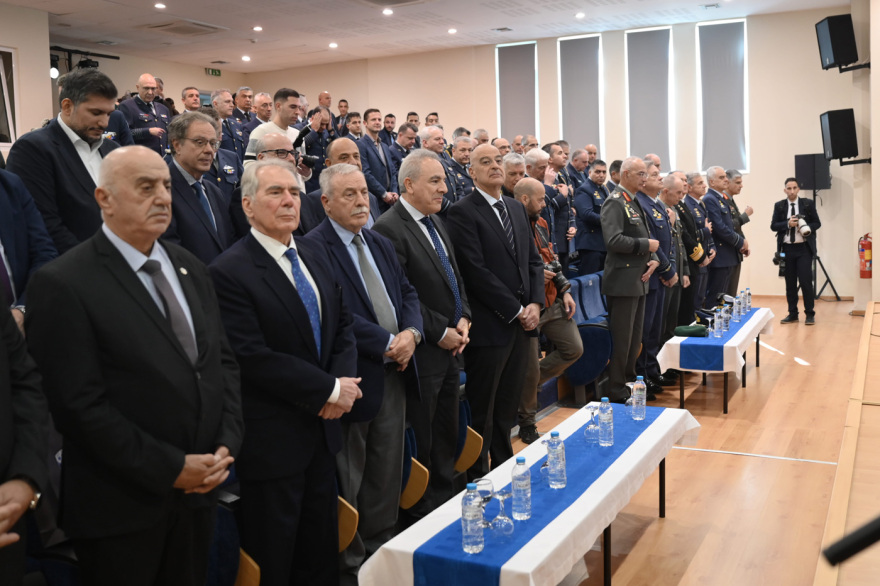
The inauguration ceremony was officiated by His Eminence Athenagoras, Metropolitan of Ilion, Acharnes and Petroupolis.
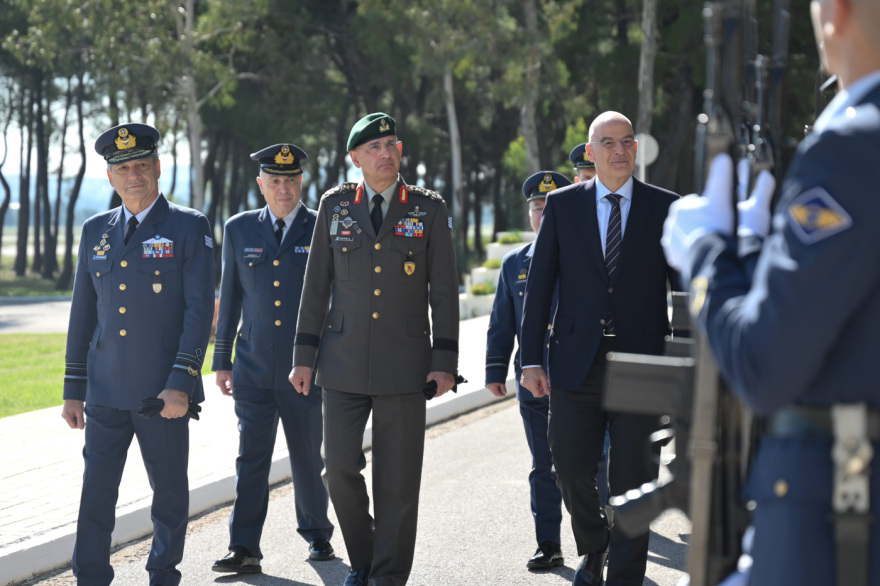
Also in attendance were General Dimitrios Choupis, Chief of the Hellenic National Defence General Staff; Thanos Dokos, Secretary-General for National Security; Lieutenant General Georgios Kostidis, Chief of the Hellenic Army General Staff; Vice Admiral Dimitrios-Eleftherios Kataras, Chief of the Hellenic Navy General Staff; Lieutenant General (Pilot) Dimosthenis Grigoriadis, Chief of the Hellenic Air Force General Staff; Major General Georgios Panousis, Director of the Hellenic National Defence General Staff’s Sixth Branch, responsible for transformation, innovation and defence technology; former chiefs of the General Staff; senior and high-ranking Armed Forces officers; and cadets from the Hellenic Air Force Academy.
Ask me anything
Explore related questions




