





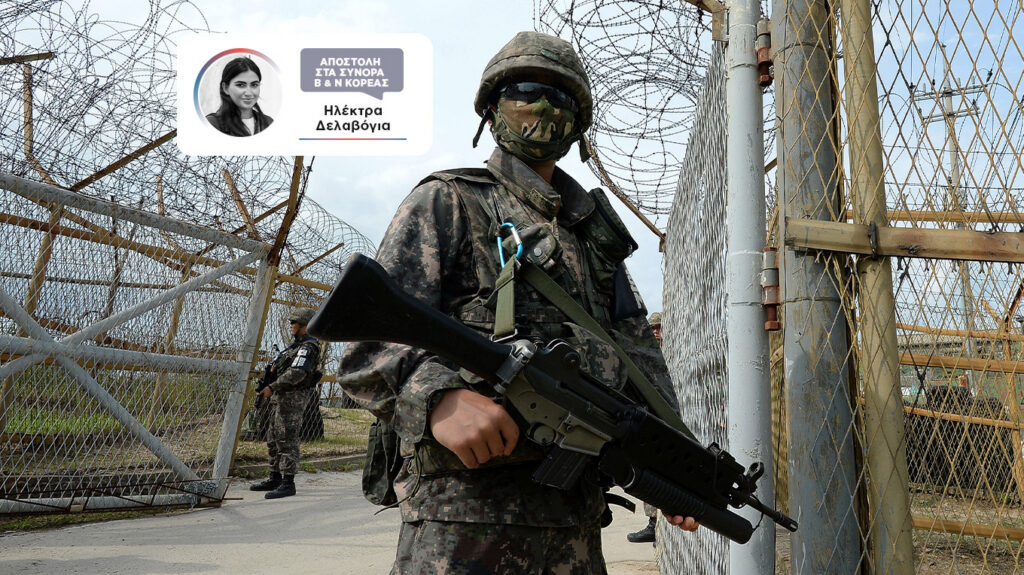
Do not be misled by its name. The Korean Demilitarized Zone, known as the DMZ, is one of the most militarised and heavily guarded places on the planet. Stretching for approximately 250 kilometres across the Korean peninsula and measuring around four kilometres in width, it separates North Korea from South Korea while serving as the most visible reminder of a war that stopped but never truly ended.
More than two million landmines, military installations, barbed-wire fences and armed guards on constant alert form the landscape of an area created to prevent another conflict.
I found myself there, at the heart of one of the world’s most fragile geopolitical balances. Before me lay North Korea: a vast flag flying from a mast approximately 160 metres high, propaganda slogans and soldiers keeping watch over the area. Photography, entry and access to certain locations are subject to strict restrictions. Nothing is left to chance.
The paradox is there in the name itself. The DMZ was established following the armistice of 27 July 1953, which brought the hostilities of the Korean War to an end but did not lead to a peace treaty. It was intended to serve as a buffer zone separating the two sides. In practice, however, the wider border remains one of the most closely monitored military areas in the world.
Former US President Bill Clinton is said to have described the area during a visit in 1993 as “the scariest place on Earth”. The phrase captures the sense that, even when relative calm prevails, the confrontation is far from over.
Behind the barbed wire, however, the story is not only about armies, nuclear threats and geopolitical balances. It is also about people who have fled North Korea, communities that continue to live in the shadow of the border, and a natural environment that, amid restrictions on human activity, has found an unexpected space in which to survive.
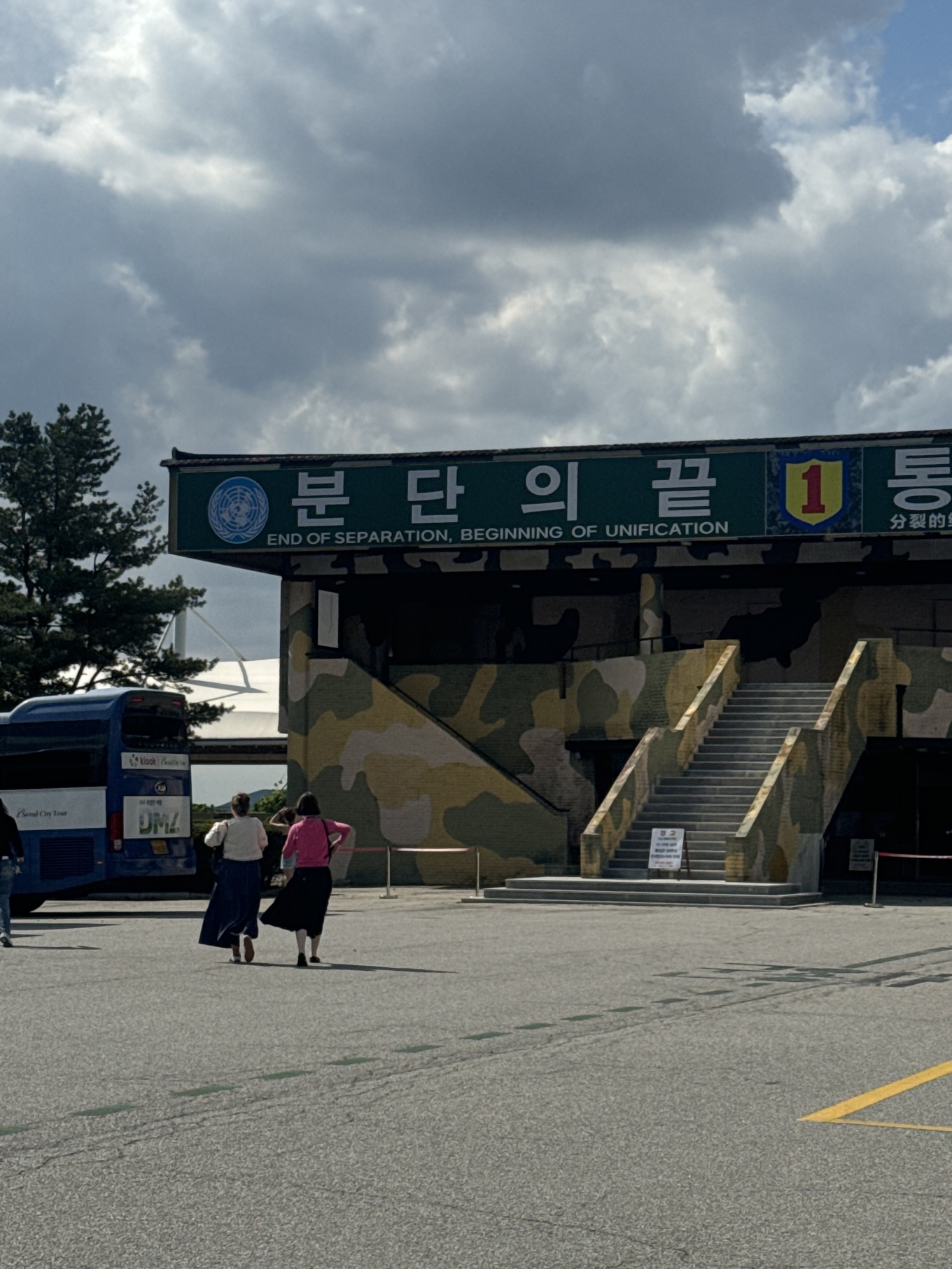
The sign calling for long-awaited reunification stands prominently at a facility in the Demilitarized Zone, highlighting the contradiction of a divided Korean nation.
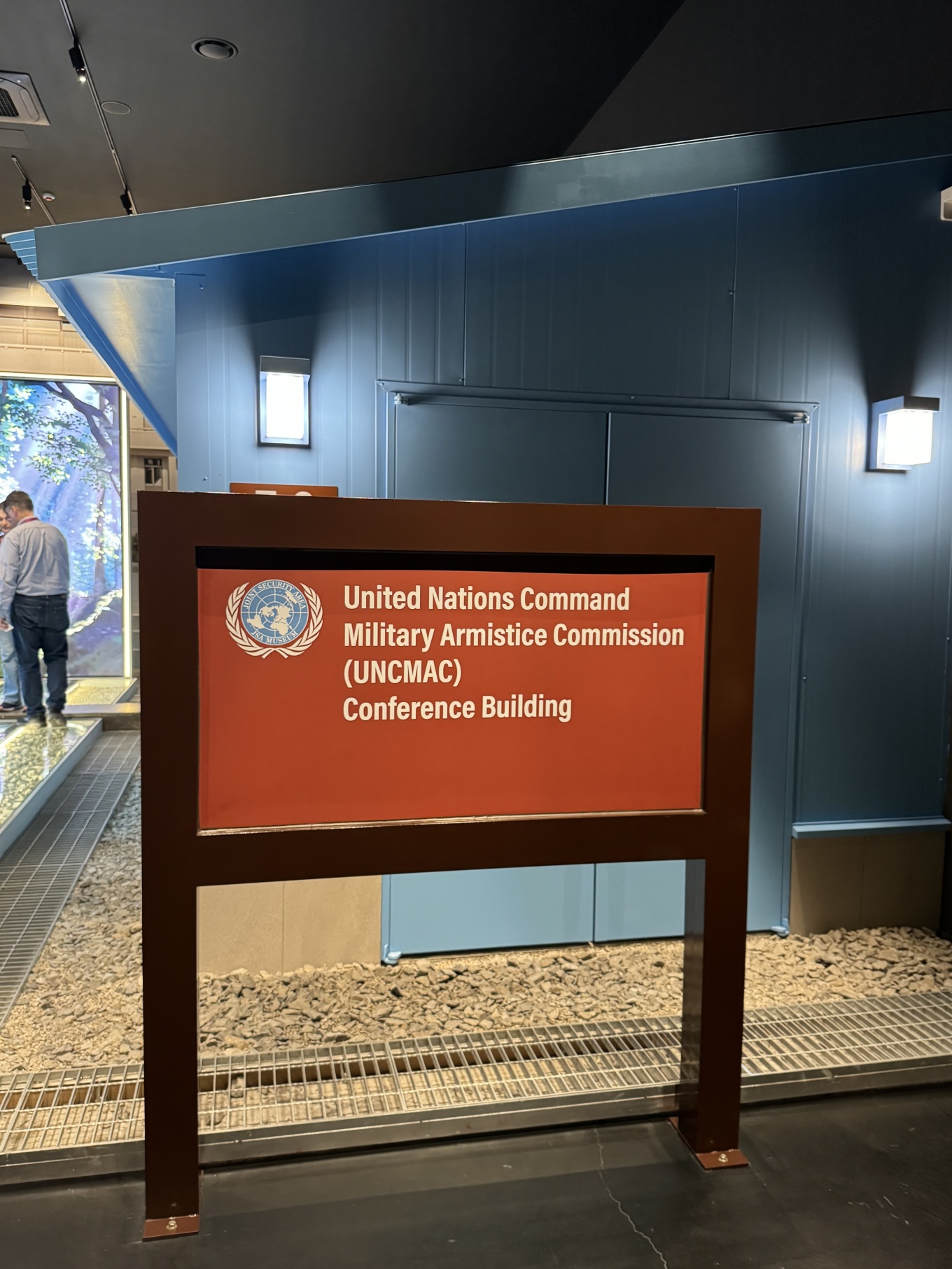
The United Nations Command Military Armistice Commission conference building sign, a symbol of the fragile ceasefire established in 1953.
A visit to the DMZ is an encounter with the contradictions of the Korean peninsula: a war that stopped without ending, a peace that was never signed, and a zone created to keep people apart but which has become a refuge for forms of life that are increasingly rare elsewhere.
A border under constant tension
The DMZ has long served as a barometer of relations between Seoul and Pyongyang. Tensions escalated again following a landmine explosion on 21 September 2026, in which three South Korean soldiers were injured, two of them seriously.
The South Korean military concluded that the explosions had been caused by mines planted by North Korean soldiers south of the Military Demarcation Line, in violation of the Korean War Armistice Agreement.
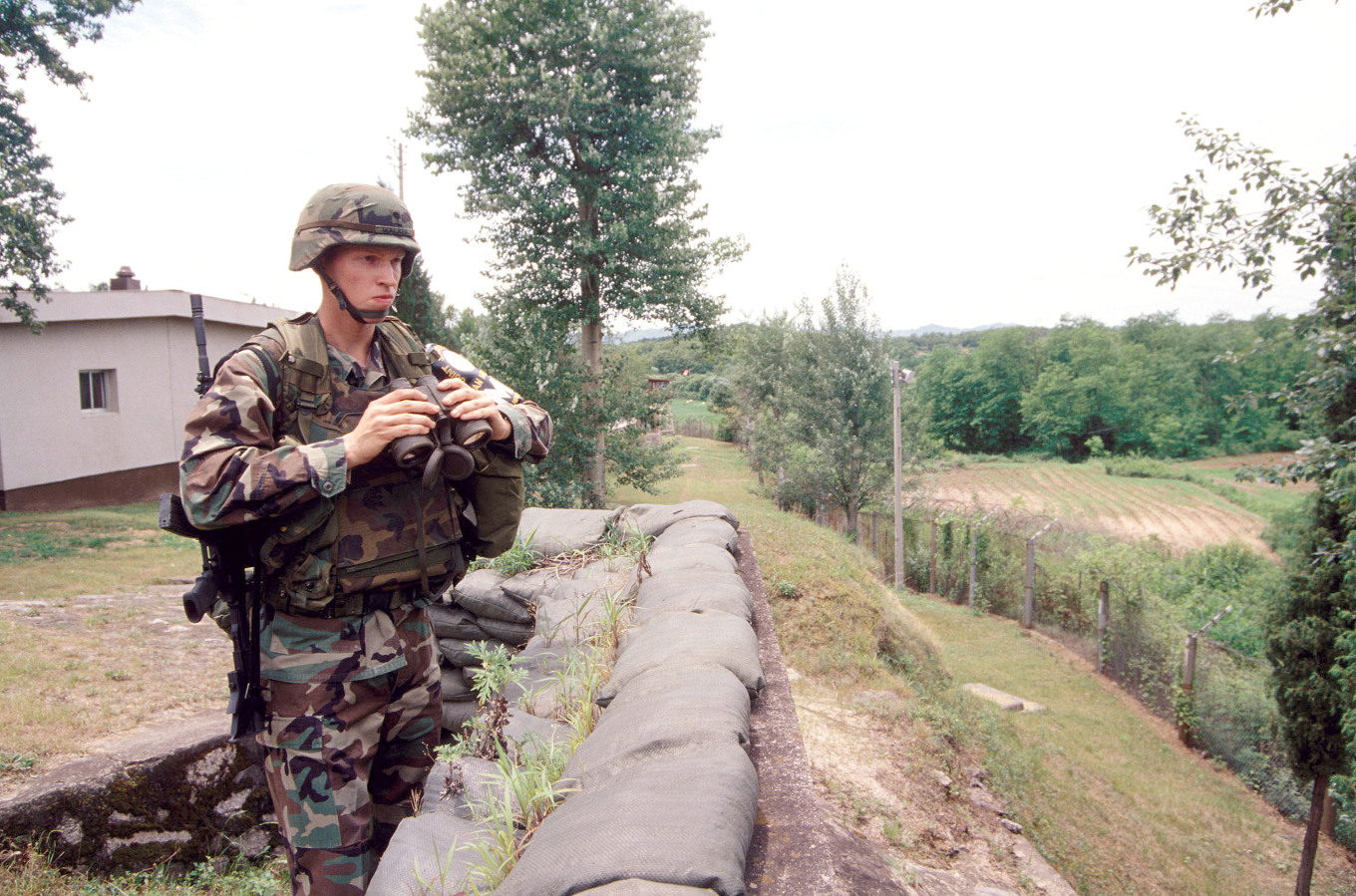
A soldier stands guard, keeping watch over the border in the Demilitarized Zone.
Seoul announced that it would send a letter to the president of the United Nations Security Council, calling on Pyongyang to apologise and accept responsibility for violating the agreement.
According to Reuters, North Korea ordered its troops stationed along the border to take “immediate and decisive action” if South Korean forces threatened their security, increasing the risk of a confrontation along the heavily armed frontier.
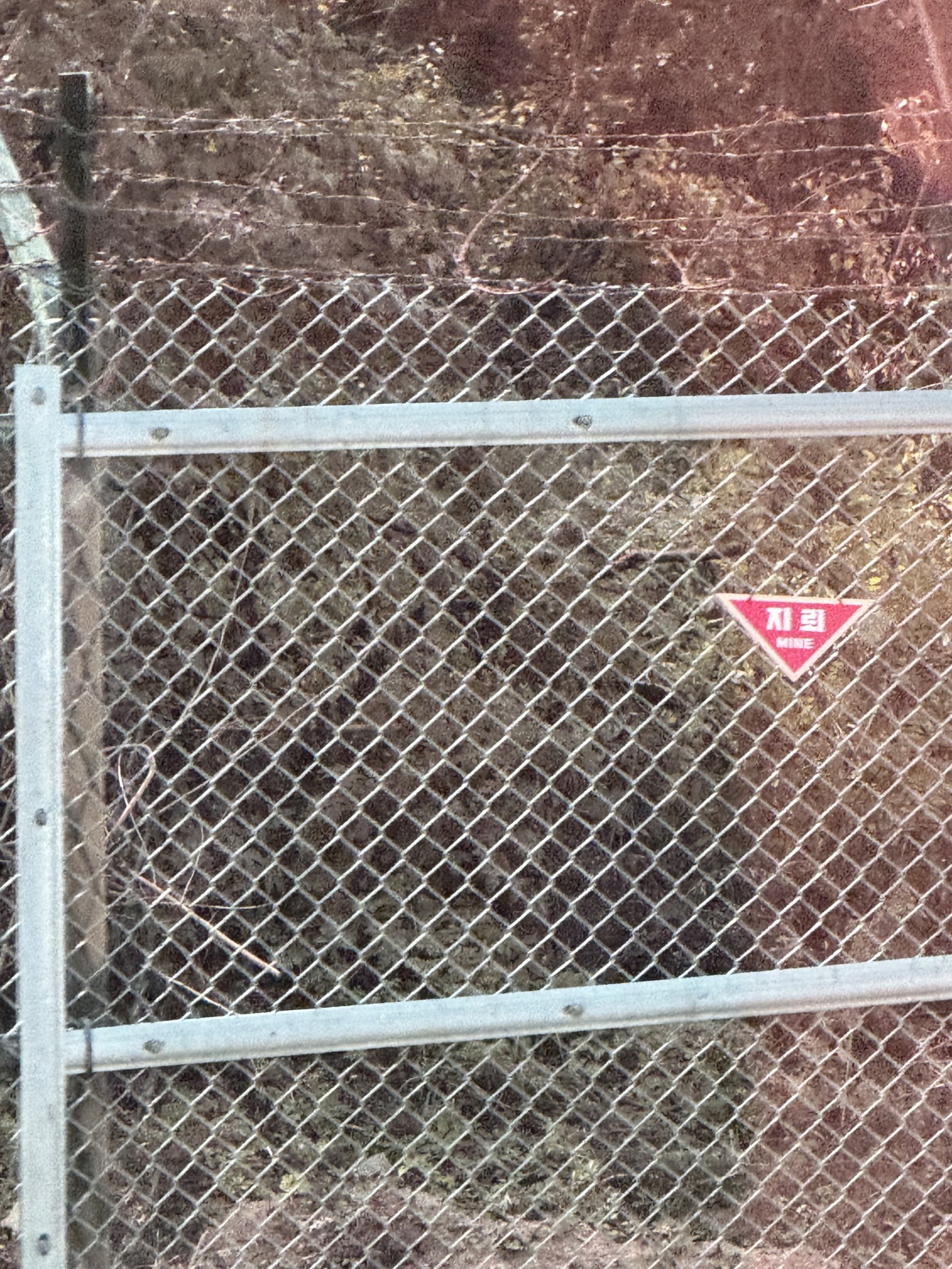
Barbed-wire fences and warning signs about landmines serve as reminders of the deadly dangers along one of the most heavily guarded borders on the planet.
The announcement came a day after Seoul pledged to respond “decisively” to any further provocation from Pyongyang, should the latter carry out its threats to strengthen its military presence along the border.
During the same period, according to North Korea’s state news agency KCNA, North Korean Army Marshal Pak Jong Chon inspected fortifications along the border with South Korea, accompanied by Kim Yo Jong, the sister of the country’s leader, Kim Jong Un. Kim Yo Jong said that new artillery units had already “taken up their firing positions” along the border.
Tensions between the two countries have risen since April 2024, when North Korea began strengthening its fortifications along the frontier. The 1953 armistice halted the hostilities but did not resolve the conflict. To this day, the DMZ remains the most striking reminder of that unfinished business.
The visible remnants of a war
A rusted steam locomotive, riddled with more than 1,020 bullet holes and with its wheels deformed, is one of the most distinctive physical remnants of the Korean War. It is the locomotive abandoned near Jangdan Station, on the Gyeongui Line, during the conflict.
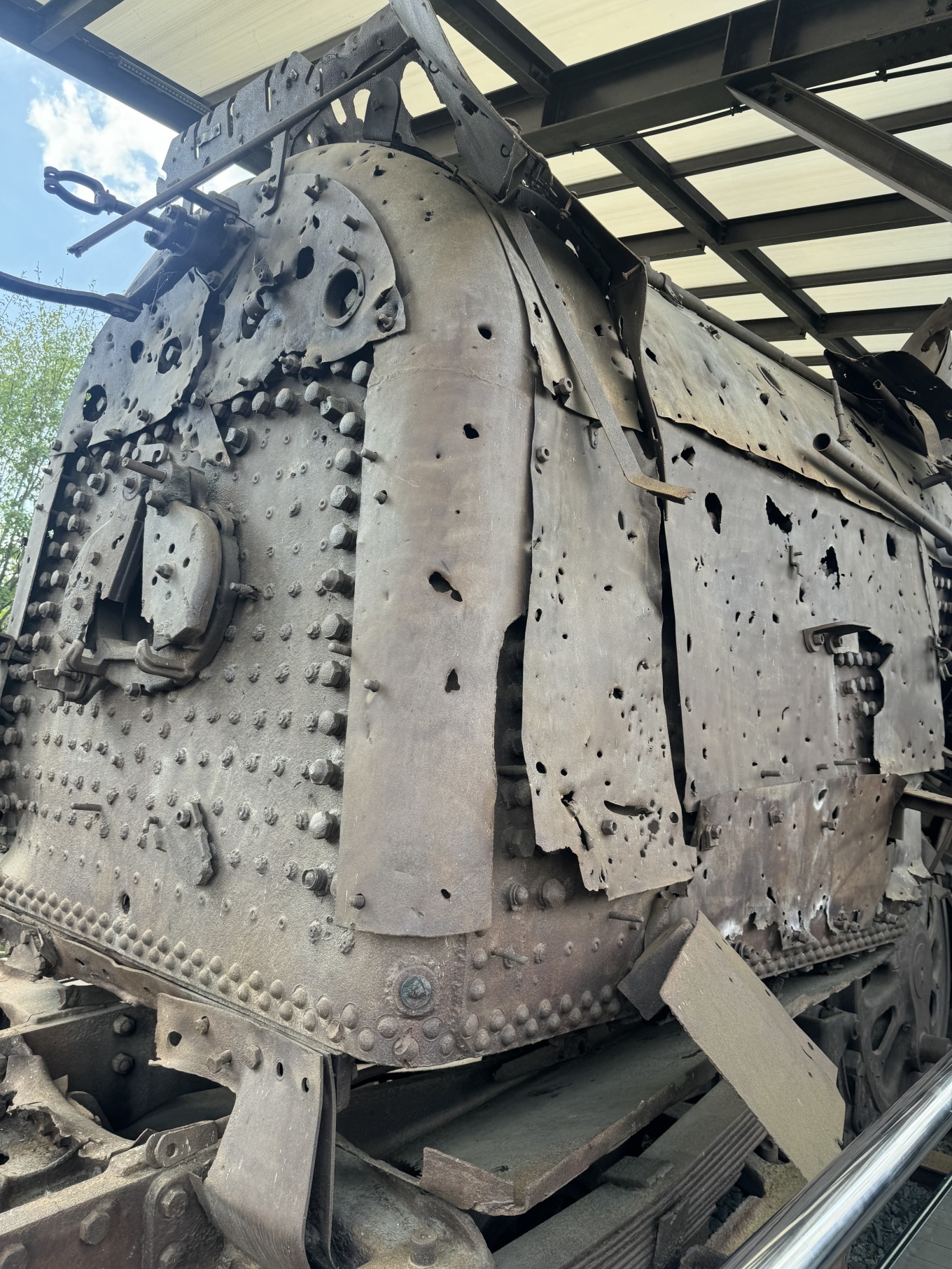
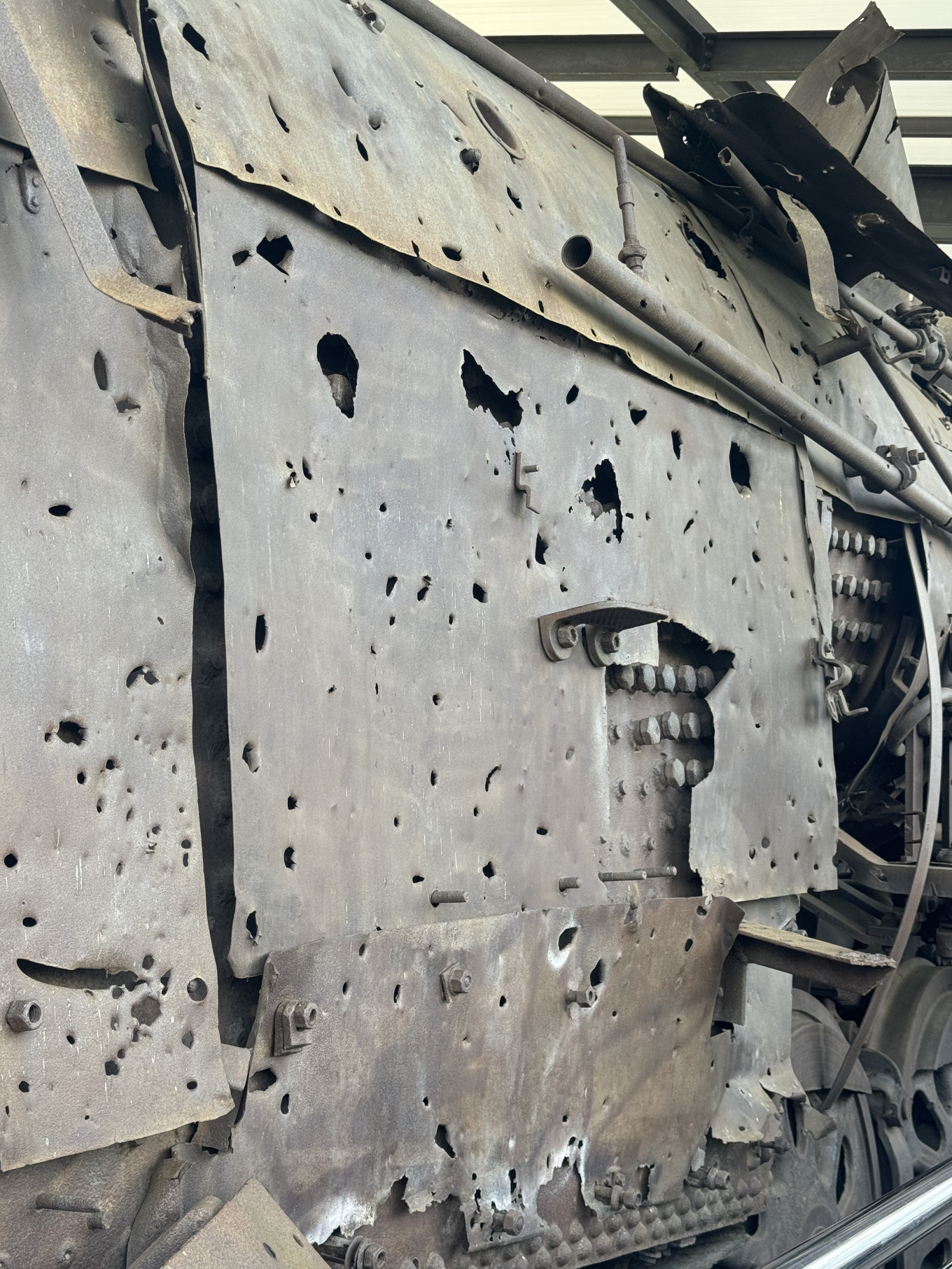
The locomotive abandoned near Jangdan Station, on the Gyeongui Line, during the conflict.
Its story is linked to train driver Han Joon-ki, who had been tasked with transporting supplies north. In late 1950, returning from a mission in North Korea, he was driving the locomotive in reverse because there was no facility for turning it around at Hambo Station. When he reached Jangdan Station, American soldiers surrounded the locomotive and opened fire on it to prevent it from falling into the hands of North Korean forces.
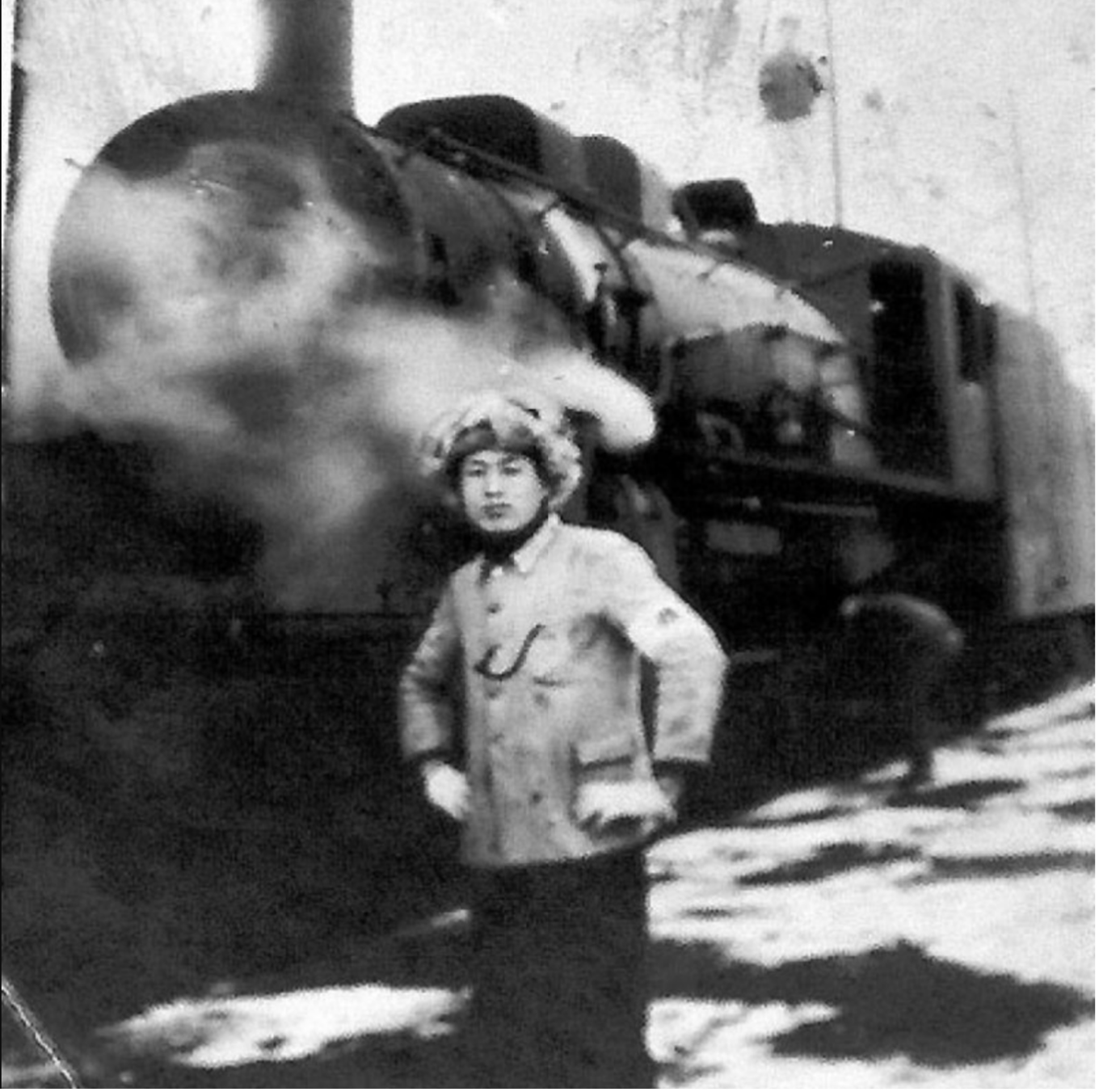
Train driver Han Joon-ki, who had been tasked with transporting supplies north and was at the controls of the locomotive that was riddled with bullets. Source: War History Online.
Han later described his shock and helplessness as he watched the soldiers shoot at his locomotive. Its destruction marked not only the end of the journey of a train that had carried military supplies, but also the collapse of a railway network connecting parts of a peninsula that would soon be divided by a heavily guarded border.
After the armistice was signed on 27 July 1953, the locomotive remained in the area that became part of the DMZ. It stayed there for more than 50 years, exposed to the elements, until it was transported by lorry to Imjingak in 2006. It had been designated a cultural heritage asset of South Korea in 2004. It was not restored to its original condition. Instead, it was preserved with the damage intact, which has since become part of its historical significance.
The underground tunnels of the DMZ
Four underground tunnels attributed to North Korea have been discovered beneath the Demilitarized Zone. South Korean authorities believe they were built to allow troops to be secretly moved south in the event of war.
The first was discovered in November 1974, when South Korean soldiers noticed steam rising from the ground and heard underground explosions. To locate the second tunnel, in March 1975, boreholes were drilled with the assistance of the US Army Corps of Engineers. The third was discovered on 17 October 1978, following information provided by a North Korean who had defected to the South. The fourth was found in March 1990, near the city of Yanggu.
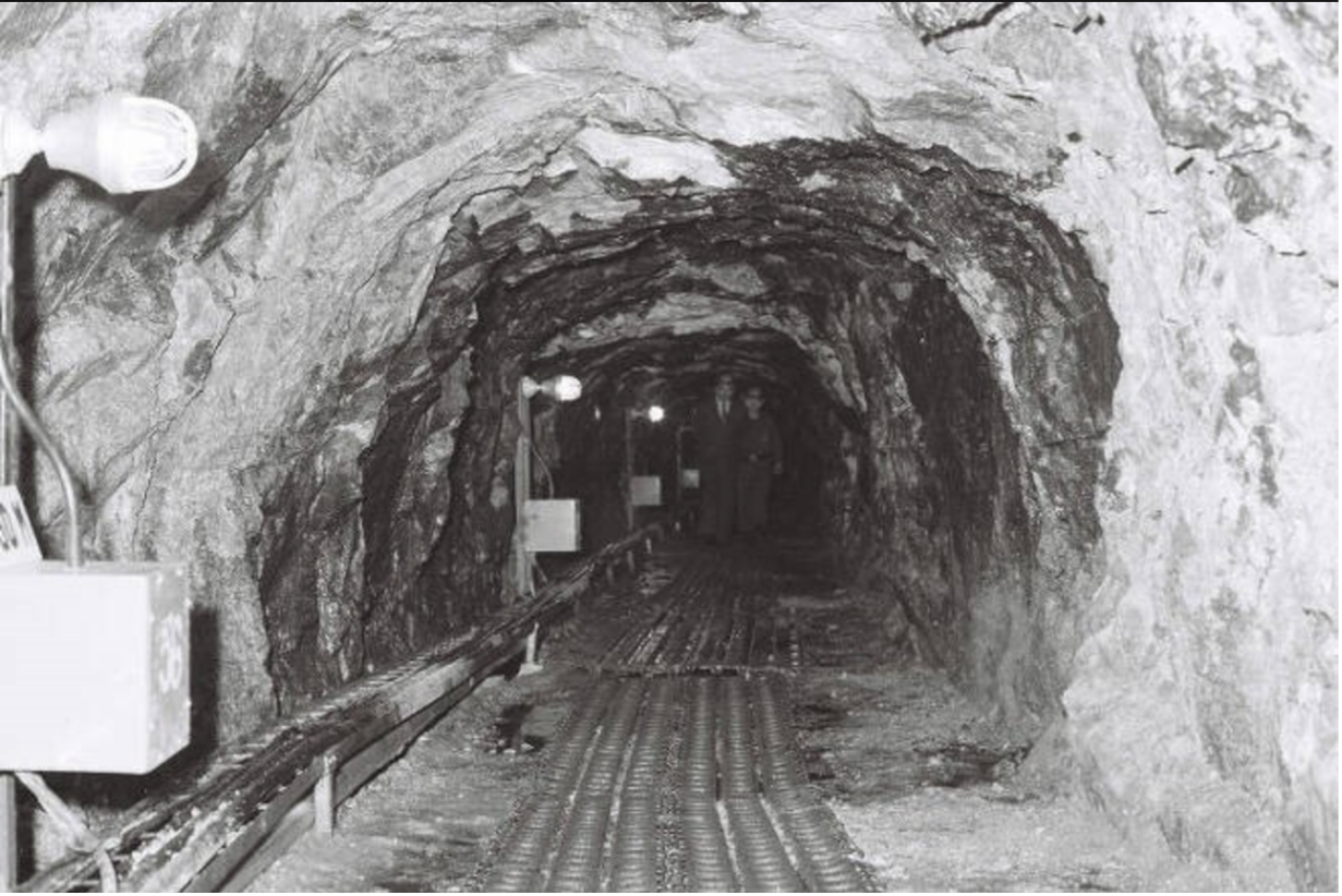
The photograph shows the second tunnel, which was discovered on 19 March 1975. (South Korean Ministry of National Defense newspaper archives.)
The third tunnel is located approximately 52 kilometres from Seoul. It is around 1.6 kilometres long, with a height and width of approximately two metres. According to estimates, it could have allowed up to 30,000 soldiers to pass through in a single hour.
Visitors descend into the tunnel wearing protective helmets, following a steep route approximately 350 metres long to a point 73 metres below the surface. The passage is narrow, dark and damp.
Personally, I had hoped to describe the inside of the tunnel in greater detail. My claustrophobia, however, had other plans: I managed just 50 metres underground before deciding I had seen enough.
The restrictions, however, do not apply only to those who struggle with enclosed spaces. South Korean authorities enforce strict rules on mobile phones in the area, and visitors are not allowed to take them into this particular section of the tour. Phones are checked before entry and stored in a specially designated area. Between the security rules and my own struggle with claustrophobia, documenting the experience on site proved rather brief.
The Dora Observatory and the two villages of the Korean DMZ
From the Dora Observatory, on the South Korean side of the Demilitarized Zone (DMZ), visitors can use telescopes to view North Korean territory, the city of Kaesong and two villages near the Military Demarcation Line.
Kijong-dong, known in South Korea as the “Propaganda Village”, was built on the North Korean side and features an imposing flagpole approximately 160 metres high. In a BBC documentary, Lieutenant Colonel Chris Mercado explains that the village earned its nickname because of the appearance of its buildings: on some of them, windows and doors appear to have been painted on the façades rather than being real openings.
For years, South Korean authorities maintained that the village was essentially uninhabited and had been built for propaganda purposes. However, the actual presence of residents cannot be confirmed.
Opposite it lies Daeseong-dong, known as the “Freedom Village”, which is located within the DMZ on the South Korean side. Unlike its North Korean counterpart, it is a genuine settlement, where residents have lived and farmed the land since the period following the 1953 armistice. Access is strictly controlled by the military authorities, and residents are subject to special restrictions in their daily lives.
Two villages facing one another, just a stone’s throw apart, yet separated by a line that continues to shape the lives of those on either side.
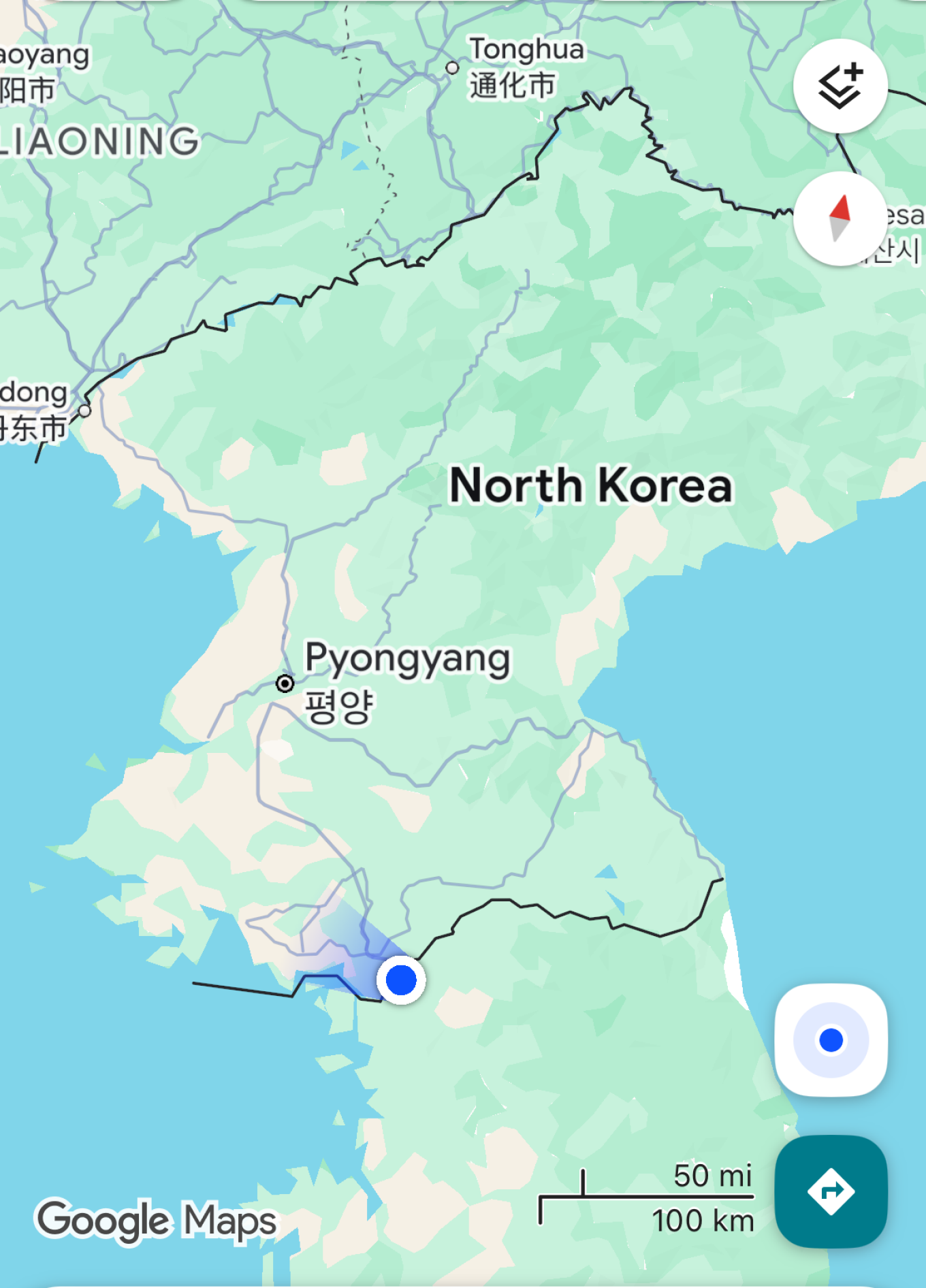
The other side of North Korea: the testimony of a man who escaped
A childhood under restrictions
Behind the military installations, barbed-wire fences and underground tunnels are the people who lived under this system. When I met Yeongnam (Ken) Eom, a man who left North Korea, I heard a different account of the country: not through military analysis or official statements, but through the memories of someone who grew up there.
Ken Eom described a childhood and adolescence shaped by a strictly controlled environment, in which even everyday social interactions were subject to restrictions. He grew up in a household shared by 11 members of his family. His father died when he was still young, and his mother remarried – a development which, he explained, was uncommon in North Korea.

My meeting with Yeongnam (Ken) Eom, the North Korean who escaped in 2010 in search of freedom from the restrictions imposed on him.
He completed his schooling in the country and, in 1990, when he moved on to secondary education, experienced a change that may seem self-evident today but was entirely new to him at the time: his first contact with girls in a school environment. Until then, according to his account, boys and girls had not been allowed to attend school together. This changed in 1990, when, he said, Kim Jong Il ordered that mixed-sex schools be established.
The year 1993 remains in his memory as one of the most difficult of his life. A powerful typhoon struck the country, while North Korea was simultaneously sinking into a severe food crisis. For his family, he said, it was a nightmare he could never forget. The collapse of the rationing system left large sections of the population without adequate access to food, turning everyday survival into a constant struggle.
He lived in the city of Hyesan, near the border with China. Its geographical location would later become particularly significant when he began seriously considering the possibility of escaping.
The decision to leave the country
After working and completing his ten years of compulsory military service, he decided to leave North Korea. He put that decision into action just three months after completing his military service.
By then, however, his family circumstances had become extremely difficult. His mother and brother had left the country, and he did not know where they were or whether they were still alive. Their absence was not only a personal loss and a source of constant anxiety; it also directly affected his ability to continue his life in North Korea.
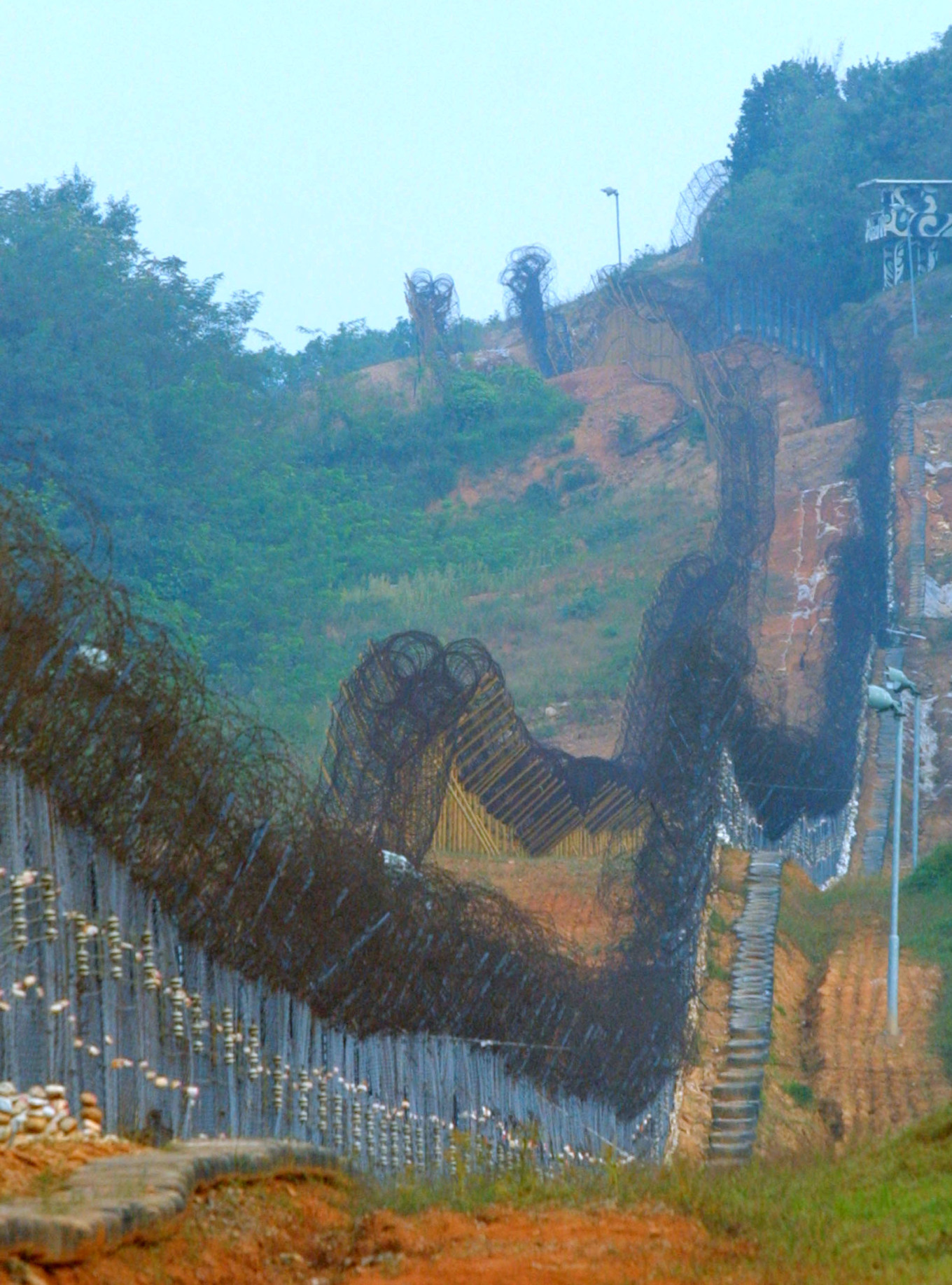
The fence separating North Korea from South Korea in the Demilitarized Zone (DMZ).
As he explained, he could no longer find work because members of his family were considered missing. With no knowledge of what had happened to his mother and brother, and no way of contacting them, he found himself in a situation that made remaining in the country increasingly difficult. Three months after completing his military service, he decided to leave as well, seeking a way out of a system that restricted not only his freedom but also his ability to earn a living.
The escape and the story of a baby who was not abandoned
Ken Eom escaped from North Korea in 2010. The journey to freedom was neither short nor easy. As he told me, he had to cross the border between North Korea and China and make his way across a river in the middle of winter, walking approximately 20 kilometres over a period of almost 20 days. He knew that if he returned, he would be killed.
Among the stories he told me, one was particularly shocking. The group of people attempting to escape included a mother with her baby. As both became exhausted, the infant’s cries echoed through the stillness of dawn. They had to move as quietly as possible, as any sound could put the entire group in danger. Whenever the baby cried, the others froze and fell silent, afraid they would be discovered.
Then the mother’s brother coldly told her to abandon her child. “Leave your baby. You could get us all killed,” he told her, even though the infant was his own nephew.
It is difficult to hear a story like this without reflecting on what lies behind those words. A mother, exhausted in the middle of the night on a journey fraught with danger, is forced to confront the possibility of leaving her own child behind. Around her are people who know that even the slightest sound could betray them. When Ken Eom described those moments to me, what stayed with me most was the brutality of the circumstances: how the fear of survival can force people into decisions that would be unthinkable under normal conditions.
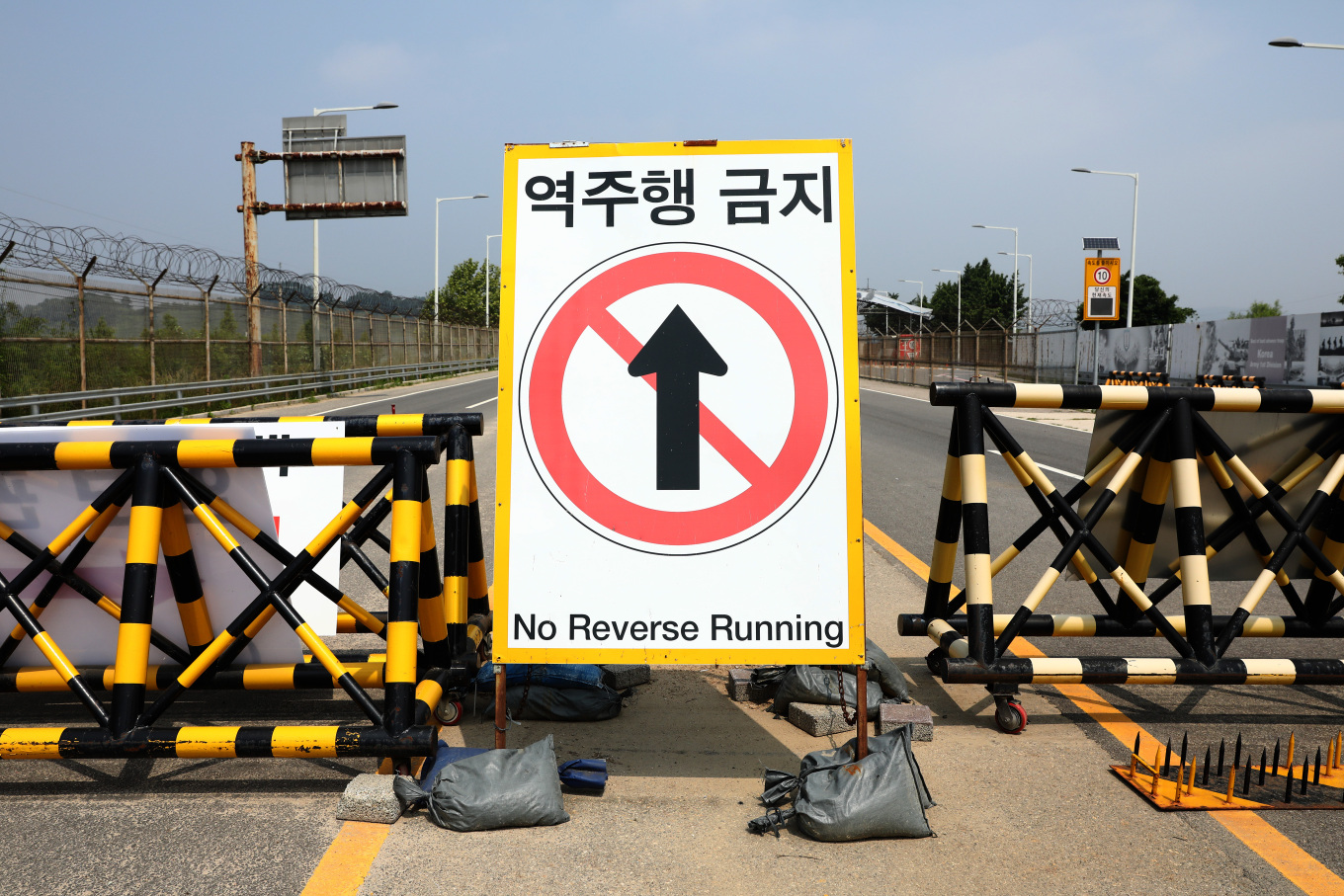
Warning sign and barriers on the road leading towards the border line. Photograph: Getty Images / Ideal Image.
Fortunately, the story did not end there. The mother did not abandon her baby. She managed to cross the jungle with the child and continue the journey towards freedom. Her brother, whom Ken Eom described as “heartless”, has now settled in Busan, South Korea, where he enjoys a comfortable life, with his own home and two vehicles. The mother, meanwhile, now works as a nurse in a hospital.
Twice, luck saved them
The group’s escape was not simply a test of endurance, but also a succession of moments in which luck played a decisive role. Ken Eom remembers two incidents that could have changed everything.
The first took place in the Chinese city of Kunming, where border guards, who would normally inspect every vehicle thoroughly, allowed them to pass without checking their car, for reasons he does not know.
The second happened in Laos, when the group passed through a checkpoint manned by a team of undercover anti-narcotics police officers. Without their uniforms, the officers looked like criminals to the group, adding yet another cause for concern to an already dangerous journey.
Despite the difficulties, they eventually managed to reach an immigration office in Thailand. They stayed there for almost 20 days before boarding a Korean Air flight, operated by South Korea’s national carrier.
For Ken Eom, arriving in South Korea marked the end of a journey filled with danger and uncertainty. For me, listening to his account, the details of that journey made it even clearer how fragile the line between escape and capture can be – and how high a price a person may have to pay in the pursuit of freedom.
The DMZ was created to divide two countries and prevent another war. More than seven decades later, it remains a reminder that the conflict has not been resolved. Behind the military lines and political statements, however, are the lives of people who continue to pay the price of that division.
Ask me anything
Explore related questions




