





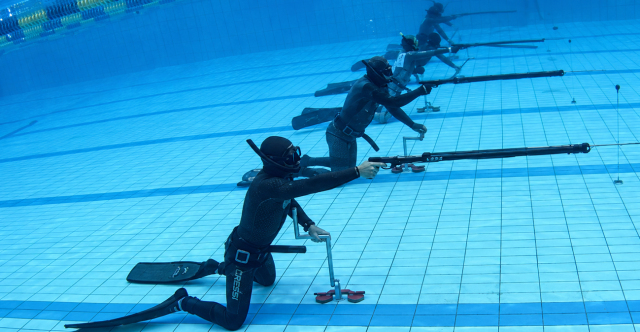
From athletics, swimming and artistic gymnastics to competitive fishing, underwater target shooting, pankration, sambo and ju-jitsu, the list of sports practised in Greece that can, under certain conditions, qualify athletes for a special admissions route into higher education is far broader than most people might imagine.
The resignation of Deputy Minister of Development Lazaros Tsavdaridis, on 12 November, following allegations concerning his daughter’s status as an athlete and the possibility of her benefiting from the relevant system of bonus points, brought the legal framework into the spotlight. He denied the allegations, saying that his daughter held a valid sports registration card and had not used the bonus points available to athletes. Regardless of how the case develops, it raises a broader question: under what conditions can sporting achievement be turned into an educational advantage?
The answer lies primarily in Article 34 of Law 2725/1999, as amended, and in the annual circular issued by the Ministry of Education. For the 2026-2027 academic year, the relevant conditions are set out in circular Φ.152/121702/Α5/17-9-2026. The framework is not limited to Olympic sports, but neither does it mean that every achievement in any competition, or participation in any sporting activity, guarantees preferential admission to a university department.
Competitive fishing and sports few people would expect
One characteristic example is competitive fishing. This is not simply the familiar pastime of recreational fishing, but an organised sporting activity with regulations, clubs, national competitions and international events.
In Greece, the Hellenic Federation of Underwater Activities and Sport Fishing (EΟΥDA) is active and is included in the register of sports federations maintained by the General Secretariat of Sport. Its activities include different forms of competitive fishing, such as shore angling with a rod and reel, float fishing, freshwater fishing and other techniques. The federation also oversees sports including spearfishing, underwater target shooting and breath-hold disciplines.

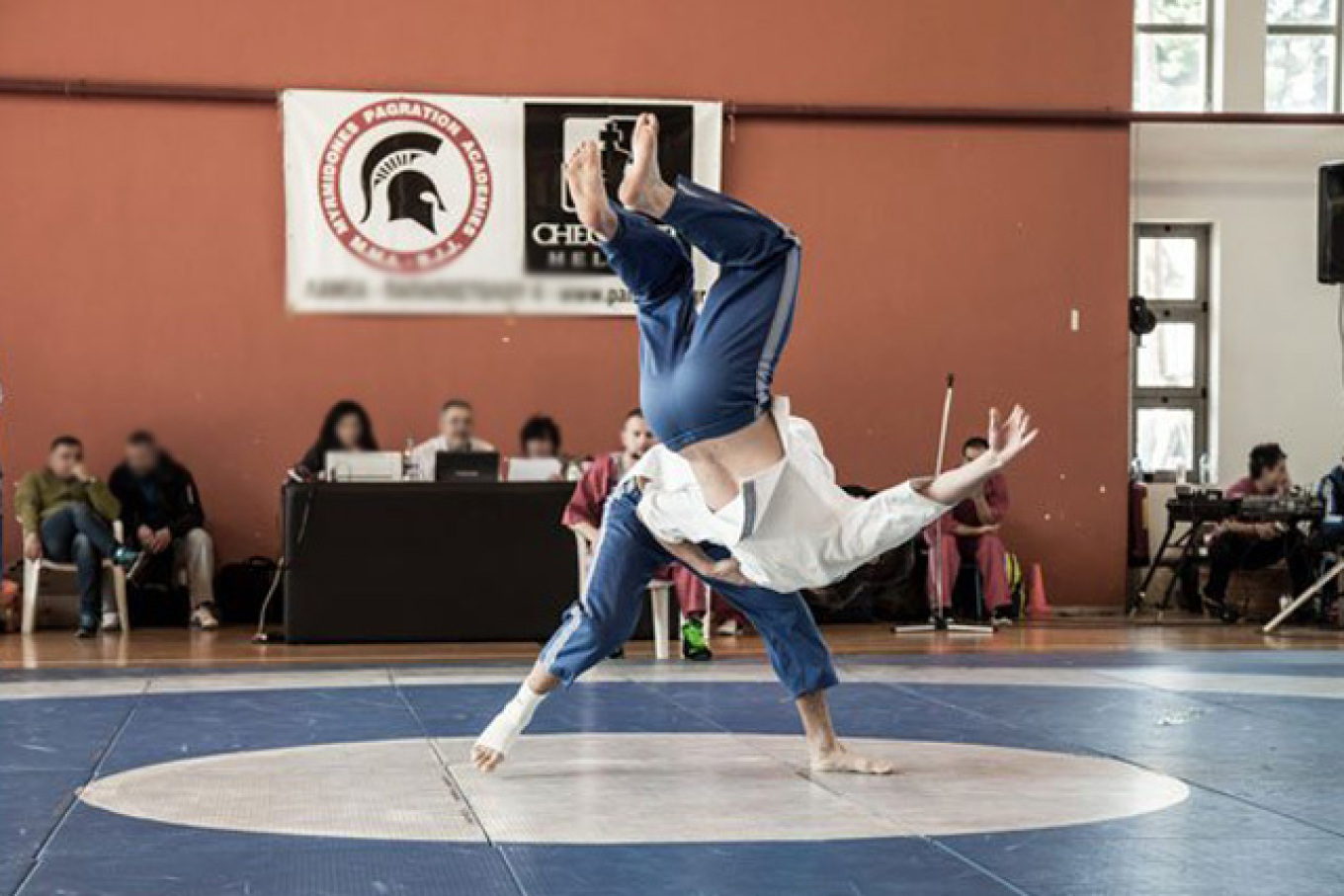
Similarly, in combat sports, there are federations supervised by the General Secretariat of Sport that oversee disciplines not all of which are part of the Olympic programme. These include pankration, wushu kung fu, sambo, ju-jitsu, kickboxing and Muay Thai. The relevant list of sports bodies maintained by the General Secretariat of Sport also includes, among others, the water skiing federation.
These are just some of the less prominent sporting activities worth examining. The wider world of non-Olympic sport also includes chess, bridge, sumo, savate, teqball, cricket, baseball and softball, as well as other forms of competitive activity.
It is important, however, to clarify that the existence of a sport or a federation does not automatically mean that every competition in which an athlete takes part is recognised for university admission. The specific legal requirements concerning the federation, the competition, the age category and the type of achievement must all be met. The list above is therefore indicative of the sports that exist and are institutionally organised in Greece; it is not a list in which participation in every discipline guarantees an educational advantage.

When does a sporting achievement qualify an athlete for admission?
The legal framework distinguishes between different categories of athletes and different levels of achievement. The most important distinction is between athletes who win medals or achieve high placings at Olympic, World and European Championships, and those who have achieved success at national or school level.
For the first category, admission to university departments over and above the prescribed number of places, with no numerical limit, is provided for in certain positions and competitions. In some cases, the right applies to any university department, while in others it is restricted to Departments of Physical Education and Sport Science (TEFAA).
More specifically:
- Olympic Games: Finishing between first and sixth place gives athletes the right to enter any university department of their choice, without a numerical limit. Those finishing seventh or eighth may enter TEFAA departments without a numerical limit, while bonus points are provided for admission to other departments.
- World Championships: For athletes competing in the men’s and women’s, under-23 and junior categories, a finish between first and sixth place can lead to admission to any university department without a numerical limit. Seventh and eighth place are treated differently: athletes are entitled to admission to TEFAA departments without a limit, while bonus points apply for other departments. More specific conditions apply to the boys’ and girls’ categories.
- European Championships: Finishing between first and third place in the specified age categories can qualify athletes for admission to any university department without a numerical limit. For certain subsequent places, admission to TEFAA departments or bonus points are provided for.
- World School Games and Youth Olympic Games: Special provisions apply, mainly allowing admission to TEFAA departments without a numerical limit or the award of bonus points for other departments.
- World or European record: Setting or equalling a world or European record in the men’s and women’s category, in a sport or event overseen by a recognised sports federation, can also establish the right to admission to any higher education institution without a numerical limit.
These provisions do not apply exclusively to sports featured at the Olympic Games. The crucial question is whether the sport and the specific international competition meet the requirements set out in the legislation, as outlined above.
The additional points awarded for national and school-level achievements
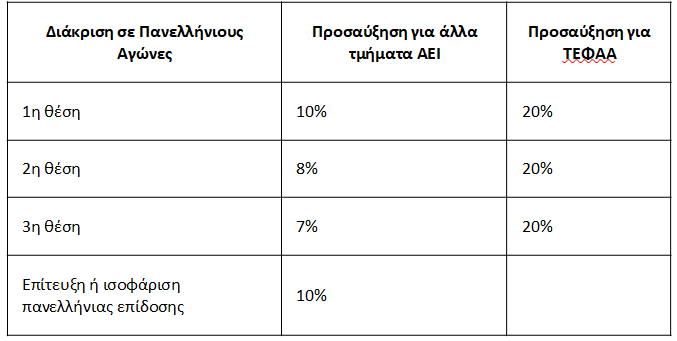
The procedure is different for athletes who have achieved success at National Championships or school competitions. In these cases, there is no general provision for unrestricted admission to any university department without examinations. Athletes must sit the Panhellenic national university entrance examinations and, provided they meet the requirements, can seek admission with an increase to their score, within a specific quota of places.
The following bonus points are provided for national-level achievements:
Bonus points are also provided for school sports competitions:
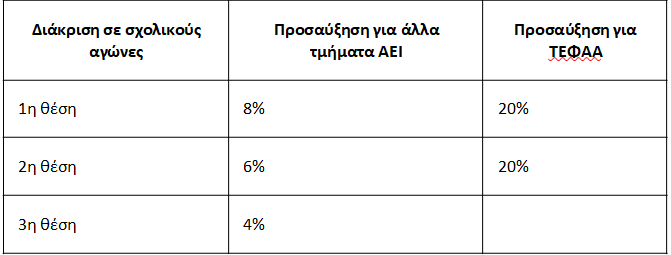
Where an athlete combines first place in a National Championship with first place in a school competition, a bonus of 11 per cent is provided for other university departments and 21 per cent for TEFAA departments.
These increases do not mean that an athlete is automatically admitted to the university department of their choice. A special quota applies to this category: 3 per cent of places in other departments and 20 per cent in TEFAA departments, in addition to the regular number of admissions. Selection is based on the applicant’s university application form and examination score, after the applicable bonus has been added.
The crucial step: Registration on the General Secretariat of Sport’s special register
Winning a sporting distinction is not enough in itself. To make use of the relevant entitlement, an athlete must have their achievement registered in the special register of distinguished athletes maintained by the General Secretariat of Sport.
The supporting documents required for this process include a certificate from the relevant federation, the athlete’s identification details, the category in which they competed, the precise achievement, the official competition records and the final rankings. The competition and the result must be capable of verification in accordance with the requirements laid down by law.
Subsequently, to secure admission to higher education, an application must be submitted to the Ministry of Education, together with the documents required for the relevant category. A basic requirement is that the athlete holds a high school leaving certificate or an equivalent qualification that allows them to take part in the procedures for admission to higher education.
For achievements in the highest category — namely at the Olympic Games, World Championships and European Championships — participation in the Panhellenic examinations and submission of a university application form are not compulsory. This option, however, is not independent of the other requirements set out in the law and the circular. For categories in which bonus points are awarded, sitting the Panhellenic examinations and submitting a university application form are part of the procedure.
There is also a time limit: for the 2026-2027 academic year, the achievements taken into account must, as a general rule, have been obtained between 1 September 2022 and 31 August 2026. The same achievement may also be used in the two immediately following academic years after the year in which the first application was submitted, provided the relevant conditions are met.
What about non-Olympic sports?
The most interesting — and least widely known — aspect of the system is that the legislation does not restrict eligibility to a closed list of Olympic sports. It refers to sports and events overseen by recognised sports federations. This means that disciplines which do not enjoy the profile of popular Olympic sports may also fall within its scope. That does not mean, however, that an athlete can secure admission to a university simply by winning a medal at any international tournament. Four elements must be checked in sequence: whether the federation is recognised; whether the specific competition meets the requirements of the law; whether the achievement concerns the prescribed age category and placing; and, finally, whether the athlete has been registered on the General Secretariat of Sport’s special register.
Competitive fishing is a characteristic example of how a sport that most people would not associate with university admission has an organised federation structure, regulations and international competitive pathways. Similarly, sports such as pankration, sambo, ju-jitsu, kickboxing and wushu kung fu have institutional representation in Greece.
How many athletes are admitted, and from which sports?
Another gap in the picture is the absence of publicly available, consolidated statistics showing how many candidates are admitted each year through the special category and, crucially, which sports they come from. The Ministry of Education announces the results for the admission of distinguished athletes, but does not publish, in the same announcement, a detailed breakdown by sport, federation and type of achievement.
For the 2026-2027 academic year, the results were announced on 5 November. The public announcement does not, however, provide a detailed table showing how many candidates were admitted, for example, through competitive fishing, ju-jitsu, sambo or other less familiar sports.
This is an area where greater transparency could make a substantial contribution: not only the number of students admitted through the special category, but also a detailed picture of the sports, competitions and achievements taken into account. It is one thing to know that the law recognises a category of sporting achievements; it is another to be able to monitor clearly how the system is applied in practice.
In any case, the key issue is not how popular a sport is, but whether the achievement is genuine, officially certified and in accordance with the strict requirements laid down by law.
Ask me anything
Explore related questions




