




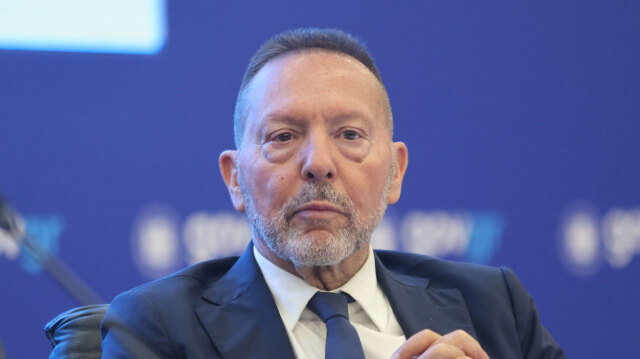
The Greek economy has moved beyond the acute phase of the crisis and its growth prospects are improving, according to Bank of Greece Governor Yannis Stournaras. Capital accumulation and productivity are now supporting estimated potential growth. However, an ageing population is expected to reduce labour’s contribution towards the end of the decade, while the income losses suffered during the crisis have yet to be made up.
Speaking at the Money and Banking Conference in Buenos Aires, Mr Stournaras said that, at the height of the crisis, real GDP per capita had fallen by around 26% compared with pre-crisis levels, while real household disposable income had declined by approximately 36%. Both figures remain below their pre-crisis levels. Greece also continues to lag behind the European Union average in terms of per capita income. For convergence to resume, real incomes will need to grow faster than the European average for a number of consecutive years.
Investment, however, has increased significantly. Fixed capital investment rose from around 11% of GDP in 2019 to approximately 18% in 2025. Its composition has also changed, with a larger share going towards equipment, research, software and other intangible assets. At the same time, exports of goods and services, which accounted for around one-fifth of GDP in the early 2000s, have risen to close to two-fifths.
Funding from the European Recovery and Resilience Facility has also contributed to the investment boost. Greece has the largest allocation of resources relative to GDP and is among the countries that have secured substantial disbursements by meeting agreed reform and investment milestones. The loan component of the facility has also mobilised private capital alongside bank lending. Funding is being channelled, among other areas, into infrastructure, skills, and the green and digital transitions. According to the Bank of Greece governor, the key challenge is to ensure that these projects increase the economy’s productive capacity.
Productivity nevertheless remains a weak point. Labour productivity has improved recently but remains below pre-crisis levels. Raising it is crucial to enabling businesses to compete internationally and real wages to increase without undermining their competitiveness. With labour’s contribution expected to decline as a result of population ageing, future growth will depend more heavily on investment, technological upgrading and making better use of skills.
The external imbalance also persists, with a current account deficit and continued dependence on imports and external financing. The increased contribution of Foreign Direct Investment (FDI) to financing the deficit – around half in 2025, compared with 4% in 2008 – represents an improvement, but is not enough to correct the imbalance permanently. Higher domestic savings and investment that boosts exports are needed.
Fiscal adjustment and the country’s return to investment-grade status have restored some confidence. The next challenge, according to Mr Stournaras, is to turn that confidence into productivity, higher incomes and sustained convergence with the rest of Europe.
Ask me anything
Explore related questions