





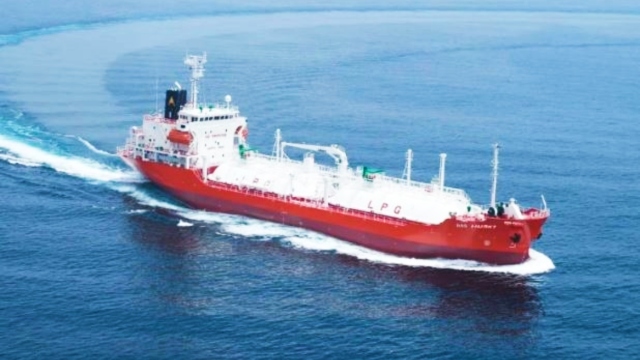
The international shipping community has been put on alert following the sinking of the LPG carrier Gas Husky, owned by interests linked to the Vafias Group, in the Black Sea off the Bulgarian coast.
The incident occurred at a particularly dangerous time for commercial shipping, as a cargo vessel carrying grain had sunk in the same maritime area just one day earlier.
According to Bulgaria’s Ministry of Defence, the Liberian-flagged Gas Husky sank approximately 50 nautical miles east of the coastal town of Byala, within the country’s Exclusive Economic Zone.
Bulgarian authorities deployed aircraft to locate and rescue the sailors. Two Su-25 military aircraft and a Cougar helicopter are taking part in the operation, while an aerial search located a life raft carrying people. At the time of the first official announcements, the fate of the entire crew had not been clarified.
The vessel disappeared from tracking systems shortly after midnight, while its automatic emergency radio beacon was activated at 08:02 on Tuesday morning, 17 November.
A new dimension has been added to the case by reports in Bulgarian media citing the Romanian maritime authority, according to which the Gas Husky was attacked by drones approximately 55 nautical miles south-east of Varna.
The information has not been officially confirmed by the Bulgarian authorities, who are investigating the circumstances of the incident. It therefore remains unclear whether the sinking was caused by hostile action or some other factor.
According to the information released, the Gas Husky, built in 2012, was sailing from Alexandria, Egypt, to the Romanian port of Midia. Bulgarian reports say it was carrying approximately 3,403 tonnes of propane and had a crew of 19 Filipino sailors.
Second sinking in two days
The sinking of the Greek-owned LPG carrier comes just 24 hours after the loss of the cargo ship Betul 8, which was carrying approximately 3,000 tonnes of wheat from Romania to Egypt.
The Somali-flagged vessel sank on Monday, 16 November, approximately 40 nautical miles south-east of Cape Kaliakra. According to shipping sources cited by Reuters, it had been struck by a naval drone. All 12 crew members were rescued.
The last known position of the Gas Husky was just 14.5 nautical miles from the site of the previous incident, heightening concerns over the safety of navigation in the area.
The two consecutive sinkings highlight the growing exposure of commercial vessels to risks associated with the Russia-Ukraine conflict. Concerns are no longer confined to maritime areas near ports in the war zone, but are extending to routes used to transport energy and agricultural products.
For Greek shipping, the Gas Husky incident is of particular significance, as it involves a Greek-owned vessel and brings renewed attention to the risks facing crews, insurance coverage and the continued operation of commercial shipping routes in the Black Sea.
Ask me anything
Explore related questions




