





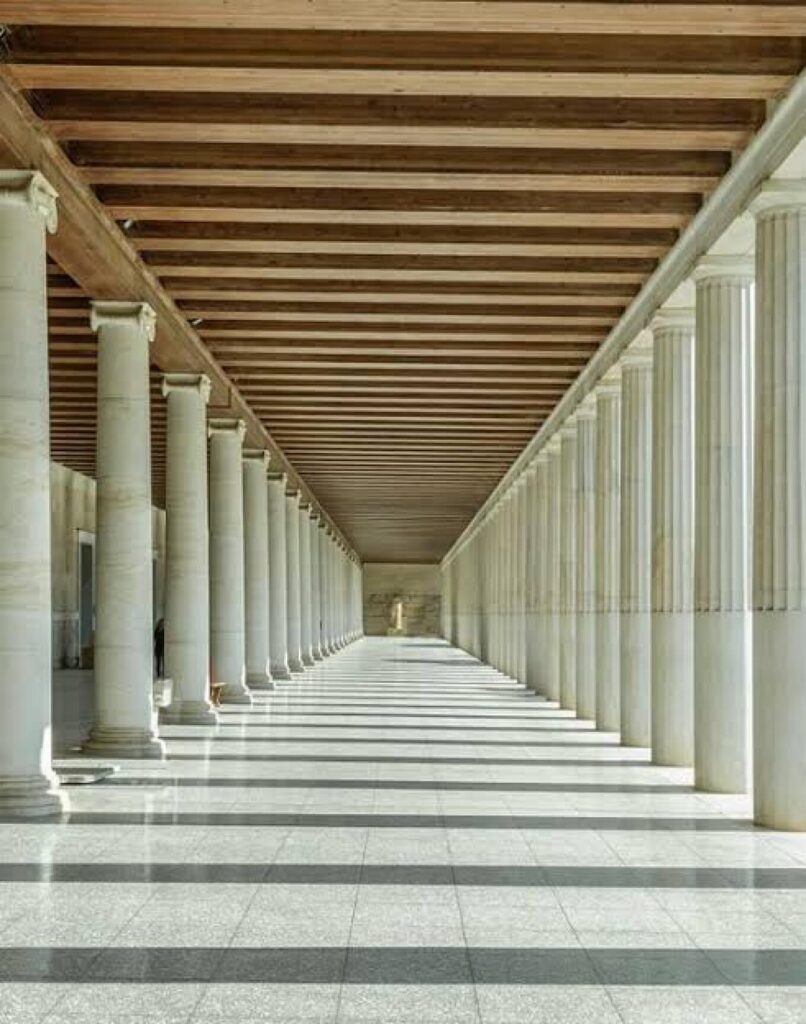
Can you imagine the citizens of ancient Athens shopping, strolling and meeting in a covered shopping centre? That is exactly what they did during the Hellenistic period at the famous Stoa of Attalos.
Standing on the eastern side of the Ancient Agora, it is now one of the Greek capital’s most recognisable and popular historic landmarks, and its roof is entering a new phase of restoration funded by the American School of Classical Studies.
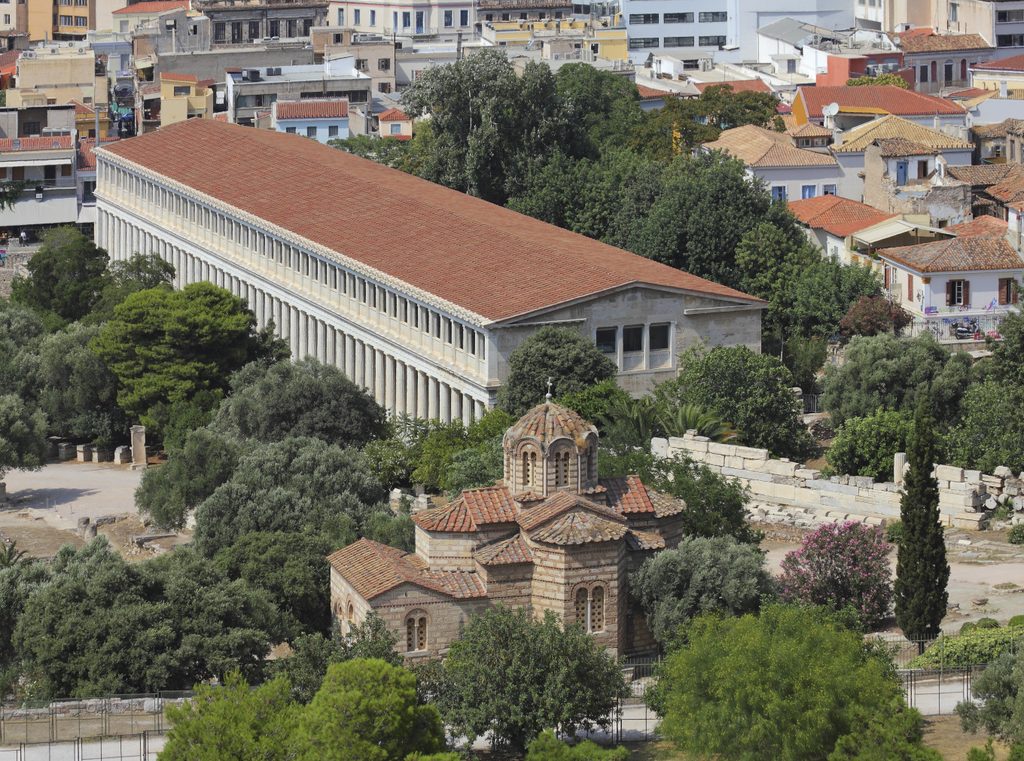
The Stoa of Attalos was among the earliest and largest covered shopping centres of antiquity, and may have been the first. It was built around 150 BC, during the Hellenistic period, as a gift from King Attalos II of Pergamon, as confirmed by a fragmentary inscription on the architrave of the lower colonnade.
The two-storey building was approximately 120 metres long, 20 metres wide and 25 metres high, with a second row of columns inside and 21 shops along each of its two floors. The shops were square, measuring 4.8 metres on each side.
On the ground floor, the outer colonnade was Doric and the inner one Ionic, with unfluted columns.
On the upper floor, the outer colonnade was Ionic and the inner one had capitals of the Pergamene type. At the north and south ends of the building, broad stairways with numerous steps formed platform-like structures leading to the upper floor.
The main building material was porous limestone, while the upright wall slabs, door jambs, room thresholds and columns were made of Pentelic marble.
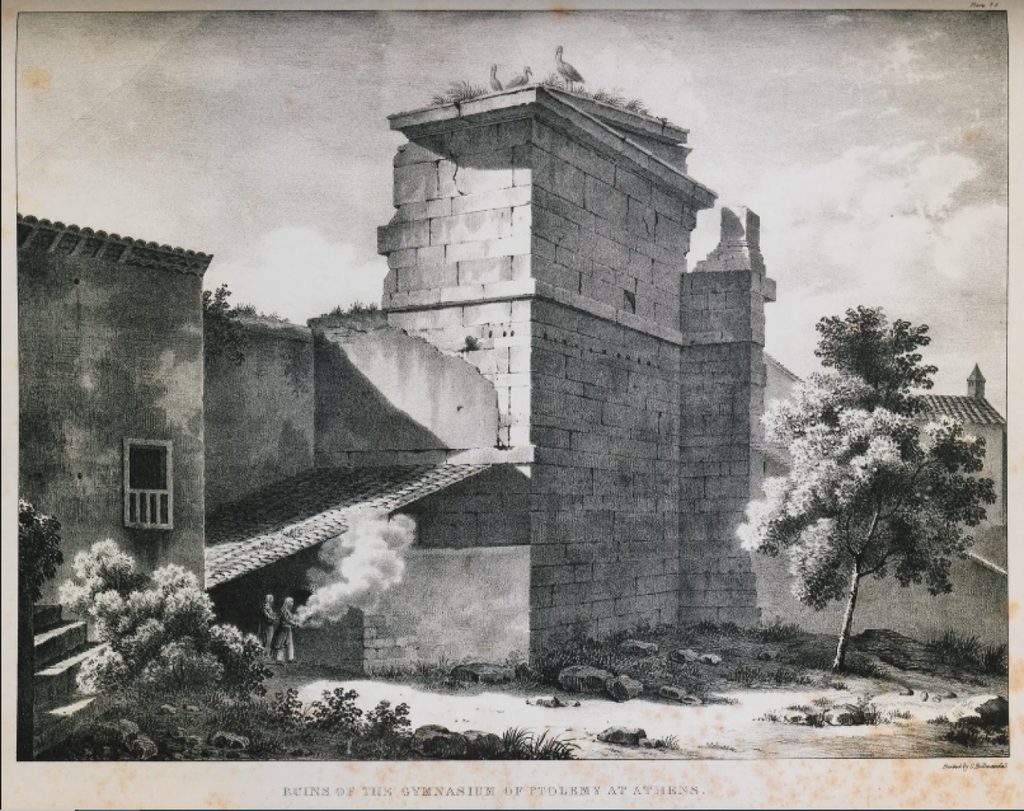
In AD 267, the Stoa of Attalos was destroyed by the Heruli and incorporated into the late Roman wall of Athens. It later served as a fortification under Frankish and Ottoman rule.
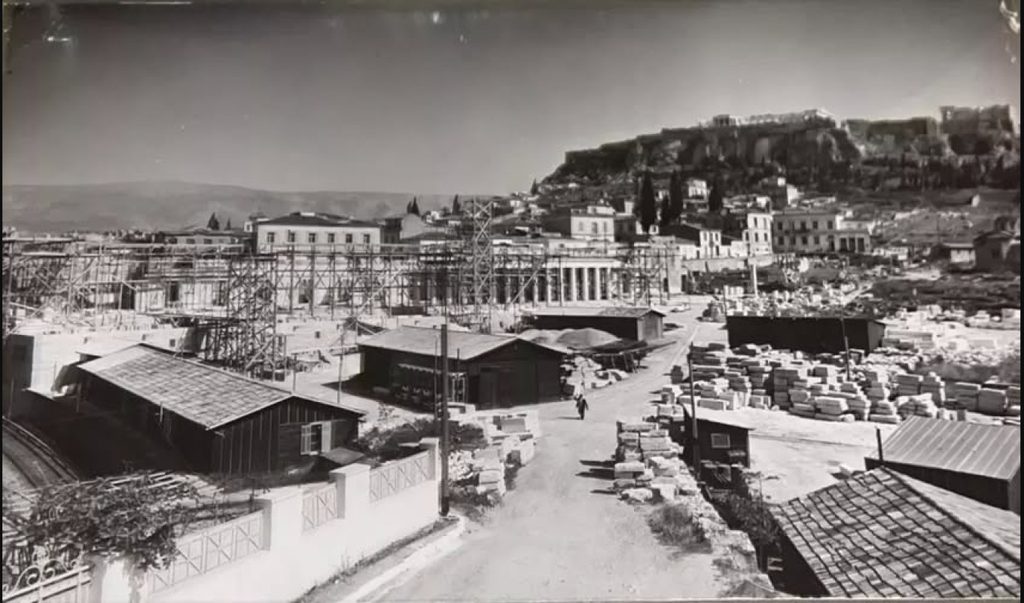
Centuries later, between 1953 and 1956, the American School of Classical Studies undertook the ambitious and demanding task of reconstructing the Stoa, guided by the studies of the distinguished architect Ioannis Travlos and funded by a donation from John D. Rockefeller Jr. The reconstructed building retained the dimensions and architectural decoration of the original, along with some of its materials.
The reconstruction marked the beginning of the American School of Classical Studies’ close association with the Stoa of Attalos, which continued over the following decades. Alongside the Museum of the Ancient Agora, the building houses the school’s research centre, which continues to excavate and conserve finds while running research and educational programmes.
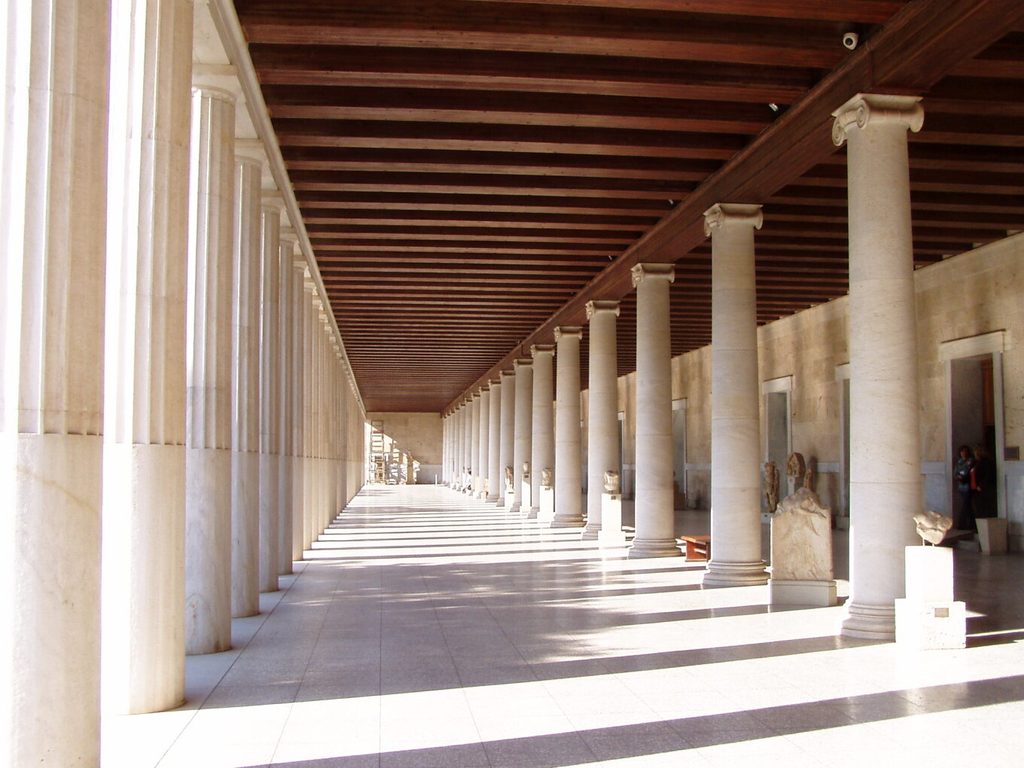
Under a donation agreement, the American School of Classical Studies will now cover the full cost of the structural study and the work needed to restore the monument’s roof, with a budget of up to €1.1 million.
“Since its reconstruction by the American School in the 1950s, this iconic monument has served as a museum, a venue for events and a storage facility for finds from the Ancient Agora excavations.
The Agora has been at the heart of the school’s mission for many decades, with generations of researchers and students contributing to its excavation, study and protection.
Through its donation to fully fund and carry out repairs to the Stoa’s roof, the school reaffirms its longstanding commitment to the Ancient Agora and its close partnership with the Ministry of Culture,” said Bonna Wescoat, director of the American School of Classical Studies.
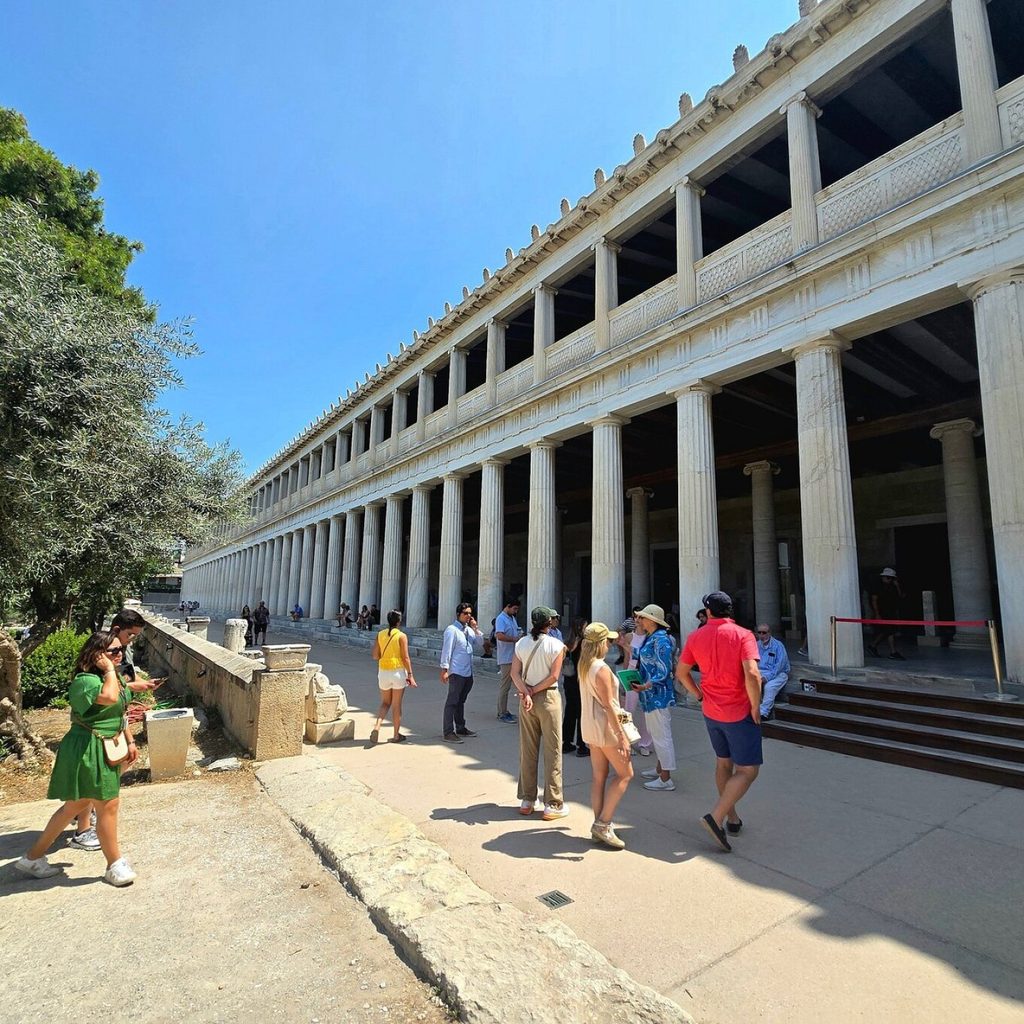
Culture Minister Lina Mendoni said, “Our collaboration with the American School, an institution with a long record of scholarship and contribution in Greece, is another example of how we work together to protect our cultural heritage. Our aim is to give the monument the best possible protection and preserve it for future generations.”
Ask me anything
Explore related questions




