





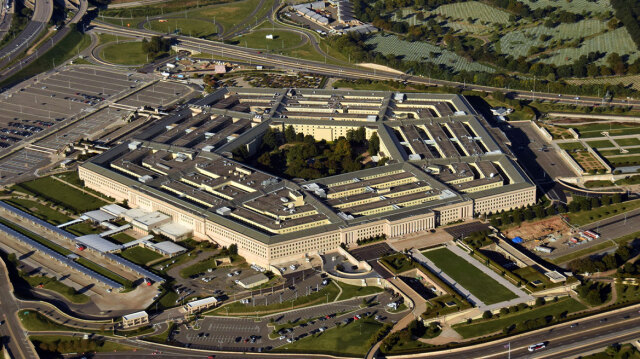
Military bases capable of operating for three months without external resupply, independent power sources, nuclear microreactors, and huge stockpiles of critical materials. These are among the measures included in the US Pentagon’s plans to strengthen the resilience of American military facilities against cyberattacks, sabotage, and the possible collapse of vital infrastructure.
At the same time, a different phenomenon is developing within American society. Fears of a widespread blackout, fueled by conspiracy theories on social media as well as the repeated problems affecting digital services in recent days, are prompting an increasing number of citizens to buy long-life food, generators, radios, and survival equipment (in some cases, reminiscent of the European Commission’s recommendation for a “72-hour survival kit” and what followed).
The trend is also reflected in market data. According to an Axios report on November 19, the company Survival Frog recorded a 450% increase in sales between October 27 and November 16, compared with previous weeks, with most recent buyers being new customers.
At the center of the discussion is FORTRESS America, an actual program run by the US Department of War, which has nevertheless become associated online with unverified claims that a months-long power outage is imminent across the entire country.
The program was officially announced on September 30 by US Secretary of War Pete Hegseth, during a speech at the Marine Corps base in Quantico, Virginia. The name FORTRESS comes from the initials of the words Federal Operations for Resilience, Troop Resources, Energy, Supply and Survivability, describing a network of federal operations covering resilience, military resources, energy, supply, and survivability.
Hegseth presented the program as a form of national security against crises that could paralyze the United States. At its core is one basic objective: ensuring that the US armed forces can continue their operations even if the civilian power grid stops functioning, fuel deliveries are disrupted, or telecommunications infrastructure is damaged.
On October 6, a new directive followed from Michael Duffy, the Deputy Secretary of Defense for Acquisition and Sustainment, launching the establishment of a special office to implement the program. Richard “Matt” O’Malley was appointed interim director, with responsibility for coordinating agencies, monitoring timelines, and drawing up the implementation plan.
FORTRESS America is organized around five main pillars:
- Energy independence: Creating independent sources of electricity for major military installations.
- Supply chain resilience: Reducing dependence on foreign countries for critical materials and components used by the defense industry.
- Strategic stockpiles: Securing critical resources and materials needed to sustain military operations.
- Facility protection: Strengthening physical security and cyber defenses against attacks and sabotage.
- Communications security: Maintaining the operation of satellite systems, communications, and the electromagnetic spectrum during a crisis.
The plan for 90 days without external support
The aspect that sparked the greatest discussion became public on October 25, when Fox News revealed, citing documents it had reviewed, that the Pentagon aims to ensure major military installations in the continental United States can maintain their critical functions for at least 90 days without external support.
The plan is not limited to electricity. It includes securing water, fuel, communications, and supplies, so that military forces can continue operating even if the infrastructure serving the rest of the population goes offline.
Pentagon spokesperson Sean Parnell explained that electricity has now become a critical factor in military power. On October 30, Dale Marks, the Assistant Secretary of Defense for Energy, Installations and Environment, confirmed the philosophy of energy independence, speaking of the ability of bases to operate for 30, 60, or even 90 days without an external electricity supply.
Nuclear microreactors, batteries, and independent grids
To achieve this level of autonomy, the Pentagon is considering a combination of technological solutions.
These include nuclear microreactors, large-scale energy storage systems, local electrical grids that can disconnect from the central network, as well as power-generation facilities using natural gas, geothermal energy, and renewable sources.
Particular interest has focused on the US Army’s Janus program, which provides for the development and testing of nuclear microreactors at military installations, with the participation of private companies.
According to reports by specialist defense publications such as The War Zone, the plan includes more than 20 microreactors, with the first installations scheduled from 2028 onward. Microreactors could provide continuous electricity without the need for frequent fuel deliveries, although their installation involves technical, financial, and regulatory challenges.
The overall undertaking is enormous. American officials have referred to approximately 500 military bases and installations in the continental United States, whose energy requirements and appropriate solutions must be assessed. According to US media reports, there is not yet a single completion timetable covering all installations, while some interventions could take many years.
A plan that began before 2026
Although FORTRESS America is a new initiative, the effort to make US military installations energy-independent did not begin this year. As early as 2021, the US Air Force had highlighted in a strategic plan the risk of power outages lasting 30 days or more due to extreme weather events or cyberattacks.
At the same time, the US armed forces began conducting energy-resilience exercises in which military bases were disconnected experimentally from the external grid to test how their backup systems performed.
In 2022, plans also advanced for the installation of a nuclear microreactor at Eielson Air Force Base in Alaska, while in 2024 the Air Force identified the development of microgrids at selected bases by fiscal year 2030 as a priority. The new initiative therefore brings together and expands earlier efforts, placing the resilience of military installations at the center of defense planning.
The Pentagon’s concerns are linked to the growing dependence of modern military operations on civilian infrastructure, such as electricity grids, telecommunications, water supply systems, and transportation networks.
In 2021, a ransomware cyberattack on the Colonial Pipeline caused serious fuel-supply problems in the eastern United States, highlighting the potential consequences of an attack on critical infrastructure. In 2024, US intelligence agencies warned that Chinese hackers were attempting to gain access to networks connected to key American infrastructure.
These developments, combined with lessons from attacks on energy facilities during modern wars, reinforce the need to ensure that military bases do not depend on a single network to remain operational. The Pentagon also aims to reduce the defense industry’s dependence on foreign supply chains, particularly in areas such as rare earths, semiconductors, titanium, and materials used in the production of missile systems.
From a military plan to theories about a widespread blackout
The publication of the 90-day plan triggered intense activity online. Videos began circulating on TikTok, YouTube, and other platforms portraying the preparations at military bases as evidence that the US government knows a nationwide collapse of the electricity grid is imminent.
Some posts even identified November 17, 2026, as the date when an alleged blackout would begin. The date, of course, passed without the relevant claims being confirmed — although isolated problems affecting US digital services did occur that day.
According to the Associated Press, even a fabricated video circulated showing US President Donald Trump warning of a 90-day power outage before the end of the year. The misleading posts combined real news about cyberattacks, technical service disruptions, and government preparedness exercises, presenting them as parts of a single scenario involving an imminent crisis.
A study by the Digital Democracy Institute of the Americas, cited by the Associated Press, recorded more than 2,200 Spanish-language posts and reports between November 11 and 17 concerning alleged global service outages. However, none of the available official information about FORTRESS America provides evidence that a widespread blackout in the United States has been scheduled or is expected.
450% increase in sales of survival supplies
Regardless of the credibility of the rumors, their impact on consumer behavior is real.
According to Axios, Survival Frog, a company specializing in emergency preparedness products, saw its sales increase by 450% between October 27 and November 16, compared with previous weeks. The company’s founder and CEO, Byron Walker, said that a significant proportion of demand was coming from consumers who had never previously purchased similar equipment.
At the top of the list of preferred products are long-life foods, such as canned meat, followed by radios, solar generators, portable batteries, and water filters. Similar trends are being observed, according to US media reports, at other companies in the sector, while reports point to increased demand for generators at major retail chains such as Costco.
This development is part of a broader trend toward emergency preparedness, known in the United States as “prepping.” It does not concern only people who fear a widespread catastrophe, but also households seeking to secure a basic level of independence in the event of a natural disaster, technical failure, or cyberattack.
What US authorities recommend to citizens
In contrast to the military’s 90-day planning, the basic guidance issued by the US Federal Emergency Management Agency (FEMA) focuses on households’ ability to meet their needs for at least three days.
The recommendations include supplies of drinking water, food that does not require refrigeration, flashlights, batteries, medical supplies, a portable radio, and means of communication. Experts stress that preparing for genuine emergencies should not be confused with claims that a catastrophe is imminent.
After all, the needs of a military installation, which must maintain operational capabilities in wartime conditions, differ significantly from those of an ordinary household.
FORTRESS America highlights a significant shift in the way the US Pentagon approaches the protection of its military infrastructure. For decades, the United States’ ability to project military power relied on an extensive network of installations, transportation, and communications. Now, the possibility that infrastructure within the country itself could come under attack is being given greater emphasis in defense planning.
Implementation of the program is still at an early stage, with the Pentagon assessing the needs of individual installations, the cost of the proposed measures, and funding options, including through partnerships with private companies.
At the same time, public reactions demonstrate how easily a military crisis-response plan can be transformed through social media into a sense that a catastrophe is imminent.
The question is not whether the Pentagon knows that a blackout is about to happen — nothing in the available evidence suggests that it does. The question is whether US military and civilian infrastructure would be able to continue operating in the event of a genuine, large-scale, and prolonged crisis.
Ask me anything
Explore related questions




