





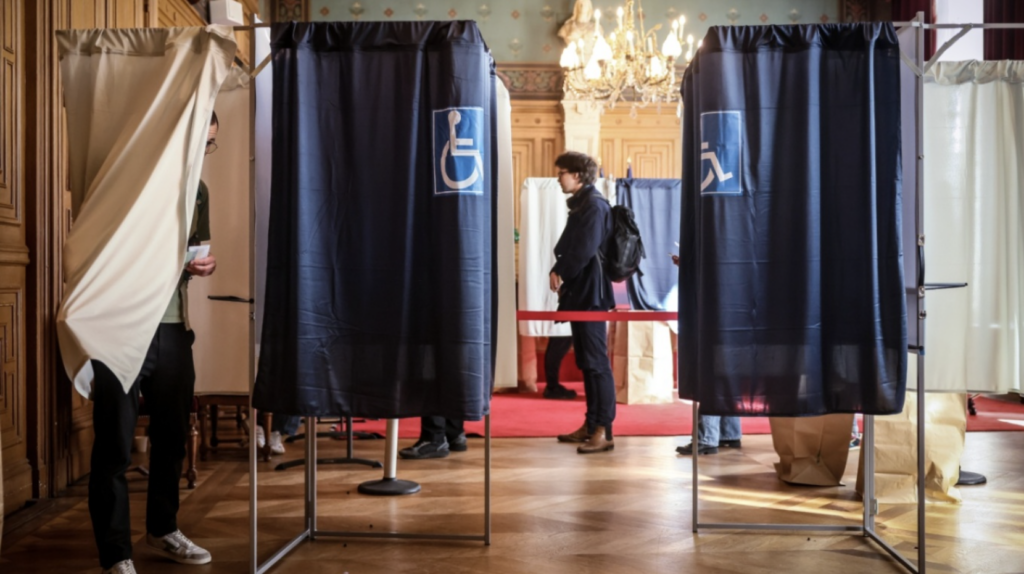
A series of crucial elections over the next 13 months threatens to shift the political balance in Europe, as nationalist and far-right parties strengthen their presence and seek power in some of the European Union’s largest countries.
According to an analysis by the Guardian, Europe is entering an electoral ‘supercycle’, with votes in Spain, France, Poland and Italy potentially paving the way for a powerful bloc of Eurosceptic leaders capable of blocking major decisions in Brussels.
Elections are also expected in Greece, Estonia, Finland and Slovakia, while regional contests will be held in Germany.
The stakes are not necessarily the break-up of the EU, but its gradual weakening, with decision-making potentially paralysed on issues including funding for Ukraine, European defence, enlargement and economic integration.
The four elections that could change Europe
The electoral cycle begins on 29 November in Spain, where socialist Prime Minister Pedro Sánchez faces the prospect of defeat by the conservative People’s Party and the far-right Vox, which are already working together in some regions.
France follows in the spring, where Marine Le Pen, leader of the far-right National Rally, is emerging as the frontrunner for the presidency, with a significant lead over Jean-Luc Mélenchon and the fragmented forces of the political centre.
In Poland, nationalist parties, which together command almost half of electoral support, could topple Donald Tusk’s pro-European governing coalition.
In Italy, Giorgia Meloni is seeking a second term in elections that must be held before the end of 2027, while also facing pressure from the even more hardline National Future party, led by Roberto Vannacci.
The rise of nationalist parties is taking place despite strong public support for the EU itself. According to figures cited by the Guardian, 74% of Europeans believe their country benefits from membership of the Union, a record high. However, almost one in four voters now supports far-right parties, a share that has almost quintupled since the mid-1990s.
Economic stagnation, the rising cost of living, an ageing population and pressure on public finances have eroded confidence in traditional centre-left and centre-right parties. At the same time, migration, the green transition, support for Ukraine and globalisation have become major battlegrounds in political debate, while Russian disinformation and the Trump administration’s open support for so-called ‘patriotic’ parties are, according to the analysis, reinforcing particular political narratives.
How the European Union could be ‘paralysed’ and why France matters
The biggest shift could take place in the European Council, where only three of the 27 leaders currently come from the centre-left. If nationalist and Eurosceptic governments take power in France, Spain and Poland, they could join forces with other governments to form a powerful minority capable of blocking European decisions.
The issues at stake would include the EU budget, further assistance to Ukraine, EU enlargement and deeper cooperation on defence, energy, finance and technology. Political scientist Nathalie Tocci warns that the electoral cycle could ‘dramatically change the face of Europe’, causing not merely the gradual erosion of the European project but potentially weakening it from within or even bringing about its collapse.
According to analysts, the most decisive election will be in France. Marine Le Pen’s programme envisages cutting France’s contribution to the EU budget by €11 billion, holding a constitutional referendum on the supremacy of French law over European law, and breaching certain single market rules.
Mujtaba Rahman of Eurasia Group points out that France wields considerably greater influence within the EU than Hungary. A potential Le Pen presidency could therefore challenge the Union’s supranational architecture far more effectively.
According to the analysis, the first major consequence could be the obstruction of further European assistance to Ukraine, if a cohesive bloc of Eurosceptic leaders were to emerge. Meanwhile, Giorgia Meloni, who has so far shown relative restraint in her dealings with Brussels, could adopt a different, less ‘moderate’ stance if she gained more political allies in the European Council.
The risk of the EU losing its ability to make decisions
The Guardian’s analysis contrasts the current situation with 1998, when pro-European, centre-left forces dominated most European governments and the Union was experiencing a period of economic growth and enlargement. Almost three decades later, the political momentum appears to be moving in the opposite direction.
Stefan Lehne of Carnegie Europe believes the upcoming elections will be a crucial test of the EU’s resilience. As he explains, the stronger presence of the radical right may not lead to the break-up of the European Union as it exists today, but could prevent it from evolving to meet future challenges.
The greatest danger, he concludes, is that a prolonged inability to act collectively will gradually lead Europe to lose political power and international influence.
Ask me anything
Explore related questions




