





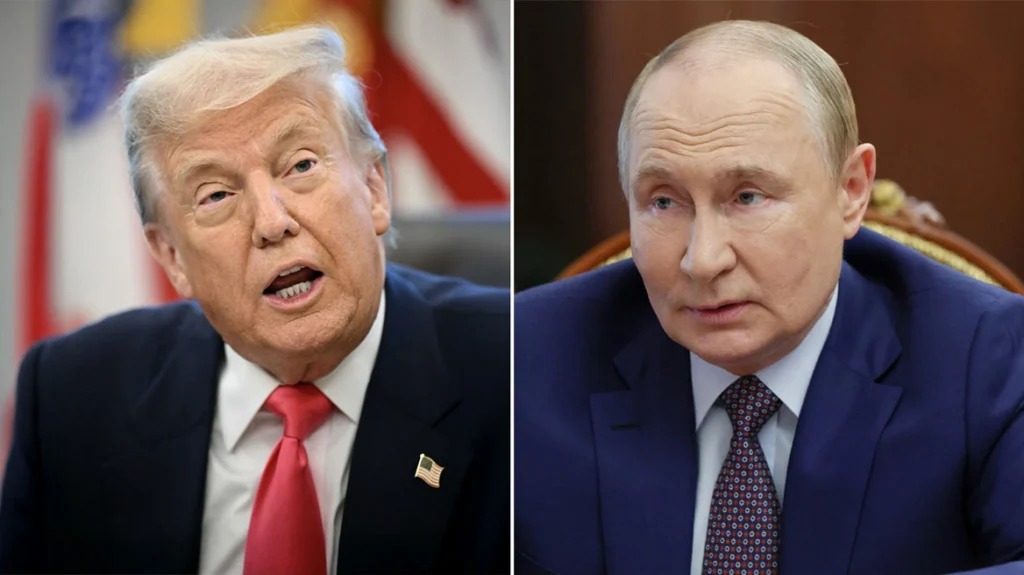
The administration of Donald Trump has quietly abandoned proposals for business deals with Russia, which it had intended to use as an incentive to persuade Vladimir Putin to end the war in Ukraine. This decision follows a series of negotiations in which Washington concluded that Moscow had no interest whatsoever in partnerships with the United States in the energy and aviation sectors.
The revelation was made by the Financial Times, citing five officials who had been briefed on the change in the US negotiating strategy.
According to the same sources, US President Donald Trump’s envoys, Steve Witkoff and Jared Kushner, informed European officials that business partnerships were no longer a central element of Washington’s proposals to Moscow.
The development represents a shift in the US approach, which had sought to use the prospect of economic cooperation with Russia as a negotiating tool to bring hostilities to an end. However, the Russian leadership appears to be prioritising its territorial and political demands over the economic incentives being offered by the Americans.
Proposals Involving Nord Stream, Oil and Titanium
Jared Kushner, the US president’s son-in-law and one of the key negotiators seeking to secure a ceasefire between Russia and Ukraine, had sought to promote economic cooperation as an important tool for restoring relations between the parties involved.
In this context, various plans had been considered for the post-war period, which could have created shared economic interests between Washington and Moscow. Among the proposals were investments by American companies in Russian oil projects, as well as partnerships in titanium production, a metal with significant applications in aerospace and industry.
At the same time, discussions had taken place about the possible involvement of an American investor in the Nord Stream natural gas pipelines, through which Russia supplied natural gas to Germany before its full-scale invasion of Ukraine. As Reuters reported in October, senior US and Russian officials had participated in the relevant discussions, including Kushner.
These investment opportunities were presented as economic incentives that could encourage Moscow to show greater flexibility in the peace negotiations.
“The Russians Were Not Interested in These Types of Deals”
Despite the initially positive response from Russian officials to the American proposals, Moscow’s interest appears to have subsequently diminished considerably.
According to the Financial Times, the Kremlin continued to insist on its fundamental demands for ending the war, including the ceding of Ukrainian territory and acceptance of other terms that Kyiv considers “unacceptable”.
This position led the American side to conclude that the economic proposals did not provide sufficient incentive for the Russian leadership. “It became quite clear that the Russians were not interested in these types of deals,” one of the officials familiar with the negotiations told the Financial Times.
As a result, business partnerships ceased to be a central element of the American proposal, as they did not appear capable of bridging the differences between Moscow and Kyiv.
Trump’s Previous Move Involving Russian Diesel
The change in strategy comes just weeks after the Trump administration decided to temporarily suspend certain US sanctions on Russian fuel.
In October, Washington took this step after Russia agreed to make diesel available on international markets, in an effort to bring fuel prices down.
The sanctions that were suspended had originally been imposed with the aim of limiting the revenue Moscow uses to finance the war in Ukraine.
Their temporary easing formed part of the US administration’s effort to combine economic policy with diplomatic pressure, offering Russia specific benefits in exchange for its cooperation. However, the latest developments indicate that this approach failed to alter the Kremlin’s fundamental demands in the negotiations.
Moscow’s Insistence on Territorial Concessions
The Trump administration’s decision to relegate business deals to a secondary role once again, and in unmistakable terms, highlights the difficulties that continue to stand in the way of efforts to secure a peace agreement.
Russia insists that any settlement must include territorial concessions from Ukraine, along with other conditions concerning security and Kyiv’s future military capabilities.
The Ukrainian side, by contrast, rejects terms that it believes would undermine its sovereignty and territorial integrity.
These differing positions continue to represent a major obstacle to the negotiations, despite American efforts to establish a framework for an agreement.
Ask me anything
Explore related questions




