





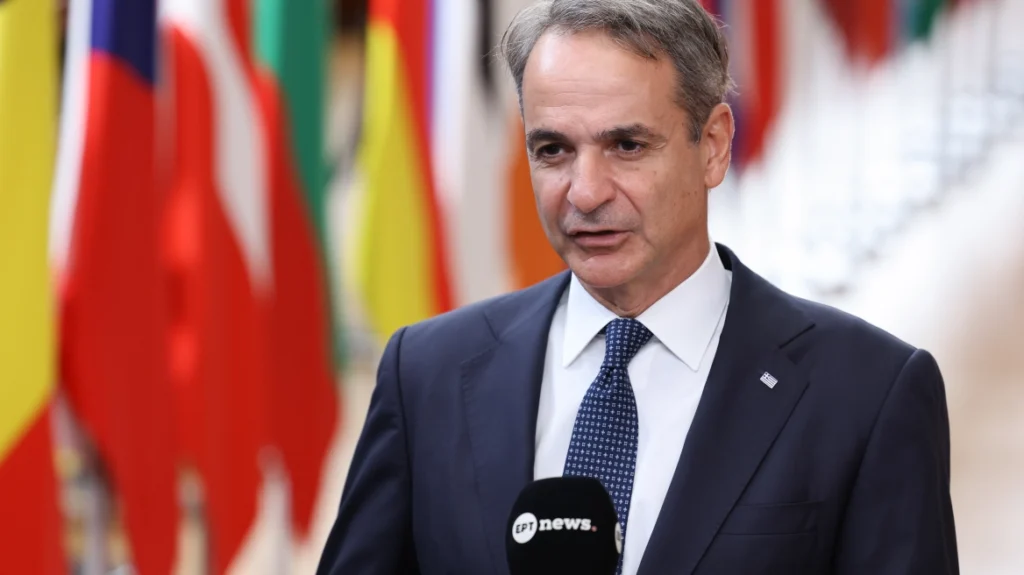
Athens is sending a clear message that it will not accept further cuts to funding for Cohesion Policy and the Common Agricultural Policy, ahead of the extraordinary European Council meeting in Brussels on 26 and 27 November.
According to government sources, Greece is entering negotiations on the 2028–2034 Multiannual Financial Framework with a constructive attitude, but does not agree with a European budget that weakens the Union’s investment capacity and downgrades Cohesion Policy.
Prime Minister Kyriakos Mitsotakis is expected to make clear that there is no room for further cuts within an already constrained budgetary framework.
According to the same sources, Greece’s positions are as follows:
Athens recognises the efforts of European Council President António Costa to bridge the sharply opposing views of member states — with a view to reaching an agreement on the 2028–2034 Multiannual Financial Framework by the end of the year — by presenting a new negotiating proposal (Negobox), which will be discussed on Thursday and Friday in Brussels. Greece is approaching the European Council with a constructive attitude.
However, it does not agree with a budget that weakens the overall European investment capacity and downgrades Cohesion Policy. Greece is seeking a budget commensurate with Europe’s ambitions, based on solidarity, security and cohesion. Europe cannot demand more of itself while simultaneously choosing to invest less. There can be no strong Europe with a weak European budget.
Athens believes that many of Greece’s positions have been incorporated into and acknowledged in the new negotiating proposal. However, the Prime Minister is expected to stress that no further cuts to funding for Cohesion Policy and the Common Agricultural Policy will be tolerated.
We need a genuinely European budget, with ambition and adequate resources. Europe is facing major challenges in competitiveness, cohesion, security and strategic autonomy. We cannot, on the one hand, acknowledge the need for more investment, as also highlighted in the Draghi report, and, on the other, end up with a budget that restricts the Union’s available capacity. Greece’s position is clear: there is no room for further cuts within an already constrained budgetary framework.
Regarding new own resources, Greece supports a fairer and more balanced system of own resources and the consideration of new revenue sources — including future auctions of 6G radio spectrum.
The final compromise must safeguard the Union’s investment capacity, protect Cohesion Policy and the Common Agricultural Policy, and avoid placing a disproportionate burden on particular member states.
Ask me anything
Explore related questions




