





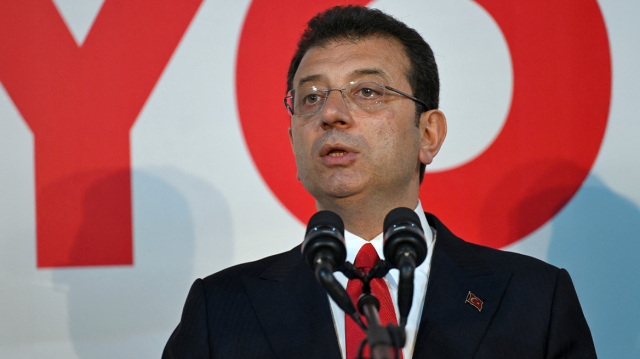
A major blow has been dealt to imprisoned former Istanbul mayor and Recep Tayyip Erdoğan’s main political rival, Ekrem İmamoğlu, after one of Turkey’s highest courts upheld the cancellation of his university degree, effectively depriving him of the possibility of running for the country’s presidency in the next election.
The ruling, made public on Wednesday, marks another judicial development against the Turkish opposition, many of whose members are facing criminal charges or have been sent to prison.
Court upholds cancellation of İmamoğlu’s degree
Turkey’s Council of State, one of the country’s highest courts, upheld the decision to cancel the university degree İmamoğlu obtained in 1994, citing irregularities in the process through which he pursued his studies.
The ruling exhausts the ordinary legal avenues of appeal, although the Istanbul mayor’s lawyers have announced that they will take the case to the Constitutional Court.
The development carries particular political significance, since the Turkish Constitution stipulates that candidates for the office of President of the Republic must hold a university degree. Therefore, as long as the cancellation of his academic qualification remains in force, İmamoğlu cannot run in the presidential election, regardless of the outcome of the other legal cases in which he is involved.
The court case concerns irregularities which, according to the Turkish authorities, occurred when he transferred to a university in Istanbul. İmamoğlu rejects the allegations and considers the cancellation of his degree to be politically motivated.
İmamoğlu denounces “illegal judicial operations”
İmamoğlu did not immediately make a public comment after the ruling was announced. However, last week, when a pro-government newspaper published information about the outcome of the case before his lawyers had received official notification, he had denounced Ankara’s actions as “illegal judicial operations”.
İmamoğlu has remained in pre-trial detention since March 2025, facing a series of corruption charges, all of which he denies.
If found guilty of all the charges brought against him, the total sentences prescribed could exceed 2,000 years in prison.
At the same time, the Erdoğan government rejects allegations of political interference in the judiciary, insisting that the courts operate independently.
$20 billion scandal causes turmoil within the AKP
While the opposition is facing new court rulings, Erdoğan’s ruling party is being shaken by a stock market scandal that has come to be known as “Fonzi”.
The case concerns investment funds with a total value of approximately $20 billion and affects nearly half a million investors.
The crisis erupted in mid-September, when several large investment funds announced that they were unable to meet investors’ requests to withdraw their money.
Regulatory authorities subsequently ordered the liquidation of 131 investment funds, while a criminal investigation was launched into possible illegal transactions and market manipulation. More than 100 suspects have been sent to prison as part of the investigation, including senior officials, regulatory authority executives and political figures.
The case has caused serious turmoil in the Turkish stock market and increased pressure on the government, as hundreds of thousands of citizens try to recover their money.
Close associate and longtime friend of Erdoğan resigns
The latest political figure to come under the spotlight in the scandal is Hayati Yazıcı, one of the Turkish president’s closest associates and oldest friends.
Yazıcı, who has known Erdoğan for more than 30 years, resigned late on Tuesday night from his position as deputy chairman of the ruling AKP, following his son’s involvement in the investigation into the scandal.
In a social media post, he maintained that he had never participated in “any controversial work, relationship or activity”, while declaring that his son was also innocent. He himself is not facing any charges of illegal conduct.
Former minister accused of making $40 million
Among the political figures implicated in the investigation is former minister and AKP member Fatma Betül Sayan Kaya. According to information published by the Financial Times, Kaya is alleged to have made approximately $40 million from investments in funds linked to the scandal.
She denies any wrongdoing. She had been arrested on suspicion of involvement in a criminal organisation and remained in prison for 19 days before being released on Tuesday, subject to house arrest.
Her release prompted reactions from opposition figures. Oya Tekin, an opposition mayor who has been in prison for almost 18 months and has appealed a conviction for bribery, made the following pointed comment: “I want the same justice that was applied in Kaya’s case.”
Erdoğan’s popularity declines as inflation approaches 30%
The “Fonzi” scandal comes amid a period of declining support for the ruling party. According to recent opinion polls cited by the Financial Times, the AKP has lost more than four percentage points since September, when the crisis erupted, with its support falling from levels close to 33%.
Berk Esen, an associate professor of Political Science at Istanbul’s Sabancı University, links the judicial pressure on the opposition to the decline in electoral support for Erdoğan.
“The relentless judicial attacks against the opposition are due to the decline in voter support for Erdoğan, and the Fonzi scandal has made the situation even worse,” he said, adding that the government’s aim is to weaken the opposition to such an extent that it can continue winning elections.
Ask me anything
Explore related questions




