In early 1941, Adolf Hitler could look at a map of Eastern Europe and think that his plans were progressing nicely. The invasion of the Soviet Union, Operation Barbarossa, was coming in a few short months, Hungary, Romania and Bulgaria had joined the Tripartite Pact, and Yugoslavia’s government signed on to the same on March 25th, 1941.
Perhaps the only problem was the Italians’ stalled invasion of Greece from Albania, which began in October 1940. In fact, the Greek Army had counter-attacked and were pushing the Italians well back into southern Albania, liberating yet again the Greek-inhabited area of Northern Epirus. But plans were already in place for the German military to sweep in from Bulgaria and take care of what the Italians couldn’t. Hitler knew he needed to control Mediterranean ports if the North Africa Campaign was to be won.
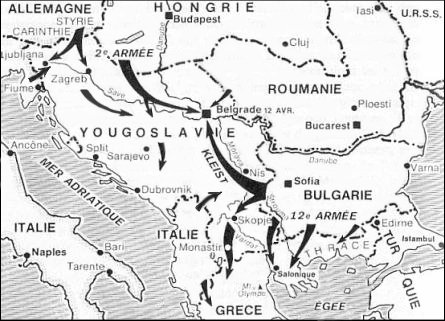
(German lines of attack into Yugoslavia and Greece, April 6th, 1941)
But two days after Yugoslavia signed the Tripartite Pact, there was a coup d’état by the mostly Serbian military who favored solidarity with Greece and closer ties to the rest of the Allied nations. Now, Hitler felt personally wronged and began a new plan for a simultaneous invasion of both Yugoslavia and Greece, which began on April 6th, 1941.
Known as the Balkan Campaign, the German invasion of these two countries happened relatively swiftly and with great success. However, Hitler came to blame the necessity for these actions, because the Italians couldn’t conquer Greece alone, for the failure of Operation Barbarossa and the loss to Russia.
Yugoslavia, though dominated government and military by the people of Serbia was also comprised of the Slovenian and Croatian people. All these people now have their own nations as well as the other small nations of former Yugoslavia. Even before the German invasion, Croats and Slovenes began rebelling against Serbian rule. Croatia formed its own government and aligned with the Nazis. Huge portions of Yugoslavia’s army mutinied when the invasion commenced.
The invasion began with a massive aerial bombing of Belgrade in which tens of thousands of civilians were killed.
Very little organized resistance met the Germans outside of ethnic Serbs fighting in Serbia. So despite having 700,000 troops, though many poorly trained and equipped, before the invasion, Yugoslavian resistance crumbled very quickly and ended in just 12 days.
The ancient Greek city (2800 BC) only meters below the sea (video)
Turkish extremists “Gray Wolves” attacked Kurds in Lyon with iron baseball bats & knives
Yugoslavia did have a compelling strategy if faced with an overwhelming German invasion: retreat from all fronts except the Southern, advancing on the Italian positions in Northern Epirus, meet up with the Greek army and build a substantial Southern front. But due to the rapid fall of the country and inadequate gains against the Italian Army, this move failed and Yugoslavia surrendered to Germany.
The Greeks fared somewhat better due in large part to a kingdom far less divided, and to substantial support from British Imperial forces, including from Australian, New Zealand, Palestine, and Cyprus.
The British, however, were not able to commit nearly enough troops to the defense of Greece and the deployment of over 60,000 men was heavily criticized and seen as a largely symbolic gesture of support to fight a “gentleman’s war” of honor that was sure to be lost.
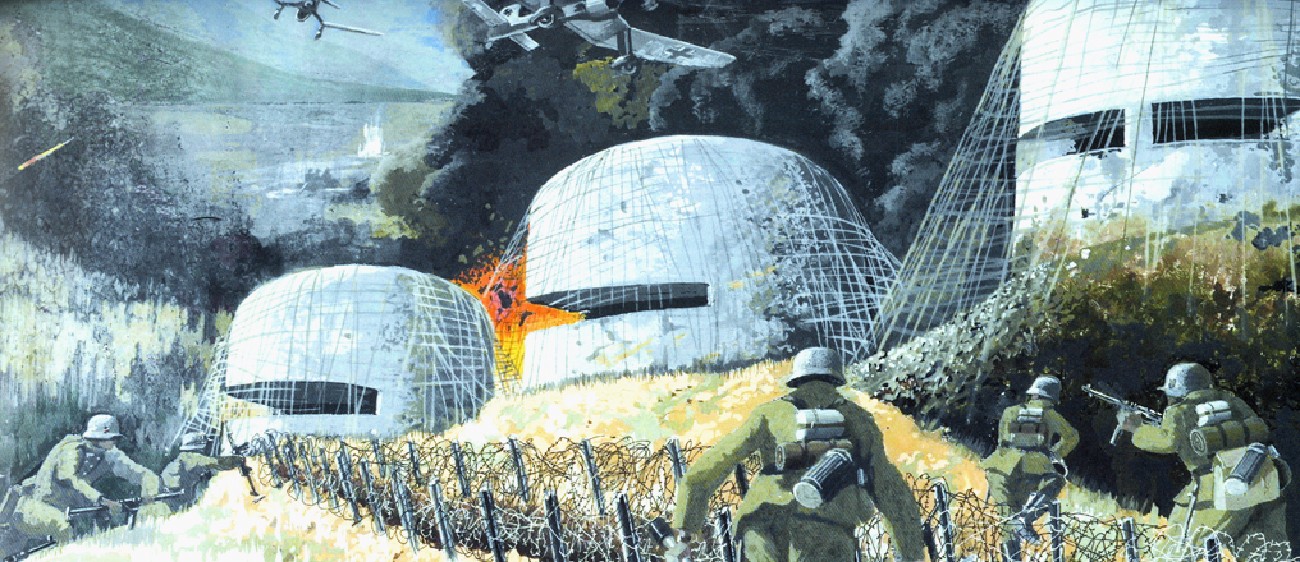
The Greeks had a formidable front line defense along their Northeastern border with Bulgaria called the Metaxas Line. Similar to the Maginot Line in France, it featured pillboxes and other fortifications. But the Greeks, who had the bulk of their army fighting the Italians in Albania to the West, were not nearly prepared to defend it well. They did so anyway, despite British requests to form a shorter, more concentrated line further into the Greek mainland.
Read more: warhistoryonline
Ask me anything
Explore related questions