The European Commission today proposed the possibility of a common European degree, which students could obtain from higher education institutions that cooperate on a voluntary basis.
The European bachelor, master and doctoral degrees will be awarded on a voluntary basis, with the aim of making European higher education even more competitive and interconnected, while making graduates more competitive on international labour markets.
Such a European degree, according to the European Commission, would reduce bureaucracy and allow higher education institutions from different EU Member States to cooperate and create joint programmes.
This degree would be recognised at a pan-European level and the Commission hopes that in this way European higher education institutions will be able to attract more ‘talent’ and students from outside the EU.
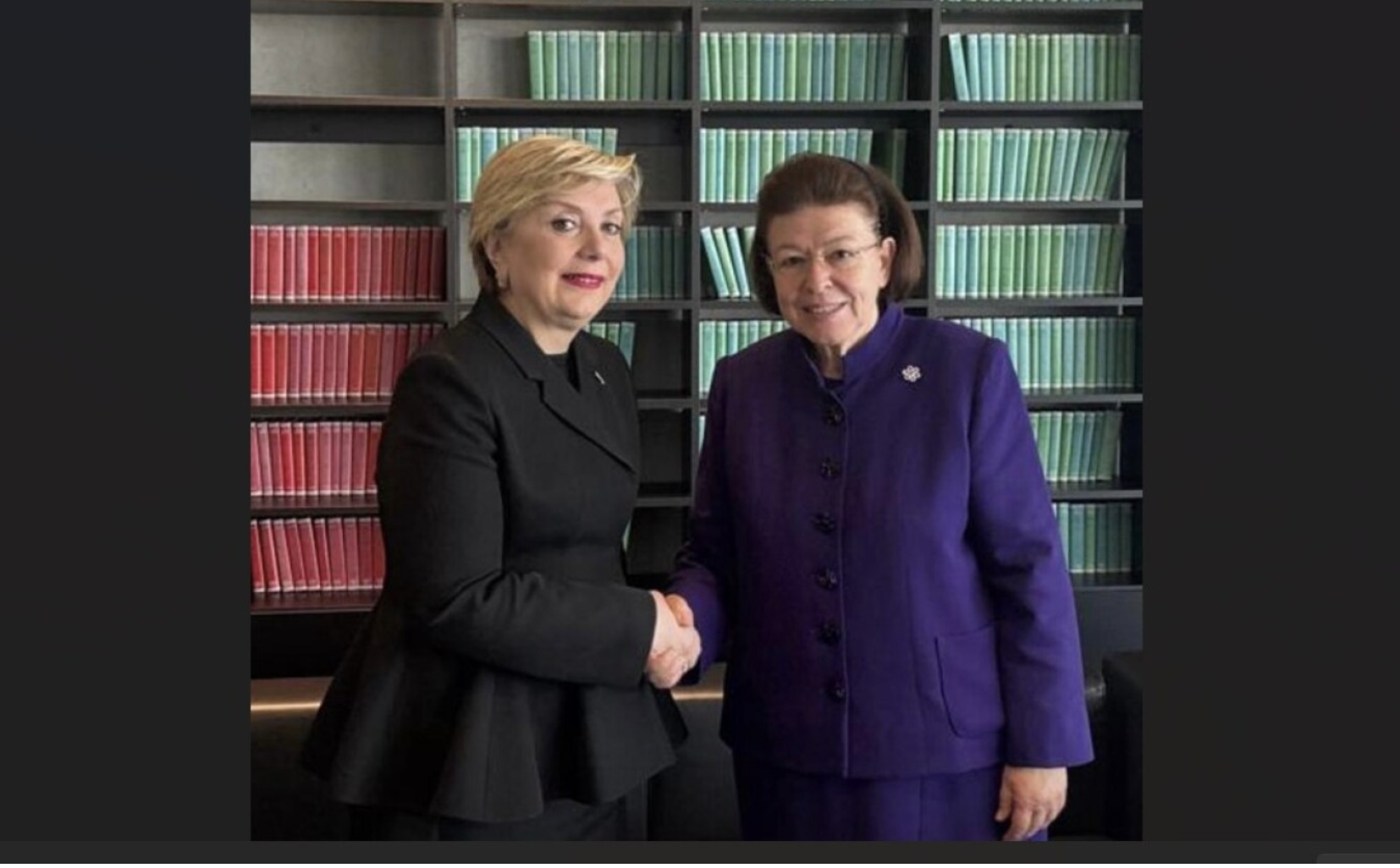
The Commission’s proposal, presented by Vice-President Margaritis Schinas and Commissioner Iliana Ivanova, responsible for innovation, research, culture, education and youth, foresees the steps that EU Member States could take towards a European degree, with two pathways.
According to Commissioner Ivanova, the possibility of a European degree would require cooperation between higher education institutions in at least two EU Member States.
Firstly, a preparatory European label, which would be awarded to students graduating from joint degree programmes that meet the proposed European criteria.
Students would therefore receive this European degree label together with the degree obtained from the educational institution of the Member State in which they studied.
Secondly, the creation of a common European degree, based on common criteria and on the national legislation of the Member States. It will be awarded either jointly by several universities in different Member States or, possibly, by a European legal entity set up by the universities concerned.
European Commission Vice-President Margaritis Schinas has repeatedly stressed that this proposal is not intended to replace national legislation, and the reason is that education policy is primarily the responsibility of EU Member States and universities across the EU strongly support their autonomy.
Rhodes: Jellyfish reaching 1 meter in diameter appeared – What to do if you get stung
The European Commission will facilitate and support Member States in their work on the European degree through a number of concrete actions, including a European Degree Policy Workshop supported by the Erasmus+ programme, to be established in 2025, to involve Member States and the higher education community in the development of guidelines for the European degree.
“We are talking about a European degree. The difference is that not every degree is European. One can get a degree from the Law School of the Aristotle University of Thessaloniki, as I personally have the honour to do, but at the same time a graduate can get a degree from the Aristotle University of Thessaloniki that is also a European degree,” said Vice-President Schinas.
The Vice President of the Commission also referred to the recent legislative framework of Greece for the establishment of non-state universities, saying that in the specific proposal of the Commission for the creation of a European degree, both state and private or non-profit universities will be able to participate and cooperate, provided that they respect the quality criteria presented by the Commission.
Ask me anything
Explore related questions