





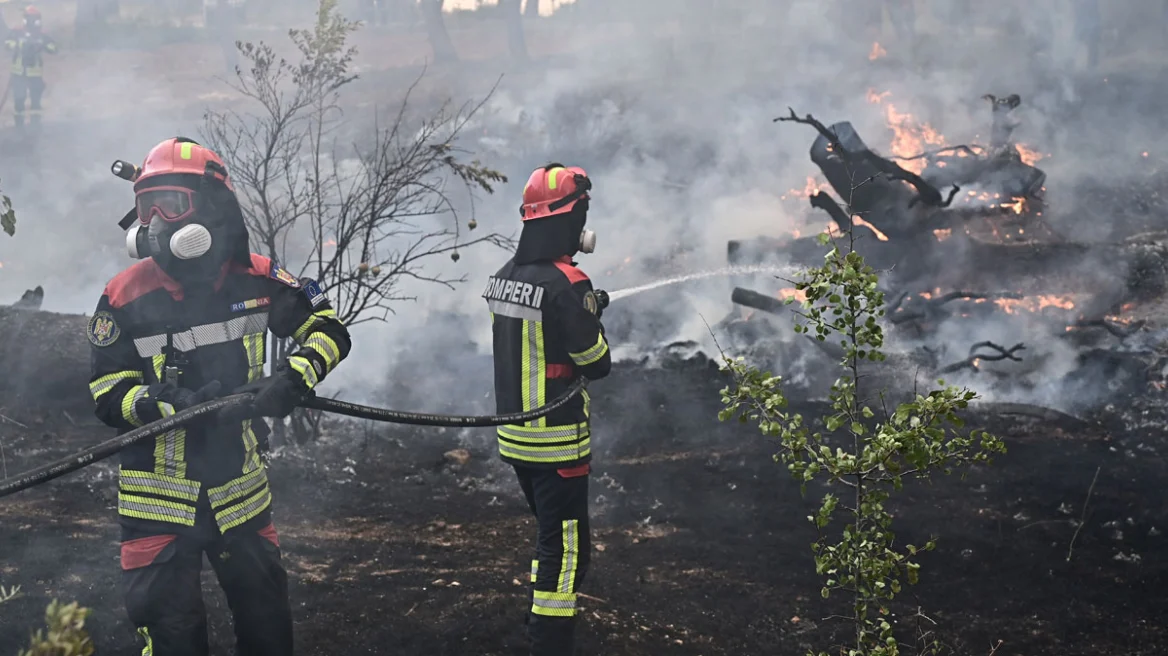
The three main fronts of the wildfire in western Attica are generally showing signs of easing after firefighters battled the blaze for a fourth consecutive night.
The most active area remains above Psatha, where small scattered hotspots continue to trigger flare-ups.
The operational area has been divided into three sectors: the northern sector toward Kryo Pigadi, Agios Nektarios, and Mount Kithairon; the southern sector toward Psatha, Loumpa, Veniza, and Zachouli; and the southeastern sector toward Kandili, Moni Kamara, and Megara.
At first light, seven firefighting aircraft resumed water-dropping operations.
The period after 1:00–1:30 p.m. is considered critical, as rising temperatures and falling humidity increase the risk of renewed flare-ups.
A total of 450 firefighters, supported by 126 fire engines and 22 ground crews, are deployed, along with volunteers and water tankers.
They are being assisted by 46 firefighters from France and Romania, operating eight vehicles, while the Armed Forces’ Deucalion disaster response unit is also taking part in the operation.
Engineering equipment from the Greek Army and the regional authorities of Attica and Central Greece is opening firebreaks and supporting the firefighting effort with water tankers and mobile water reservoirs.
The wildfire has burned approximately 132,900 acres across Attica and Boeotia, causing damage to homes, private property, farmland, and agricultural crops.
Ask me anything
Explore related questions




