

×
GreekEnglish

×
  • Politics
  • Diaspora
  • World
  • Lifestyle
  • Travel
  • Culture
  • Sports
  • Cooking
Sunday
18
Jan 2026
weather symbol
Athens 7°C
  • Home
  • Politics
  • Economy
  • World
  • Diaspora
  • Lifestyle
  • Travel
  • Culture
  • Sports
  • Mediterranean Cooking
  • Weather
Contact follow Protothema:
Powered by Cloudevo
> World

How Did Paleolithic People Cook? Greece’s Franchthi Cave provides some insight

Others include the Shanidar Cave, which is located in the northwestern Zagros Mountains of Iraq

Newsroom December 1 11:54

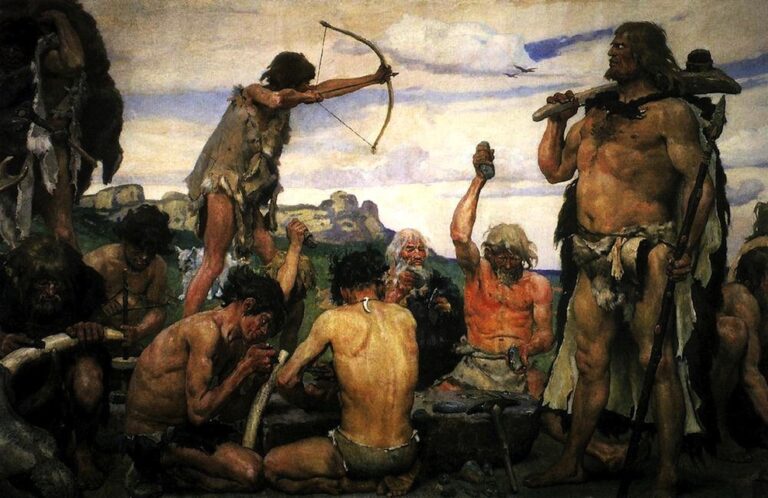
A study of charred plant remains, dating as far back as 70,000 years ago has revealed how Paleolithic people prepared foods to make them more palatable, according to a Haaretz report.

A team of researchers led by University of Liverpool archaeologist Ceren Kabukcu used a scanning electron microscope to analyze plant fragments processed by Neanderthals between 70,000 and 40,000 years ago in Shanidar Cave, which is located in the northwestern Zagros Mountains of Iraq, as well as plants cooked by humans around 12,000 years ago in Greece’s Franchthi Cave.

>Related articles

Here are the Top 2 gelato makers qualified for the World Final of Gelato Festival World Masters

Yannick Alléno: The luxury of a dish lies in its taste, not in excess

Brooklyn Beckham boiled pasta in seawater – Followers ‘disgusted’

They found that both Neanderthals and early modern humans made foods that contained multiple ingredients, primarily pulses, such as lentils, as well as nuts and grasses. “The evidence from one fragment supports this idea that Neanderthals, much like the later Homo sapiens (early modern humans), were cooking plants,” Kabukcu says. “Our evidence is also supported by previous studies that were done on plant starches trapped in the tartar preserved on Neanderthal teeth found in burials from the same [Shanidar] site.”

Both groups prepared their foods by soaking, pounding, and grinding the plants, many of which were naturally bitter due to the alkaloids and tannins in seed coats. Such techniques would have reduced, but not eliminated, the bitter taste, Kabukcu says.

source archaeology.org

Ask me anything

Explore related questions

#cooking#Paleolithic era
> More World

Follow en.protothema.gr on Google News and be the first to know all the news

See all the latest News from Greece and the World, the moment they happen, at en.protothema.gr

> Latest Stories

War, diplomacy, or insurrection: What’s next in Iran

January 17, 2026

New tensions in the Middle East as Trump invites regional leaders to the Gaza Peace Council

January 17, 2026

Weather: A return to winter in the coming days – Cold and strong northerly winds – Kolydas’ post

January 17, 2026

A view of Nikolaos Stasinopoulos of Viohalco – The “enduring imprint” of Greece’s greatest industrialist

January 17, 2026

The horror of the “Tariff of the Dead”: how the Iranian regime prices the bodies of protesters

January 17, 2026

Mitsotakis on the Karystianou party: “There is a long distance between being the parent of a tragedy victim and being the leader of a political party”

January 17, 2026

Patras in carnival mode – This evening, the city’s official opening ceremony

January 17, 2026

Greenland as the first line ofdefense for the U.S. and NATO:

January 17, 2026
All News

> Economy

Where affordable housing falls short in Greece: IOBE proposes a cap on rent increases

The factors that exacerbate the housing problem in Greece, international practices and proposals for the Greek housing market

January 17, 2026

Greek firms secure key roles in Libya’s reconstruction

January 16, 2026

Latsis Group: This is the new project of Aura Residential’s 219 apartments in Elliniko

January 16, 2026

Industry: Energy deadlock after Commission’s “no” to Italian pricing model

January 16, 2026

ENFIA discounts explained: How home insurance unlocks up to 20% off – 21 answers from AADE

January 16, 2026
Homepage
PERSONAL DATA PROTECTION POLICY COOKIES POLICY TERM OF USE
Powered by Cloudevo
Copyright © 2026 Πρώτο Θέμα



