





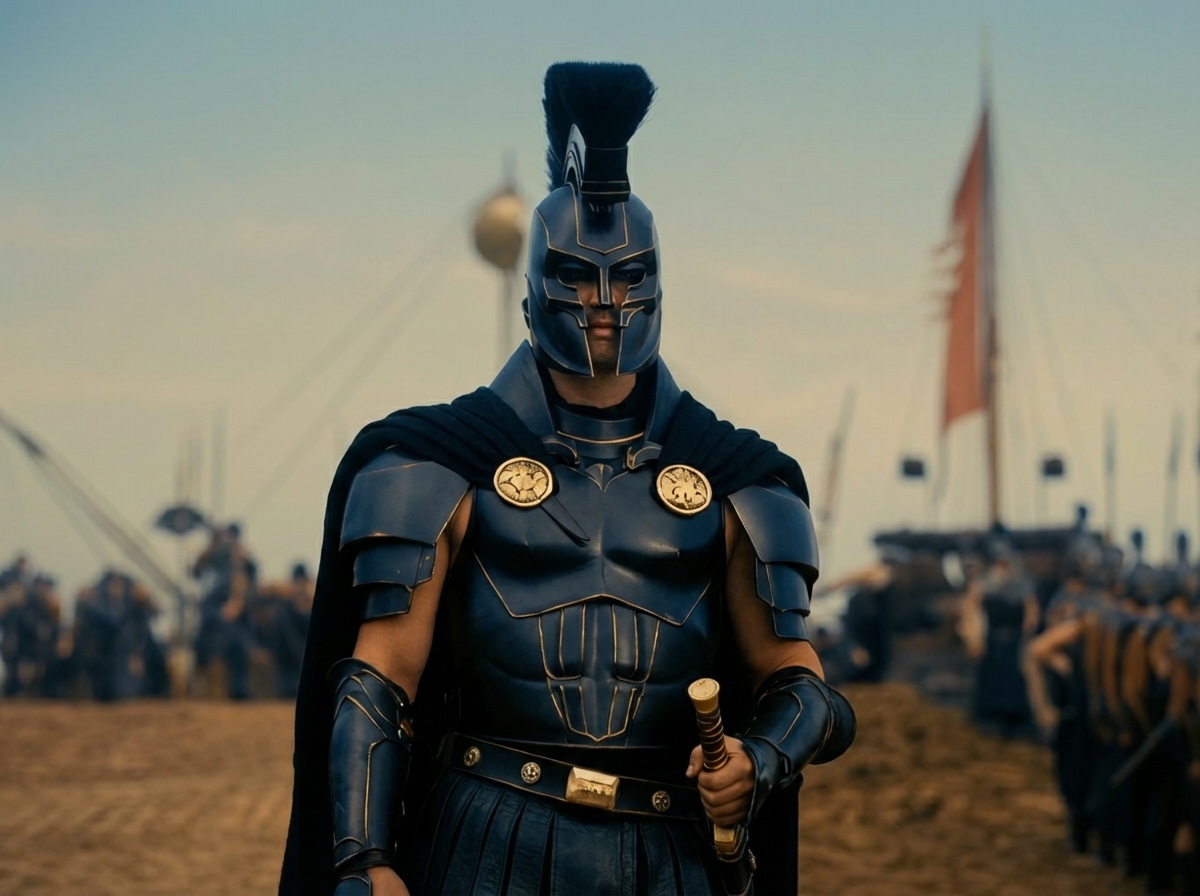
Christopher Nolan’s ‘The Odyssey’ arrives with a charm that many historical epics lack: the story is rooted in a living landscape. Homer’s epic poem is a tale of adrenaline-soaked sea passages, devastating wrecks, false starts, seductive detours, violent reckonings, and the long yearning for return. It gave Western literature one of its great archetypes in Odysseus, “the man of many ways,” and shaped everything from Athenian drama to James Joyce’s Ulysses.
Some of the locations used are existing, authentic spots in the Peloponnese, with fortifications, beaches, caves, and archaeological sites that require little to no cinematic embellishment. Others belong to the broader Greek afterlife of Homer: islands and coastlines that have infused cultural imagination from the text over centuries of reading, translation, argument, and travel.
Taken together, they offer a richly satisfying way to see Greece as a country whose terrain still makes the scale of the epic relatable. Here, we guide you to locations that will appear in the film, and were used as a set, and areas or places that feature in the poem, and direct you to what you can see and where you can stay if you choose to travel there.
Read the article on Travel.gr/en
Ask me anything
Explore related questions




