





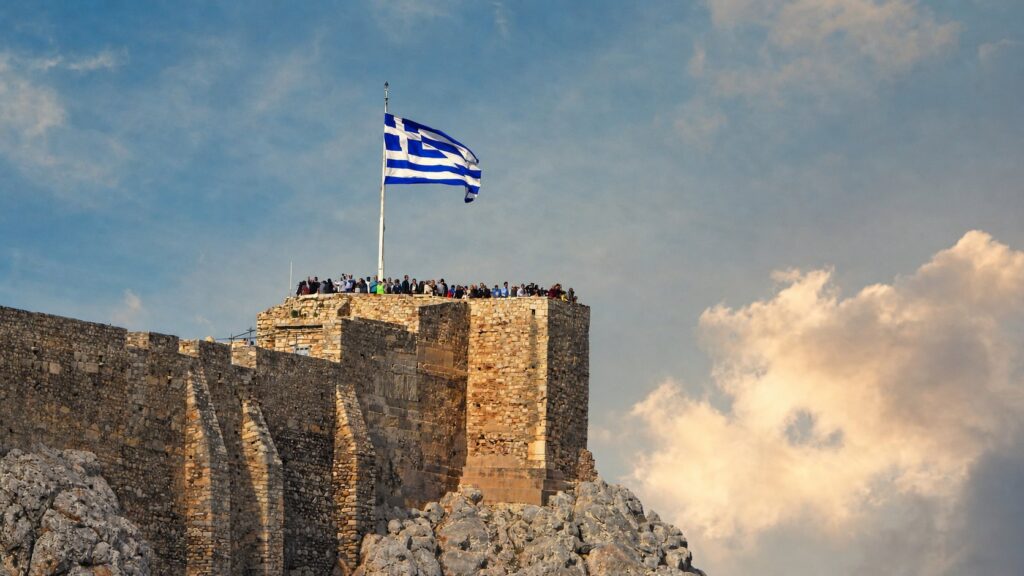
Every year on 28 October, Greece turns blue and white. Flags hang from balconies, schoolchildren march through village squares, military bands fill the streets and wreaths are laid at war memorials. From remote mountain hamlets to the boulevards of Athens and Thessaloniki, one word comes back to the centre of national memory: Ochi (OH-hee), Greek for “No”. It’s a simple word for an extraordinary chapter in European history. In 1940, Greece refused an ultimatum from Fascist Italy. What followed was an unexpected victory on the battlefield, then the German invasion and years of brutal occupation.
Eighty-six years on, it remains one of Greece’s most deeply felt holidays, as much about remembrance, family tradition and shared identity as about patriotism. Unlike Independence Day on 25 March, which marks the 1821 uprising against Ottoman rule, Ochi Day doesn’t celebrate how a war ended. It honours the moment a nation refused to give up its sovereignty. In the days before, schools put on ceremonies, poetry readings and performances of wartime songs, and being chosen to carry the flag makes a family very proud. The date also has a spiritual side: the Orthodox Church celebrates the Holy Protection of the Virgin Mary (Agia Skepi) on the same day, a feast long linked with the Greek soldiers of 1940.
Ask me anything
Explore related questions




