×
GreekEnglish

×
  • Politics
  • Diaspora
  • World
  • Lifestyle
  • Travel
  • Culture
  • Sports
  • Cooking
Monday
23
Feb 2026
weather symbol
Athens 15°C
  • Home
  • Politics
  • Economy
  • World
  • Diaspora
  • Lifestyle
  • Travel
  • Culture
  • Sports
  • Mediterranean Cooking
  • Weather
Contact follow Protothema:
Powered by Cloudevo
> World

This is what ancient European faces looked like (photos)

They are on display at a museum in Brighton

Newsroom February 4 11:33

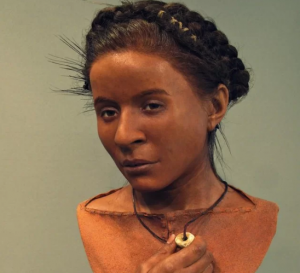
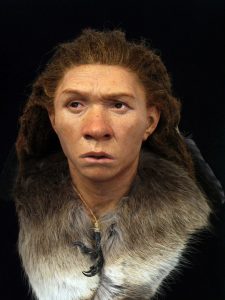
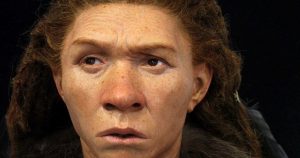
About 5,600 years ago, a 20-year-old woman was buried with a tiny baby resting on her chest, a sad clue that she likely died in childbirth during the Neolithic. This woman and six other ancient Europeans — including a Cro-Magnon man, a Neanderthal woman and a man-bun-sporting dude from 250 B.C. — are on display at a museum in Brighton, England, now that a forensic artist has re-created their faces.
These re-creations took hundreds of hours of work and are based on every available detail scientists could glean from these people’s remains, including radiocarbon dating; the collection of dental plaque; and, when possible, the analysis of ancient DNA that detailed each person’s eye, skin and hair color, said Richard Le Saux, senior keeper of collections at the Royal Pavilion & Museums in England, where the exhibit opened on Jan. 26.
This exhibit aims to shine a light on the past inhabitants of Brighton and mainland Europe by featuring hyper-realistic portrayals of their faces
To re-create these heads, Oscar Nilsson, a forensic artist based in Sweden, took 3D printed replicas of their skulls and got to work. After reviewing data on the individuals’ heritage and ages of death, he used plasticine clay to sculpt muscles and then covered that with artificial skin, which included details such as wrinkles and pores. The first two faces — those of a Neanderthal woman from Gibraltar and a Cro-Magnon man from France — show the history of Europe’s early human inhabitants. According to DNA research, “early Cro-Magnonslike this one had really dark skin,” Nilsson told Live Science in an email.
The woman who likely died in childbirth, known as the Whitehawk girl (named for Whitehawk, Brighton, where she was found), also had dark skin. While her remains didn’t have any preserved DNA, other burials from her time period did, and those people’s genetic material shows “their skin color to be at least like today’s people living in North Africa, or in fact, a bit darker,” Nilsson said.

>Related articles

Storm Goretti sweeps France, Britain, Germany and the Netherlands: Thousands of households without power and flight cancellations

Britain to rejoin Erasmus from 2027

Photos: Lily-Rose Depp looks unrecognizable on the set of her new movie

more at livescience.com

Royal Pavilion & Museums

Ask me anything

Explore related questions

#ancient Europeans#Brighton#britain#England
> More World

Follow en.protothema.gr on Google News and be the first to know all the news

See all the latest News from Greece and the World, the moment they happen, at en.protothema.gr

> Latest Stories

The photos of a national trauma: This is the Nazi sergeant who photographed the executions in Kaisariani

February 23, 2026

New model: Everything changes in military service from Tuesday

February 23, 2026

Weather: Sunshine and northerly winds for kite flying — where winds will be favorable

February 23, 2026

Clean Monday: How Koulouma will be celebrated across the Municipalities of Attica

February 23, 2026

Winter Olympic Games: Spectacular Closing Ceremony at the Arena of Verona – Watch the Video

February 23, 2026

Volodymyr Zelensky to the BBC: “Vladimir Putin has already started World War Three — We will not hand over territory for a ceasefire”

February 23, 2026

Eleni Glykatzi-Arveler: How she changed the historical image of Byzantium

February 23, 2026

A “Hexagon” of alliances with India, Greece, Cyprus & Arab states sought by Netanyahu against Shiite and Sunni extremism

February 22, 2026
All News

> Culture

The photos of a national trauma: This is the Nazi sergeant who photographed the executions in Kaisariani

For the first time, the face of Sergeant Hermann Hoyer is revealed—the man who captured on film the heroes executed by the Nazis. Rare historical documents also come to light, including images from the funeral of General Krech, who was killed in Molai, as well as from the unit stationed in Malakasa

February 23, 2026

Eleni Glykatzi-Arveler: How she changed the historical image of Byzantium

February 23, 2026

The Herodion closes for three years: It will reopen with a new entrance, roof, lighting, no speaker towers, and an expanded forecourt

February 20, 2026

Brad Pitt’s secluded accommodation on Hydra: Why he chose the small hotel in Vlychos (video-photos)

February 20, 2026

Giannis Aggelakas: Transforms into “The Little Prince” on the Stage of Stegi

February 20, 2026
Homepage
PERSONAL DATA PROTECTION POLICY COOKIES POLICY TERM OF USE
Powered by Cloudevo
Copyright © 2026 Πρώτο Θέμα