×
GreekEnglish

×
  • Politics
  • Diaspora
  • World
  • Lifestyle
  • Travel
  • Culture
  • Sports
  • Cooking
Monday
19
Jan 2026
weather symbol
Athens 6°C
  • Home
  • Politics
  • Economy
  • World
  • Diaspora
  • Lifestyle
  • Travel
  • Culture
  • Sports
  • Mediterranean Cooking
  • Weather
Contact follow Protothema:
Powered by Cloudevo
> World

Warp drives: Physicists give chances of faster-than-light space travel a boost

If humanity ever wants to travel easily between stars, people will need to go faster than light...

Newsroom December 5 02:45

The closest star to Earth is Proxima Centauri. It is about 4.25 light-years away, or about 25 trillion miles (40 trillion km). The fastest ever spacecraft, the now- in-space Parker Solar Probe will reach a top speed of 450,000 mph. It would take just 20 seconds to go from Los Angeles to New York City at that speed, but it would take the solar probe about 6,633 years to reach Earth’s nearest neighboring solar system.

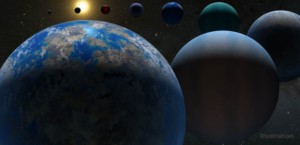
If humanity ever wants to travel easily between stars, people will need to go faster than light. But so far, faster-than-light travel is possible only in science fiction.

In Issac Asimov’s Foundation series, humanity can travel from planet to planet, star to star or across the universe using jump drives. As a kid, I read as many of those stories as I could get my hands on. I am now a theoretical physicist and study nanotechnology, but I am still fascinated by the ways humanity could one day travel in space.

See Also:

Fairytale Villages in the Taygetos Mountains, Southern Peloponnese

>Related articles

Britain: New defection of a Conservative MP who defected to Farage’s party

A school bus crash in South Africa: At least 13 children dead

Trump invited Putin to join the “Peace Council”: we are considering it, Moscow says

Some characters – like the astronauts in the movies “Interstellar” and “Thor” – use wormholes to travel between solar systems in seconds. Another approach – familiar to “Star Trek” fans – is warp drive technology. Warp drives are theoretically possible if still far-fetched technology. Two recent papers made headlines in March when researchers claimed to have overcome one of the many challenges that stand between the theory of warp drives and reality.

But how do these theoretical warp drives really work? And will humans be making the jump to warp speed anytime soon?

Read more: The Conversation

Ask me anything

Explore related questions

#light speed#planets#science#space#technology#travel#warp#world
> More World

Follow en.protothema.gr on Google News and be the first to know all the news

See all the latest News from Greece and the World, the moment they happen, at en.protothema.gr

> Latest Stories

Eurovision 2026: What the betting odds suggest about Greece’s song choice

January 19, 2026

Britain: New defection of a Conservative MP who defected to Farage’s party

January 19, 2026

Marinakis: The four contracts for hydrocarbons have been approved, aiming to start exploration in 2026

January 19, 2026

A school bus crash in South Africa: At least 13 children dead

January 19, 2026

Trump invited Putin to join the “Peace Council”: we are considering it, Moscow says

January 19, 2026

Karystianou: Abortions a matter of public consultation – I speak with people from all parties

January 19, 2026

Farmers arrive at the Maximos Mansion for the meeting with PM Mitsotakis

January 19, 2026

Severe weather and biting cold across the country – What the “Aegean Sea Effect” is, which brings heavy snow to coastal areas and dangerous storms

January 19, 2026
All News

> technology

From Tesla to Disney, 4 companies are preparing humanoid robots for the market: What they can do, how much they will cost

They fold clothes, serve coffee, work in factories and are getting ready to enter our homes — the four most advanced robots moving closer to everyday life

January 4, 2026

iPhone 17: Slimmer, better, but not much more expensive despite Trump’s tariffs

September 10, 2025

Voice Cloning: A new form of AI-assisted fraud sweeps the US and is coming to Europe

October 20, 2024

Instagram: Changes for minors – Introducing ‘teen accounts’ with parental supervision, countries affected

September 17, 2024

Europe at the forefront of artificial intelligence: The first AI law

August 30, 2024
Homepage
PERSONAL DATA PROTECTION POLICY COOKIES POLICY TERM OF USE
Powered by Cloudevo
Copyright © 2026 Πρώτο Θέμα