×
GreekEnglish

×
  • Politics
  • Diaspora
  • World
  • Lifestyle
  • Travel
  • Culture
  • Sports
  • Cooking
Friday
16
Jan 2026
weather symbol
Athens 16°C
  • Home
  • Politics
  • Economy
  • World
  • Diaspora
  • Lifestyle
  • Travel
  • Culture
  • Sports
  • Mediterranean Cooking
  • Weather
Contact follow Protothema:
Powered by Cloudevo
> Culture

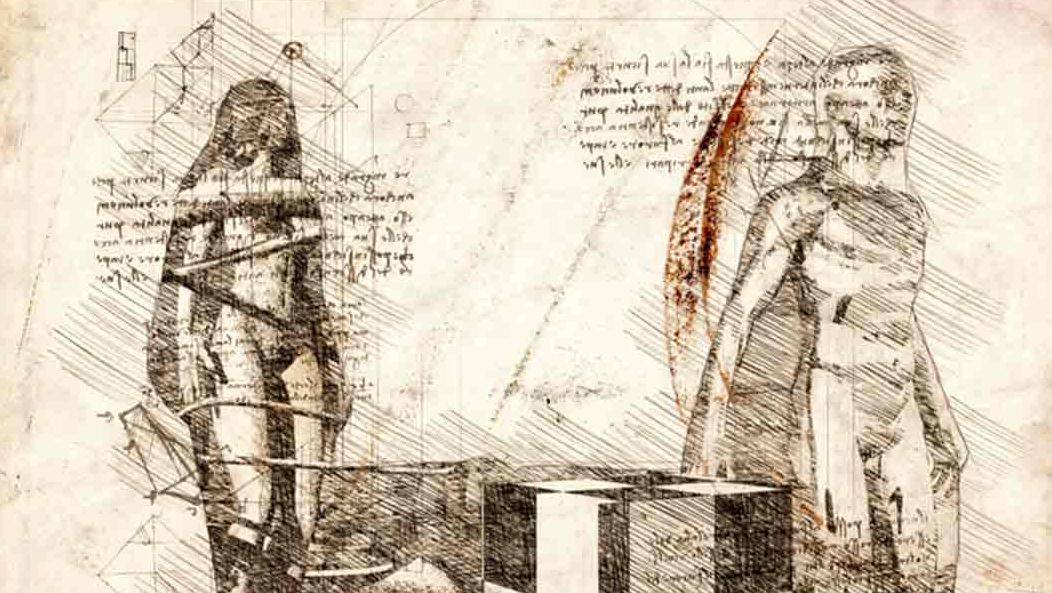
What makes us human? How ancient thinkers saw the human-animal divide

Who or what is man?

Newsroom March 26 09:18

What makes us human? What (if anything) sets us apart from all other creatures? Ever since Charles Darwin’s theory of evolution, the answer to these questions has pointed us back to our own animal nature.

Yet the idea that, in one way or another, our humanity is entangled with the non-human has a much longer and more venerable history. In the West, it goes all the way back to Classical antiquity – to Greek and Roman views about humans and animals.

The Greek philosopher Aristotle (384-322) first argued the human stands out from all other animals through the presence of  logos (“speech” but also “reason”). Numerous Greek and Roman thinkers engaged in similar attempts to name what, exactly, sets humans apart.

Who or what is man? The arguments these philosophers came up with verged from the obscure to the outright bizarre: The human alone has the capacity to have sex at all seasons and well into old age; the human alone can sit comfortably on his hip bones; the human alone has hands that can build altars to the gods and craft divine statues. No observation seemed too far-fetched or outlandish.

See Also:

US Federal Judge: Illegal immigrants can carry guns

>Related articles

Ballistic missile strike hits pier in Ukraine

The ordeal of a 28-year-old Greek man in Australia: He went on holiday to visit relatives, was injured at a beach, and is at risk of quadriplegia

FBI searches the home of a Washington Post journalist who covered the Trump administration’s firing of federal employees

And yet, above all, the argument that animals lack logos continued to resonate. In classical antiquity it became powerful enough to coin the very word for animals in ancient Greek:  ta aloga – “those without logos”.

This position was taken up by the philosophical school of the Stoics and from there came to influence Christianity, with its view of manmade in the image of God.

Continue here: Ancient Origins

Ask me anything

Explore related questions
#Ancient Greeks#ancient thinkers#animals#history#humans#philosophy#science#world
> More Culture

Follow en.protothema.gr on Google News and be the first to know all the news

See all the latest News from Greece and the World, the moment they happen, at en.protothema.gr

> Latest Stories

Study in Greece: International students apply for a place in Greek universities through a single platform

January 16, 2026

Users on X respond to Rama’s comments on whether modern Greeks are descendants of the ancient Greeks

January 16, 2026

Cycladic Identity Initiative launches fourth funding phase to preserve the Cultural and Natural Heritage of the Cyclades

January 16, 2026

Cold wave from Ukraine to hit Greece: Temperatures drop to 10°C, Gale-Force winds in the Aegean and Ionian Seas

January 16, 2026

The billionaire behind Trump’s Greenland decisions convinced him that the U.S. should acquire it

January 16, 2026

A treat for readers: Dior, bags, and literature

January 16, 2026

Greek firms secure key roles in Libya’s reconstruction

January 16, 2026

Why Trump hasn’t “pressed the button” to attack Iran: White House and allies doubt it will weaken the Iranian regime

January 16, 2026
All News

> Greece

Study in Greece: International students apply for a place in Greek universities through a single platform

New internationalisation services from Study in Greece - Applications can be made through the common platform @SiG (Apply to Study in Greece) which will act as a central gateway for international students

January 16, 2026

Users on X respond to Rama’s comments on whether modern Greeks are descendants of the ancient Greeks

January 16, 2026

Cold wave from Ukraine to hit Greece: Temperatures drop to 10°C, Gale-Force winds in the Aegean and Ionian Seas

January 16, 2026

Mercosur agreement sparks concern over olive export tariffs: Greek and European producers face 12.6% duty

January 16, 2026

When Triodion 2026 begins – Carnival, Lent, and Easter in Greece

January 16, 2026
Homepage
PERSONAL DATA PROTECTION POLICY COOKIES POLICY TERM OF USE
Powered by Cloudevo
Copyright © 2026 Πρώτο Θέμα