×
GreekEnglish

×
  • Politics
  • Diaspora
  • World
  • Lifestyle
  • Travel
  • Culture
  • Sports
  • Cooking
Tuesday
10
Mar 2026
weather symbol
Athens 16°C
  • Home
  • Politics
  • Economy
  • World
  • Diaspora
  • Lifestyle
  • Travel
  • Culture
  • Sports
  • Mediterranean Cooking
  • Weather
Contact follow Protothema:
Powered by Cloudevo
> Culture

Ancient Greeks were gourmands with a preference for fish

“We can also learn a lot from ancient bones of fish brought to light by the archaeologist’s hoe and by the pots in which they were cooked"

Newsroom August 30 07:48

Ancient Greeks were gourmands and particularly fond of large fresh fish and eel, according to research headed by zooarchaeologist Dr. Demetra Mylona.

The zooarchaeologist, who does research for the Institute of Aegean Prehistory Study Center for East Crete, is collecting data from written sources, scientific texts and also from the study of ancient remains of fish, such as bones.

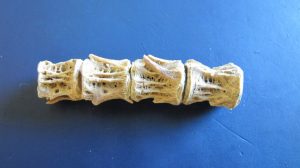
“We can also learn a lot from ancient bones of fish brought to light by the archaeologist’s hoe and by the pots in which they were cooked, conducting chemical analysis of food residues,” Mylona told the Athens News Agency.

“At the same time,” Mylona said, “there are references in many ancient texts where, for example, in Classical Era Athens, the purchase of all fish by a wealthy citizen was considered an undemocratic act since he left nothing for the rest of the people.”

A stone fish price list from the 2nd century BC found in Akraifnio of Boeotia, which at the time was on the shores of Lake Copais, includes prices of both sea fish and lake fish. At the time being a fisherman was considered one of the most difficult professions, especially for those fishing at sea. Ancient inscriptions speak of wealthy fishing guilds near rich fishing waters. Particularly profitable, however, appears to be the profession of fish merchant.
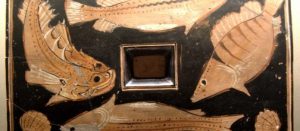
According to Mylona, the ancient Greeks had a special preference for Aegean fish living in rocks, but also liked fish from the open seas, such as tuna, a sought-after fish. They also liked mackerel, bonito and anchovy, which were abundant during their season and were easy to catch with nets.

“Of course, we do not have the names for all fish found in ancient sources, except where details of the characteristics of the fish are given,” she explained.

As for processed fish, such as tuna and anchovies, they were widely consumed by all social classes and were the product of a very flourishing trade throughout the Mediterranean and the adjacent seas.

>Related articles

More expensive ferry tickets: Rising fuel costs due to the Middle East put pressure on prices

Hellenic Air Force at the Top of TLP 2026

Oil: Drops below $90 after rally toward $120

Mylona also pointed out, in the antiquity and through the Middle Ages, garos was a basic element of Mediterranean diet.

“Garos was a sort of sauce, made from fried fatty fish with salt, equivalent to the fish sauce of the Far East cuisine. High quality garos, made of tuna offal and blood, was expensive. There were cities around the Mediterranean and the Black Sea that lived from the production and trade of garos and other fish products. Today, we find the amphorae in which they were transported, which, in addition to their characteristic shape, often contain the remains of processed fish,” Mylona said.

Source: Philip Chrysopoulos/greekreporter

Ask me anything

Explore related questions

#aegean sea#ancient greece#archaeology#fish#food#gourmands#greece#greek#history
> More Culture

Follow en.protothema.gr on Google News and be the first to know all the news

See all the latest News from Greece and the World, the moment they happen, at en.protothema.gr

> Latest Stories

Aramco: Catastrophic impact on the oil market if the blockade in the Strait of Hormuz continues

March 10, 2026

Strait of Hormuz: The maritime chokepoint driving up freight rates, insurance costs, and energy prices

March 10, 2026

More expensive ferry tickets: Rising fuel costs due to the Middle East put pressure on prices

March 10, 2026

EU’s shift away from nuclear power was a “strategic mistake,” says von der Leyen

March 10, 2026

Hellenic Air Force at the Top of TLP 2026

March 10, 2026

Domna Michailidou: Housing is at the centre of the European agenda due to demographics

March 10, 2026

“Fava” beach in Halkidiki is up for auction – Reactions from residents and local authorities

March 10, 2026

Digital learning footprint for every child, a new model for tracking school progress from Kindergarten to the National Baccalaureate

March 10, 2026
All News

> World

Strait of Hormuz: The maritime chokepoint driving up freight rates, insurance costs, and energy prices

Just 21 miles wide, it is the world’s most important energy chokepoint — In peacetime, 114 to 138 ships pass through daily, carrying 21 million barrels of oil — U.S. and French plans to escort commercial vessels

March 10, 2026

EU’s shift away from nuclear power was a “strategic mistake,” says von der Leyen

March 10, 2026

Fidan: Turkish airspace violation is unacceptable

March 10, 2026

The Revolutionary Guards threaten to block oil transport until the attacks on Iran are stopped

March 10, 2026

Five Iranian women footballers receive Visa in Australia after Asian Cup & threw away their Hijabs

March 10, 2026
Homepage
PERSONAL DATA PROTECTION POLICY COOKIES POLICY TERM OF USE
Powered by Cloudevo
Copyright © 2026 Πρώτο Θέμα