





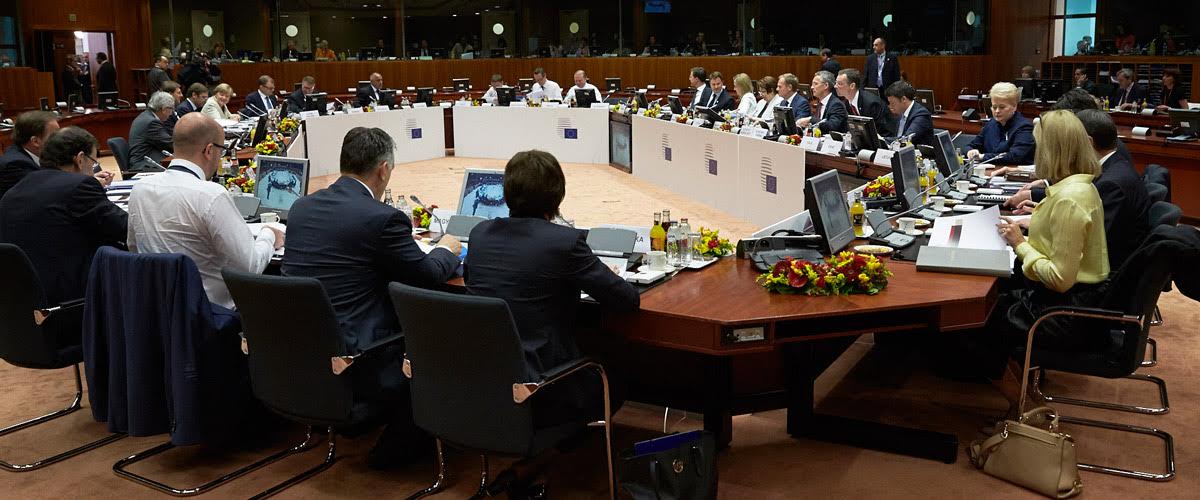
Prime Minister Alexis Tsipras will meet with EU leaders on Tuesday in an attempt to pull a camel through the eye of the needle so that Greece can enter the kingdom of normalcy. The Euro Summit at 7 p.m. on Tuesday is an effort to perceive creditors mood following the Greek referendum where 61% of voters rejected tough bailout reforms presented to Greece by the European Commission, European Central Bank and International Monetary Fund. Now, the future of Greece, is up in the air making the Brussels meeting crucial. The question on everyone’s lips is the following: Will the Radical Left Coalition (SYRIZA) government manage to finally pave the way for an agreement after five months of deadlock?
Tough campaigning for the referendum both within and outside Greece have led many to believe that failure to agree could result in a Grexit, though this notion has also been dismissed as a possible scenario. Furthermore, the Greek side has pledged that this would not be its intent… though the saying goes, that the way to hell is paved with good intentions. Ominous clouds hang over Brussels at the moment with Greeks and European factions aware that they’re nearing the end of their options.
Sunday’s landslide victory rejecting bailout reforms followed by pandemonium and celebration until dawn in the Athens center was like wound to the salt for creditors. Aware of this, Tsipras is careful to use the result to give him power for an honorable and viable solution for Greece rather than to blackmail Greece’s EU partners.
Hence, no sooner did Tsipras receive the popular mandate that makes it clear that the Greek people cannot tolerate further austerity (as if the January 25 elections were not enough), that he:
1) called a council of political leaders to decide on a common framework on which an agreement with creditors should move. The main opposition conservative New Democracy party, centrist Potami and socialist PASOK that championed “Yes” in the referendum were invited to join in an agreement, thus cementing the government’s intent for an agreement with creditors that would allow Greece to remain in the euro.
2) Finance Minister Yanis Varoufakis was removed from his position. “Soon after the announcement of the referendum results, I was made aware of a certain preferency by some Eurogroup participants, and assorted ‘partners’, for my… ‘absence’ from its meetings; an idea that the Prime Minister judged to be potentially helpful to him in reacing an agreement. For this reason I am leaving the Ministry of Finance today,” he wrote on Monday. “I consider it my duty to help Alexis Tsipras exploit, as he sees fit, the capital that the Greek people granted us through yesterday’s referendum.”
3) Tsipras communicated with European leaders (German Chancellor Angela Merkel etc.) and other factions (ECB Chief Mario Draghi and IMF Chief Christine Lagarde) in order to open the channels of communication with Greece’s partners. French President Francois Hollande and Merkel both said that partners are waiting to hear proposals by the Greek side.
Despite positive developments, the noose is tightening around the Greek economy. The ECB did not increase European Liquidity Assistance to Greek banks, prefering instead to impose tougher ‘haircuts’ on the assets they hand over, restricting their ability to access the funding.
Ask me anything
Explore related questions




