×
GreekEnglish

×
  • Politics
  • Diaspora
  • World
  • Lifestyle
  • Travel
  • Culture
  • Sports
  • Cooking
Tuesday
23
Dec 2025
weather symbol
Athens 13°C
  • Home
  • Politics
  • Economy
  • World
  • Diaspora
  • Lifestyle
  • Travel
  • Culture
  • Sports
  • Mediterranean Cooking
  • Weather
Contact follow Protothema:
Powered by Cloudevo
> Politics

Why Turkish F-35s are a threat to the US & NATO: Analysis

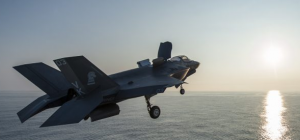
Should the THK operate the F-35 in the vicinity of Russian S-400 missile systems Turkey will receive in 2019, Russian engineers could gain valuable insight into the aircraft’s detectability

Newsroom February 1 08:25

Imagine, for a moment, a hypothetical country rapidly spiraling towards autocracy, illegally arresting American citizens, imprisoning journalists, and attacking American-supported forces. Now imagine that same country actively purchasing Russian surface-to-air missile systems and erecting missile defense sites around its territory. In such a hypothetical, it would be difficult to assume that the United States would ever support or even arm such a country. Unfortunately, this is not a hypothetical scenario. Not only is the U.S. treaty-bound to an alliance with such a country, it is actively engaged in efforts to sell fifth generation attack aircraft to it. The country in question, Turkey, and its drive toward acquiring a fleet of F-35s represents a serious threat to American national security and technological superiority. Fortunately, this threat has not been ignored by American policymakers, though more can be done to secure American aerial supremacy.

>Related articles

Greece, Cyprus and Israel decide on joint interdisciplinary exercises and co-training of Special Forces

Active Combat: Bill on the National Strategy for Natural Disaster Prevention and Management

Irritation in the Turkish media as well over the Trilateral: “The alliance of evil”

Two main factors combine to make the sale of F-35s to Turkey a credible threat to American national security. First, on the immediate and kinetic front, Ankara’s continued efforts to acquire and deploy Russian-made integrated surface-to-air missile systems could give Russian engineers and radar systems operators key insight into the radar cross section and signals signature of the F-35. Second, on a broader and more strategically oriented scale, further supporting Turkey’s military advancement could backfire should the country slip further toward authoritarianism.

The first of these issues has thus far garnered the most attention on the Hill, due largely to its immediacy and clear outcome. Put simply, should the Turkish Air Force operate the F-35 in the vicinity of Russian S-400 missile systems Turkey will receive in 2019, Russian engineers could gain valuable insight into the aircraft’s detectability and flight profile. This would greatly hinder American aerial superiority and could jeopardize some of the most critical capabilities of the new aircraft should conflict with Russia arise. Lawmakers were quick to recognize the signals intelligence threat posed by Turkey linking the Russian missile system to the fleet of F-35s it is scheduled to receive in 2020. Last fall, Congress put a halt on the sale of F-35s to Turkey pending a report from the Pentagon on the implications of Ankara’s acquisition of the 100 F-35s it originally planned on purchasing. That report was delivered in November and Congress has yet to formally announce its conclusions on whether or not the sale will go ahead as planned.

Read more HERE

Ask me anything

Explore related questions

#analysis#crisis#cyprus#diplomacy#F-35#greece#isis#israel#NATO#negotiations#politics#russia#S-400#security#technology#threat#turkey#usa
> More Politics

Follow en.protothema.gr on Google News and be the first to know all the news

See all the latest News from Greece and the World, the moment they happen, at en.protothema.gr

> Latest Stories

Greece, Cyprus and Israel decide on joint interdisciplinary exercises and co-training of Special Forces

December 23, 2025

Active Combat: Bill on the National Strategy for Natural Disaster Prevention and Management

December 23, 2025

Irritation in the Turkish media as well over the Trilateral: “The alliance of evil”

December 23, 2025

Smaragda Karydi and Thodoris Atheridis have separated after 23 years

December 23, 2025

Damage, anger and hardship, cancellations in tourism up to 50% due to roadblocks – “Mainland Greece is bleeding,” professionals say

December 23, 2025

Our army will remain in Gaza, says Israeli Defence Minister

December 23, 2025

George Petzetakis: Debts in Athens, business and the high life in America despite international warrants

December 23, 2025

The Pentagon “sees” strong nuclear mobility in China: Over 100 intercontinental ballistic missiles have been deployed near Mongolia

December 23, 2025
All News

> Politics

Greece, Cyprus and Israel decide on joint interdisciplinary exercises and co-training of Special Forces

The Joint Action Plan of the three countries and the Greece-Israel Defence Cooperation Programme signed in Nicosia

December 23, 2025

Irritation in the Turkish media as well over the Trilateral: “The alliance of evil”

December 23, 2025

Mitsotakis on farmers: The government will not yield to blackmail and the paradox of silence (updated)

December 23, 2025

New dynamics in the Eastern Mediterranean after the Trilateral Summit: Why Netanyahu sent a clear message to Turkish revisionism

December 23, 2025

Today, the last cabinet meeting of 2025 with 2026 reforms on the agenda and a new message from Mitsotakis to the blockades

December 23, 2025
Homepage
PERSONAL DATA PROTECTION POLICY COOKIES POLICY TERM OF USE
Powered by Cloudevo
Copyright © 2025 Πρώτο Θέμα