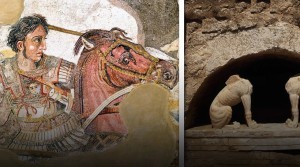
National Geographic web magazine made a long report on the family of Alexander the Great, “a tale of family drama and palace intrigue”.
Although the great discoveries in Amphipolis continue and the anticipation for the mystery of the identity of the deceased grows , National Geographic believes that the riddle of the funerary monument is the Greek “Game of Thrones”.
According to the article although is almost for certain that Alexander the Great was buried in Egypt, it remains unknown where the rest members of his family were buried.
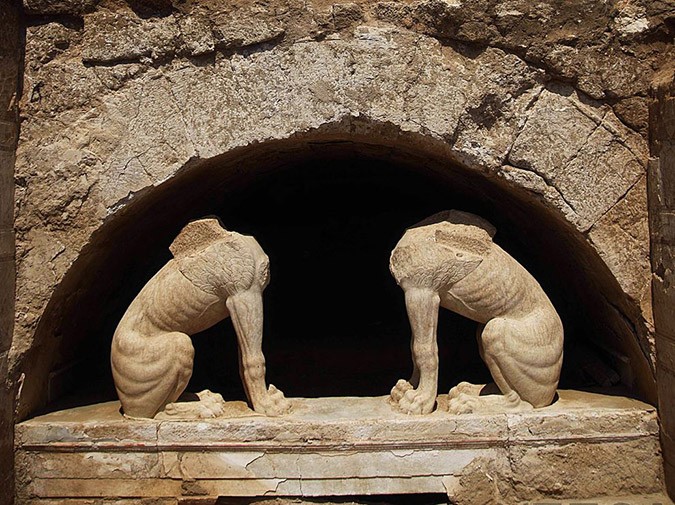
As the article reports, over the past three months, Greek archaeologist Katerina Peristeri and her team have made a series of tantalizing discoveries in the tomb, from columns sculpted masterfully in the shapes of young women to a mosaic floor depicting the abduction of the Greek goddess Persephone. The tomb’s costly artwork all dates to the tumultuous time around the death of Alexander the Great, and points to the presence of an important person.
Alexander himself was almost certainly buried in Egypt. But the final resting places—and the rich historical and genetic data they may contain—of many of his family members are unknown. The excavation at Amphipolis is bound to add a new chapter to the history of Alexander the Great and his family, a dynasty as steeped in intrigue, conspiracy, and bloodshed as the fictional Lannisters in the popular television series Game of Thrones.
As explained in the article, among Alexander’s family, “the king or ruler who ended up dying in his bed was rare,” says Phillip Freeman, a biographer of Alexander the Great and a classical historian at Luther College in Decorah, Iowa.
Alexander’s mother, Olympias, was a daughter of the king of Molossia, a realm that encompassed part of modern Albania, and she claimed descent from the legendary Greek hero, Achilles. She was one of Philip’s many wives, and according to ancient historians, she schemed relentlessly at court to put her son on the Macedonian throne. Some historians even suspect that she poisoned Alexander’s older half-brother, impairing his mental faculties.
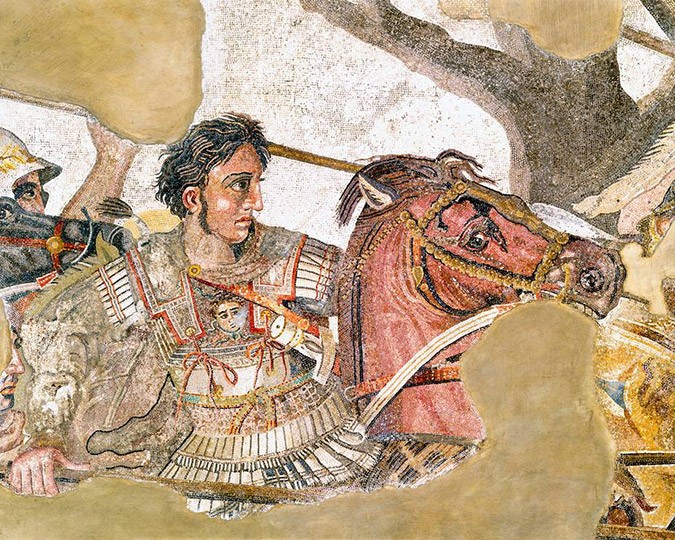
The article explains in detail the life of the family members of Alexander and his life as well as choises.
Also supports that in order to clear the path to the Macedonian throne, Cassander took Olympias prisoner during a siege and executed her. Then, like Alexander himself, he set about eliminating other potential plotters. He imprisoned Alexander’s most important foreign wife, Roxane, and his posthumous son, Alexander IV, at Amphipolis—and had them both secretly murdered in 311 B.C. With the dirty work done, Cassander ruled the kingdom of Macedonia until his death in 297 B.C.
Most archaeologists today are convinced, based on historical accounts, that Alexander himself was buried somewhere in Egypt, quite possibly in the city that bears his name today, Alexandria.
The article concludes by saying that researchers have yet to find the tombs of Olympias, Roxane, Hephaestion, and many of his generals. Perhaps the archaeological team clearing the mysterious tomb at Amphipolis will yet find the remains of one of them.
Ask me anything
Explore related questions