





The EU member states where poverty and social exclusion had increased the most during the economic crisis were Greece, Ireland, Spain, Italy and Hungary, according to the European Commission’s Annual Review on employment and social developments in 2014. The report notes that these countries already had high rates that had been exacerbated during the crisis.
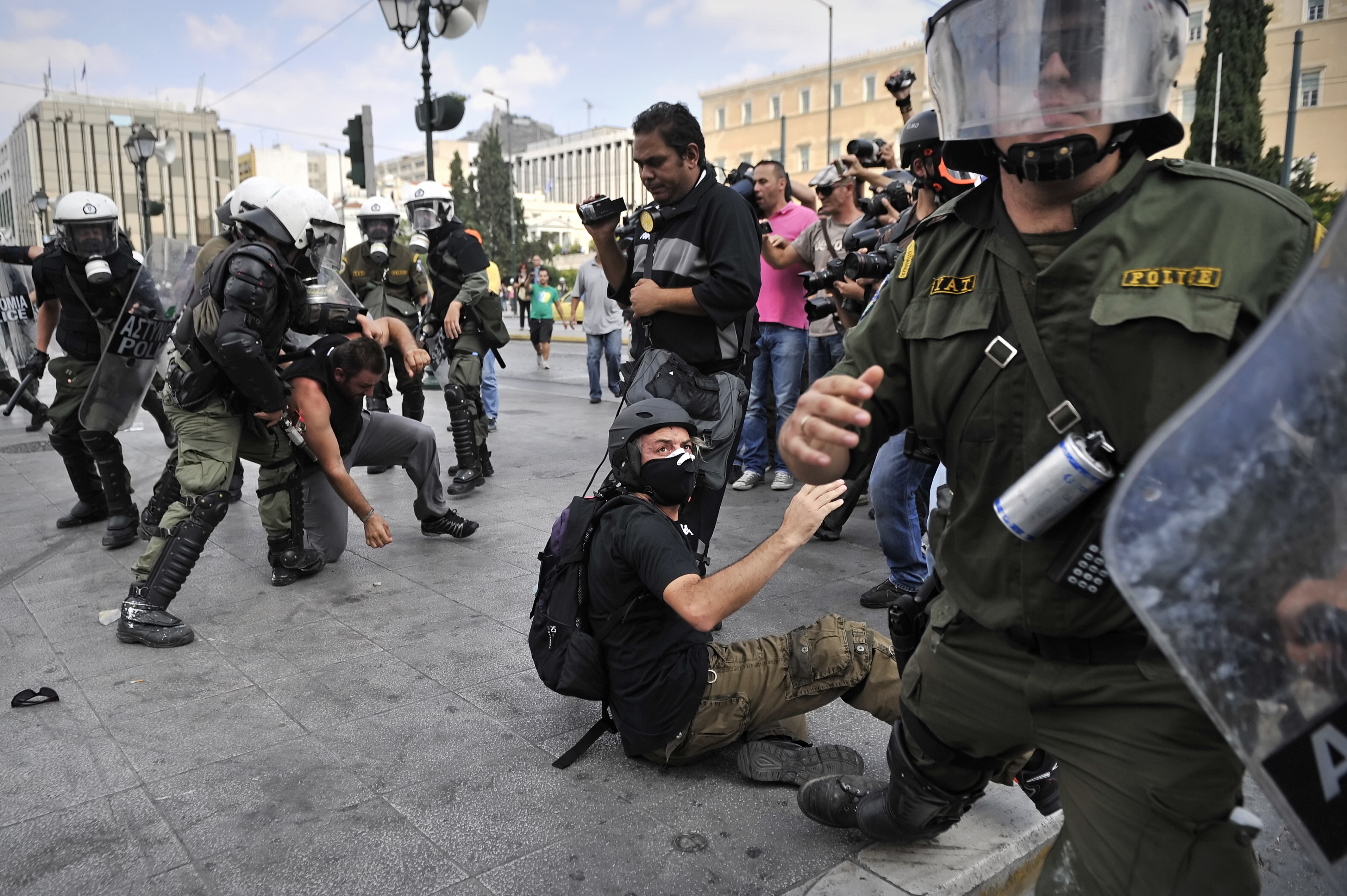
In Greece, the percentage of the population on the verge of poverty or social exclusion shot up from 28.1% in 2008 to 35.7% in 2013, and serious deprivation of basic goods increased in the country from 11.2% in 2008 to 20.3% in 2013. Long-term unemployment in Greece increased from 3.7% in 2008 to 18.6% in 2013, while the employment rate of the economically active population (25-64 age group) dropped from 61.9% to 49.3%.
Greece, Spain, France and Italy were the countries that had the lowest transition of people from part-time to permanent job status in the EU during the economic crisis. In Greece and Portugal, a quarter of the people working part-time were unemployed within a year.

The number of households with no working family members had increased mainly in Greece, Spain, Lithuania and Ireland. The highest percentage of young adults who are forced to continue living with their parents or who have been forced to move back to their family homes as a result of financial problems had increased in Ireland, Spain and Greece.
The high unemployment since 2008 had resulted in an increase in the number of households with no working family members, mainly, in Greece, Spain, Lithuania and Ireland. Education sector investments dropped in Romania (40%), Hungary (30%) and in Greece, UK, Latvia, Italy and Portugal (20%).
The percentage of European workers covered by collective labor contracts dropped from 66% in 2007 to 60% in 2012, with drops in Portugal, Greece and Spain.
Marianne Thyssen, Commissioner for Employment, Social Affairs, Skills and Labour Mobility, commented: “Job creation is our most urgent task and the legacy of the crisis makes it more challenging. This Review finds that it is necessary to implement structural reforms as well as measures to support consumption and demand. We need further investment in people to even better educate, train and activate Europeans for the labour market. The Investment offensive of the Juncker Commission will help make a real and substantial difference in these crucial areas.”
The Review notes that a number of Member States are progressively moving towards a social investment model that promotes people’s potential throughout their lives and supports wider labour market participation. Past reforms to bring more women and older workers into work have helped maintain activity rates in Europe. This confirms the need to continue with labour market reforms and the modernisation of social protection.
Better skills matched by better jobs
In the face of an ageing but declining population in the EU, investment in human capital is essential to support productivity and ensure a job-rich and inclusive growth in the future. The Review underlines that effective human capital investment requires not only education and training in the right skills, but also adequate frameworks to help people to maintain, upgrade and use those skills all through their working lives.In this sense, appropriate policies are needed to prevent human capital from being wasted through inactivity or underutilization of people’s employment potential.
On the other hand, an increase in the supply of skilled human capital needs to be matched by an increase in the supply of quality jobs, in order to yield a more productive workforce. Looking at future challenges and opportunities, the Review notes that on-going changes linked to technological advance, globalisation, demographic change and the greening of the economy should offer opportunities to create high quality jobs, but can also make some skills and jobs outdated and wages more polarised.
Pro-active policies supporting life-long training, improved job-search assistance and social dialogue to foresee and implement innovations are therefore needed.

Restoring convergence
Finally, the Review also underlines that restoring socio-economic convergence is another important task following the crisis years, particularly concerning Southern and peripheral EU 15 Member States. Behind crisis induced divergence lay not only the size of the economic shock but also structural imbalances which were already present before the crisis in the most affected countries, such as weak productivity, lack of investment in human capital, weaknesses in their banking sector and property bubbles, and in their welfare systems. The Review contributes to the on-going debate on the most appropriate ways to restore convergence, deepen the economic and monetary union and strengthen its social dimension.
The Employment and Social Developments in Europe Review
This is the fourth edition of the Annual Review of Employment and Social Developments in Europe (ESDE), in which the Commission reports on the recent employment and social trends, and reflects on upcoming challenges and possible policy responses. With this review, the Commission also fulfils its Treaty obligation to report on the social situation in the EU.
ESDE presents sound analytical work by the Commission services, based on the latest data and literature available, and its main findings underpin the Commission’s initiatives in the employment and social policy field.
Ask me anything
Explore related questions




