





The Charioteer of Delphi is a masterpiece of the ancient Greeks and is considered to be among the finest of the era’s bronze sculptures. Also known as Heniokhos, the life-size statue of a chariot driver was found in 1896, in Delphi, at the Sanctuary of Apollo. The charioteer is one of the few original sculptures made of bronze that survived the centuries, and today it can be seen at the Delphi Archaeological Museum.
The statue is a commemoration of the victory of Polyzalus of Gela, riding his chariot in the Pythian Games held in 478 BC at Delphi. It depicts the driver at the moment of his victory, when he presents his chariot and horses to the spectators. Heniokhos was part of a larger piece that included at least four horses and perhaps two grooms.
Heniokhos is a special exhibit in the museum, and it is the last item that visitors see on their tour. There is a drawing of the missing parts next to the statue, and little pieces of what remains of them. It is believed that the sculptor of the statue was Pythagoras of Samos, but the sculptor Calamis from Sicily is also thought to have been involved in its creation. No one knows for sure.
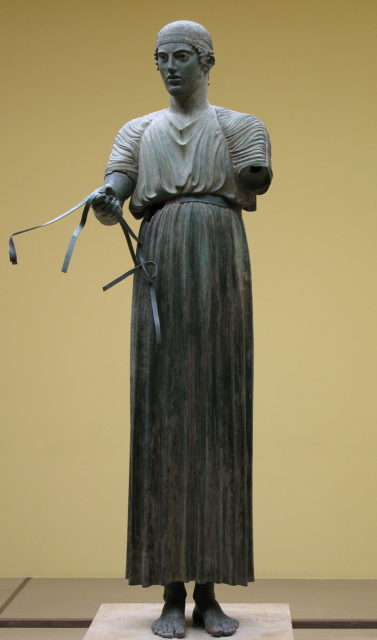
(The Charioteer of Delphi)
At that time, the Sicilian cities were very wealthy and only their rulers could afford to order statuaries such as this. They could also offer the most beautiful items to the gods and had the best drivers and horses. However, it is unlikely that the statue actually comes from Sicily, and because the master remains unknown, many believe that it was made in Athens. The reason: the style and decorative work of the statue.
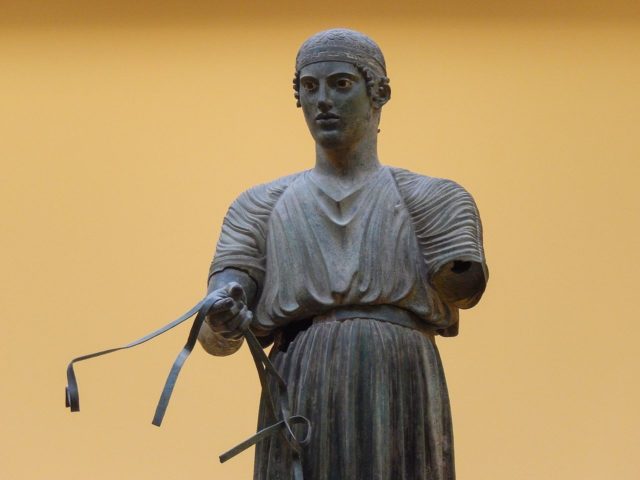
(The sculpture can be seen at the Delphi Archaeological Museum)
It is very similar to the statue known as Piraeus Apollo, which historians claim was made in Athens. The figure of Heniokhos is a young man wearing a robe or a long tunic (xyston), which was the traditional clothing for a charioteer. The tunic was tightened with a white belt, and two other bands passed over the shoulders. In ancient Greece, these men were carefully chosen, and the most important characteristics were their height and weight: the taller and lighter they were, the better.
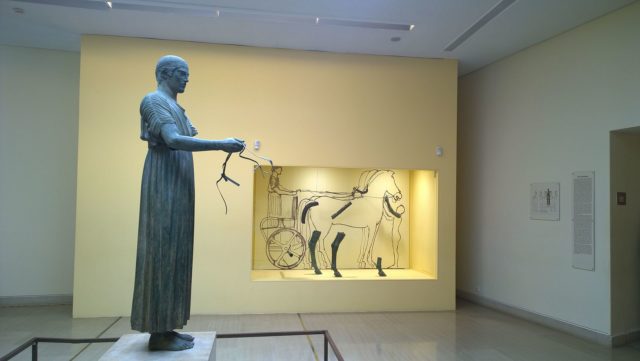
It is believed that this young man was from a noble family. For the Panhellenic games, all chariot racers were selected from among the elites. The charioteer is very strong, as we can see in his arms and posture. One of the most interesting features are his inlaid eyes, which are made from glass (onyx).
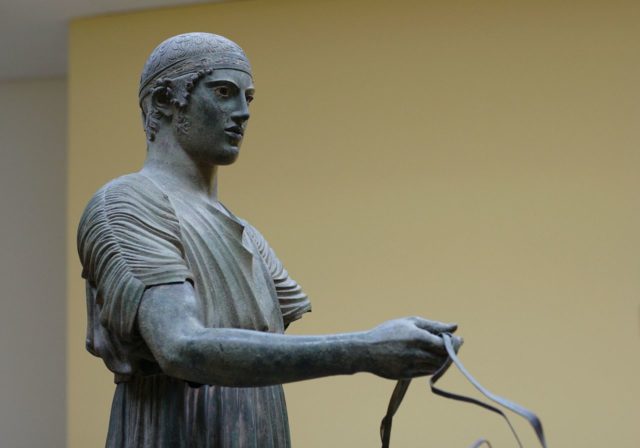
(One of the most interesting parts are the inlaid eyes. which are made from glass)
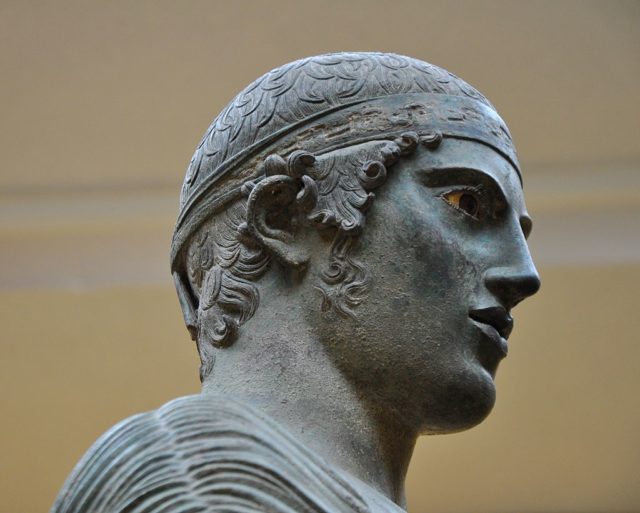
(The Charioteer’s introverted expression is compared with the Archaic smile)
This bronze statue survived because it was buried under a rock-fall in the city, which is perhaps the event that destroyed the site in 373 BC. The parts that are missing from the statue are little details from the eyelashes and the lips, and his left forearm. The style of the young man is classed as “Severe” or “Early Classical.” The statue is defined as naturalistic, and the Charioteer’s introverted expression is compared with the old Archaic smile.
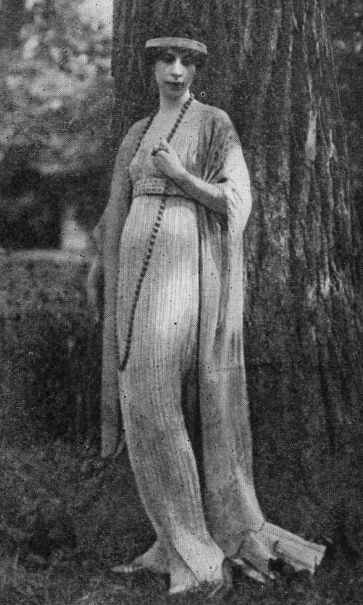
(One of the examples of the Delphos gown)
This smile was used by ancient Greek sculptors when they wanted to suggest that their subject was calm and infused with well-being. The best example of this expression is the Kroisos Kouros, but Heniokhos was even more naturalistically presented than this statue.
Ten years after its discovery, the Delphos gown was designed by the Spanish designer Mariano Fortuny y Madrazo, who was inspired by the statue’s clothing. These dresses are considered one of the most important pieces of 20th-century fashion.
Ask me anything
Explore related questions




