

×
GreekEnglish

×
  • Politics
  • Diaspora
  • World
  • Lifestyle
  • Travel
  • Culture
  • Sports
  • Cooking
Saturday
29
Aug 2026
weather symbol
Athens 30°C
  • Home
  • Politics
  • Economy
  • World
  • Diaspora
  • Lifestyle
  • Travel
  • Culture
  • Sports
  • Mediterranean Cooking
  • Weather
Contact follow Protothema:
Powered by Cloudevo
> Politics

The National Interest: Why is Cyprus still divided? – Analysis

"Cyprus and its allies do have the right to one day expel Turkish outposts on the island by force if other coercive measures fail"

Newsroom April 18 04:02

Δείτε περισσότερα άρθρα μας στα αποτελέσματα αναζήτησης

Add Protothema.gr on Google

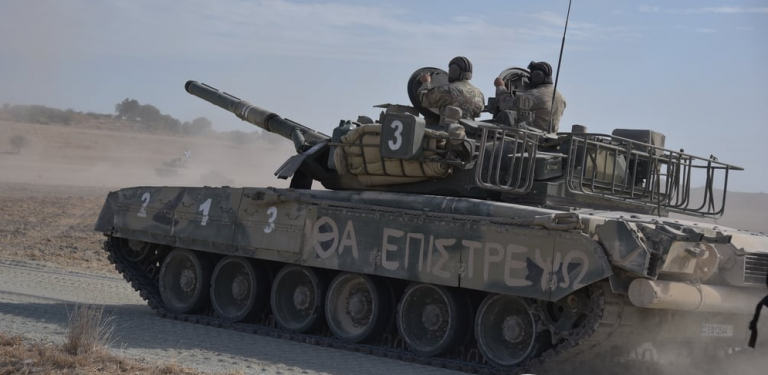
The division of Cyprus is fast approaching the half-century mark. In fact, that division has now lasted longer than that of Germany.

Close to two-thirds of Cypriots were not yet born when Turkish troops first invaded the country.

The United Nations Peacekeeping Force in Cyprus (UNFICYP) maintains the separation between Greek and Turkish Cypriots but it has failed to stop (let alone reverse) Turkey’s ethnic cleansing of the northern third of the island. While the United Nations has sporadically sponsored initiatives to end the occupation, these have gone nowhere. There have not been any substantive talks for the last three years, nor will there be : The discovery of vast gas deposits in Cypriot waters makes Turkish forces less likely to withdraw. When Turkey and Turkish Cypriots do engage, they do so insincerely to keep the process alive, even as they work to undermine any permanent solution .

When a diplomatic strategy fails consistently, it is time to reconsider its logic. Turkey already has walked away from longstanding UN and European Union frameworks for a solution when, in recent weeks, President Recep Tayyip Erdogan dismissed federalism and insisted on a two-state solution in which the international community would formally accede to the permanent division of Cyprus. Rather than empower Erdogan and Turkey’s puppet government in Northern Cyprus by treating it as an equal with the internationally recognized Cypriot government, perhaps it is time for the international community to embrace an Iraq model.

See Also:

Second historic HAF airplane to be restored to flying status (photos)

The World’s Monarchies (infographic)

>Related articles

Analysis: How Venezuela’s oil reserves change the game for the US, OPEC and the Strait of Hormuz

Greece once again under the scrutiny of rating agencies, with the surplus and rapid debt reduction as its “weapons”

Tram services to become more frequent, with shorter waiting times on Syntagma–Pikrodafni and Voula–SEF

There is little difference between Kuwait in 1990 and Cyprus today. Saddam Hussein may have resurrected revanchist claims against his southern neighbor just as Erdogan now does, but Iraq invaded Kuwait primarily to loot its natural resources. The same now holds true for Turkey in Cyprus; Turkey’s original casus belli, protecting the Turkish Cypriot community against the Greek military junta disappeared within a week when Greece’s military regime collapsed and Greeks embraced democracy. Today, Freedom House ranks Greece completely free with a rating superior even to that of the United States. It ranks Turkey as not free, on par with Algeria and below the self-declared Republic of Artsakh in Nagorno-Karbakh in terms of rights and freedoms.

When Turkey invaded Cyprus, the United Nations Security Council unanimously passed a number of resolutions that were symbolic but toothless. They called for a ceasefire and deplored continued fighting and non-compliance. Since 1975, there have been more than four dozen additional resolutions, none of which have deterred Turkey from further consolidating its control of northern Cyprus. In effect, northern Cyprus reflects the United Nations at its most impotent.

Read more: National Interest

Ask me anything

Explore related questions

#analysis#cyprus#Cyprus dispute#Cyprus issue#diplomacy#Eastern Mediterranean#eu#greece#NATO#negotiations#politics#turkey#Turkish invasion#turkish occupation#UN#usa#war#world
> More Politics

Follow en.protothema.gr on Google News and be the first to know all the news

See all the latest News from Greece and the World, the moment they happen, at en.protothema.gr

> Latest Stories

Analysis: How Venezuela’s oil reserves change the game for the US, OPEC and the Strait of Hormuz

August 29, 2026

Greece once again under the scrutiny of rating agencies, with the surplus and rapid debt reduction as its “weapons”

August 29, 2026

Tram services to become more frequent, with shorter waiting times on Syntagma–Pikrodafni and Voula–SEF

August 29, 2026

Pirates return to the Gulf of Aden, with more than 90 seafarers held hostage

August 29, 2026

Historic Deal: US takes control of Venezuela’s oil, gaining control of 65 billion barrels

August 29, 2026

Rent refund: Key dates for payments and who will receive two months’ rent

August 29, 2026

“It was worth it”: Mother killed her 11-month-old son so the father would not get custody

August 29, 2026

The Kremlin refuses to comment on reports of new talks with Ukraine in September

August 28, 2026
All News

> Greece

In reverence, the emotional deposition in Jerusalem, see photos & video

The Holy Temple of the Resurrection opened after many days due to the war between Israel and Iran

April 10, 2026

In the final stretch for the accreditation of joint master’s degrees: Aiming for their launch in the coming academic year

April 10, 2026

Schedule for Epitaph Procession today (10/4)

April 10, 2026

Perfect weather for Easter excursions, according to Tsatrafyllia’s forecast

April 10, 2026

Easter in Greece: The customs that continue in Greek tradition – From Nafpaktos to Corfu

April 10, 2026
Homepage
PERSONAL DATA PROTECTION POLICY COOKIES POLICY TERM OF USE
Powered by Cloudevo
Copyright © 2026 Πρώτο Θέμα



