×
GreekEnglish

×
  • Politics
  • Diaspora
  • World
  • Lifestyle
  • Travel
  • Culture
  • Sports
  • Cooking
Thursday
26
Mar 2026
weather symbol
Athens 14°C
  • Home
  • Politics
  • Economy
  • World
  • Diaspora
  • Lifestyle
  • Travel
  • Culture
  • Sports
  • Mediterranean Cooking
  • Weather
Contact follow Protothema:
Powered by Cloudevo
> Culture

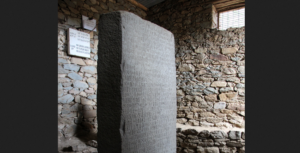
The “Ezana Stone” of Aksum: A trilingual monument, similar to the “Rosetta Stone”

These liturgical epigraphs were written in various ancient languages, including the Ethiopian Semitic Ge'ez, the South Arabian Sabaean & Greek

Newsroom September 8 09:28

The Ezana Stone is an ancient stele still standing in modern day Axum, the centre of the ancient Kingdom of Aksum. This stone monument, that probably dates from the 4th century of the Christian era, documents the conversion of King Ezana to Christianity and his conquest of various neighbouring areas, including Meroë. The name Ezana is possibly of Amharic origin and means “King of king elected by God king of axume”. An other opinion suggests that Ezra is a biblical name meaning “help” or “helper” in Hebrew. The Ezra of the Bible was a Jewish priest who helped reintroduce the Torah to the Jewish people who escaped captivity in Babylon.

From AD 330 to 356, King Ezana ruled the ancient Kingdom of Aksum centred in the Horn of Africa. He fought against the Nubians, and commemorated his victories on stone tablets in praise of God. These liturgical epigraphs were written in various ancient languages, including the Ethiopian Semitic Ge’ez, the South Arabian Sabaean, and Greek. The king’s engravings in stone provided a trilingual monument in different languages, similar to the Rosetta stone.

See Also:

>Related articles

Oil: Nearly 6% jump in prices with Brent at $108 and uncertainty growing

Teenagers from 12 years old join volunteer patrols in Tehran

Israel: One dead and 14 injured in Hezbollah rocket barrage on Nahariya

The Philistines were likely of Greek origin, according to new DNA evidence

The earliest known inscriptions in the Ge’ez script date to the 5th century BC. At first the script represented only consonants. Vowel indication started to appear in 4th century AD during the reign of king Ezana, though might have developed at a earlier date.

Read more: The archaeologist

Ask me anything

Explore related questions

#Aksum#archaeology#culture#Ezana Stone#language#stone#world
> More Culture

Follow en.protothema.gr on Google News and be the first to know all the news

See all the latest News from Greece and the World, the moment they happen, at en.protothema.gr

> Latest Stories

Oil: Nearly 6% jump in prices with Brent at $108 and uncertainty growing

March 26, 2026

Teenagers from 12 years old join volunteer patrols in Tehran

March 26, 2026

IMF: Scenarios for new country funding due to War – World Bank on alert

March 26, 2026

Israel: One dead and 14 injured in Hezbollah rocket barrage on Nahariya

March 26, 2026

Negotiations begin to form a new government in Denmark

March 26, 2026

Oil tanker allegedly hit by drone near Bosphorus Strait

March 26, 2026

Humans have been together with dogs for at least 15,800 years, the discovery in Turkey changes the facts

March 26, 2026

Nine violations of Greek airspace by Turkish aircraft

March 26, 2026
All News

> World

Teenagers from 12 years old join volunteer patrols in Tehran

“Everyone wants to contribute to the front of resistance against the global tyrant,” said Revolutionary Guards official Rahim Nadali

March 26, 2026

Negotiations begin to form a new government in Denmark

March 26, 2026

Oil tanker allegedly hit by drone near Bosphorus Strait

March 26, 2026

Transgender athletes excluded from the Olympic Games: New IOC decision ahead of Los Angeles 2028

March 26, 2026

Britain introduces “plug-in” solar panels for homes to tackle the energy crisis caused by the war in Iran

March 26, 2026
Homepage
PERSONAL DATA PROTECTION POLICY COOKIES POLICY TERM OF USE
Powered by Cloudevo
Copyright © 2026 Πρώτο Θέμα